















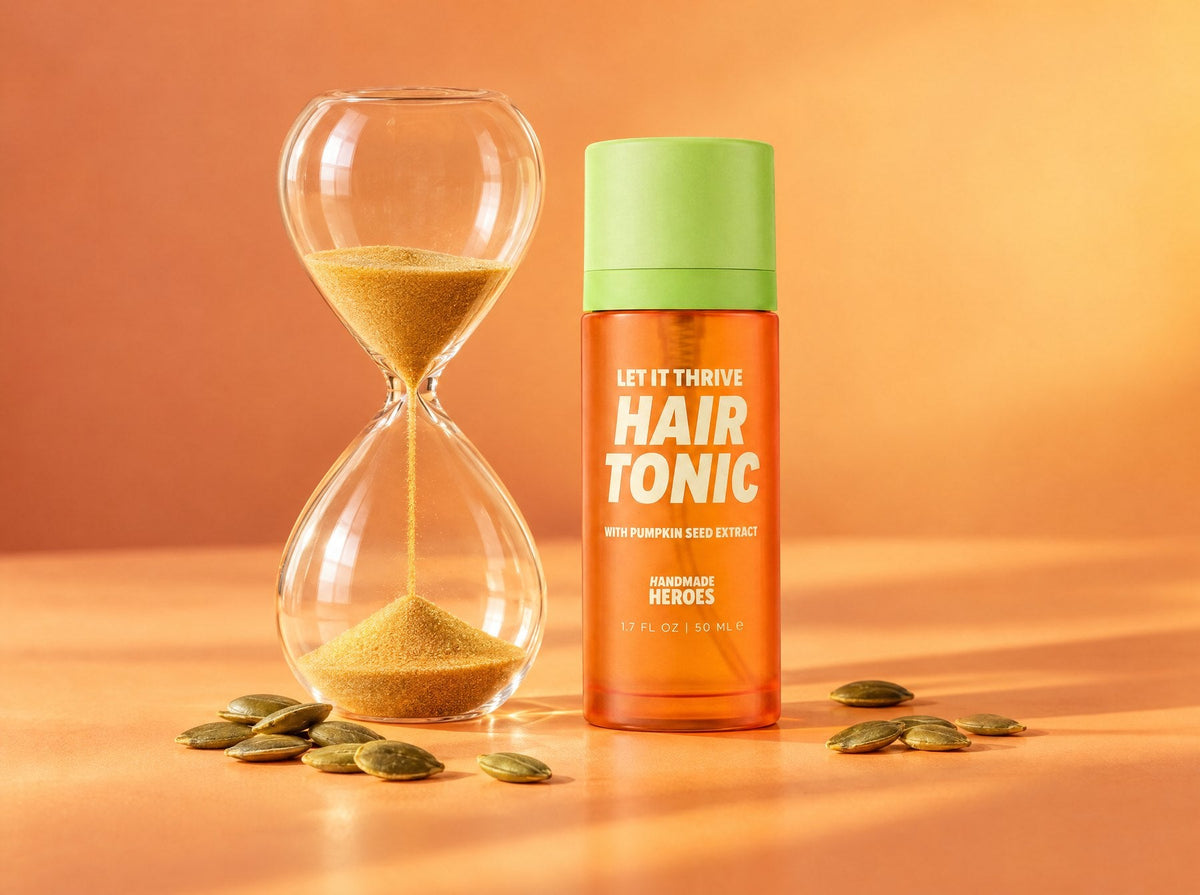
TL;DR: Most scalp hairs grow for years and then rest for about four months before they shed, so any change to your scalp routine takes months to show. Hair studies run three to six months or longer, and even minoxidil's labels say results can take up to six months. Give a daily scalp routine at least three to six months, track it with consistent monthly photos, and see a dermatologist if thinning keeps getting worse.
Skincare can reward you in a week. Hair won't. If you've ever started a new hair product, studied the mirror for a fortnight and given up, the problem probably wasn't the product so much as the clock you were holding it to.
Here's the hair cycle in plain English, why everything to do with hair is measured in months, and how to judge your own routine honestly.
This article is general information, not medical advice. For sudden, patchy or persistent hair loss, see a board-certified dermatologist.
What is the hair cycle?
Each follicle runs through repeating phases: a growing phase (anagen), a short transition (catagen), a resting phase (telogen), and then shedding, sometimes with a gap before the next hair starts (Piérard et al., 2004). At any moment, about 85% of the hair on a healthy scalp is growing and about 15% is resting. A follicle typically grows a hair for almost four years, then rests for about four months, and the new hair growing underneath pushes the old one out (Hughes et al., 2024).
In pattern hair loss, that rhythm changes: the growing phase gets shorter with each cycle while the resting phase stays the same or gets longer, and follicles gradually shrink (Asfour et al., 2023).
Why does everything to do with hair take months?
Because what you see on your head today was set in motion long ago. A hair that sheds this week entered its resting phase months earlier, and a new hair has to grow for a while before it's long enough to notice. That delay works in both directions:
- Shedding shows up late. After childbirth, for example, heavy shedding typically appears about two months later, peaks around four months, and hair tends to regain its normal fullness within six to nine months (American Academy of Dermatology). Our guides to postpartum shedding and stress shedding cover the same lag.
- Improvement shows up late too. Even when something changes at the follicle, it takes months before it's visible at the surface.
How long do hair studies and treatments take?
The research timelines tell the same story:
- Pumpkin seed oil capsules: hair counts had risen 30% versus 5% on placebo at 12 weeks, and 40% versus 10% at 24 weeks (Cho et al., 2014). A published comment argued trials should run at least a year because of seasonal hormone swings (Verma, 2015).
- Topical pumpkin seed oil: three months, with a check at six weeks (Ibrahim et al., 2021).
- Rosemary oil vs. 2% minoxidil: nothing changed at three months in either group; both had higher hair counts at six (Panahi et al., 2015).
- Minoxidil itself: the women's 5% foam label says results may occur at three months but some women need at least six (women's 5% foam label); the men's 5% solution says two months for some, at least four for others (men's 5% solution label). The American Academy of Dermatology suggests six to 12 months before judging it, and notes that shedding can increase temporarily in the first two to eight weeks (American Academy of Dermatology).
If a medicine with decades of evidence needs months, a cosmetic routine deserves at least the same patience. We compare those two trial timelines in Pumpkin Seed Oil vs. Minoxidil.
Hair has seasons, too
One more reason to be patient: shedding naturally rises and falls through the year.
- In 14 men in England measured every 28 days for 18 months, the share of growing hairs peaked above 90% in March and bottomed out in September, and daily shedding peaked around August and September at about 60 hairs, more than double the winter rate (Randall and Ebling, 1991).
- In ten men followed for eight to 14 years, the share of resting hairs peaked at the end of summer and the start of autumn (Courtois et al., 1996).
- In 823 women, resting hairs peaked in summer, with a smaller peak in spring, and were lowest in late winter (Kunz et al., 2009).
So if you start a routine in spring and see more hair in your brush by August, that's not necessarily the routine. Compare like with like.
How do you track your progress honestly?
Dermatology clinics use standardized photos: the same view, magnification and lighting at every visit, the same hairstyle and color, the same part, and four standard views of the crown, midline, front and temples (Dhurat and Saraogi, 2009). You can do a home version:
- Pick one spot with steady light, like a window at the same time of day, and use it every time.
- Part your hair the same way and keep the same style.
- Take the same shots once a month: top of the head, your part, and your hairline from the front and sides.
- Write down anything that could trigger shedding, like illness, a crash diet or a very stressful stretch.
- Compare photos three to six months apart, and ideally the same month a year apart.
A routine built for the long haul
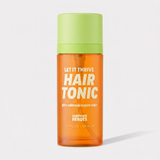
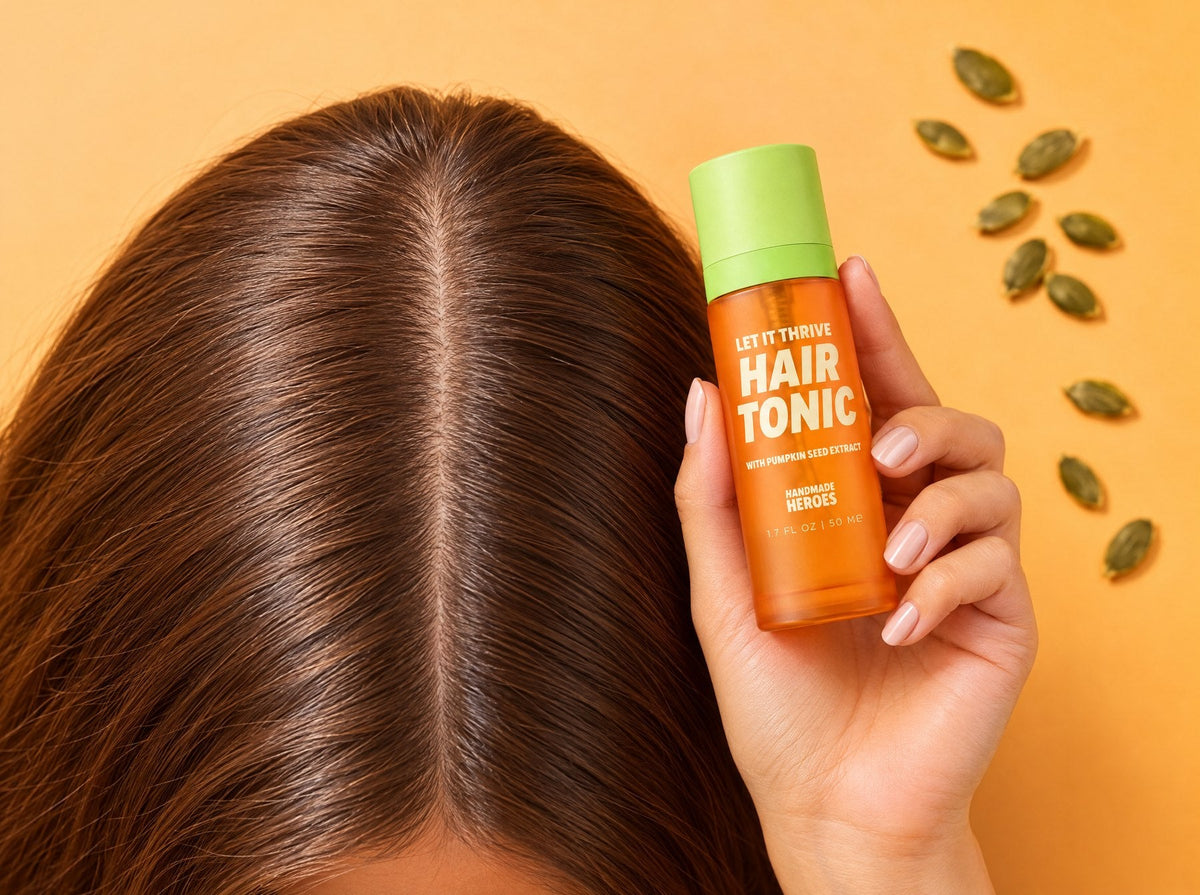
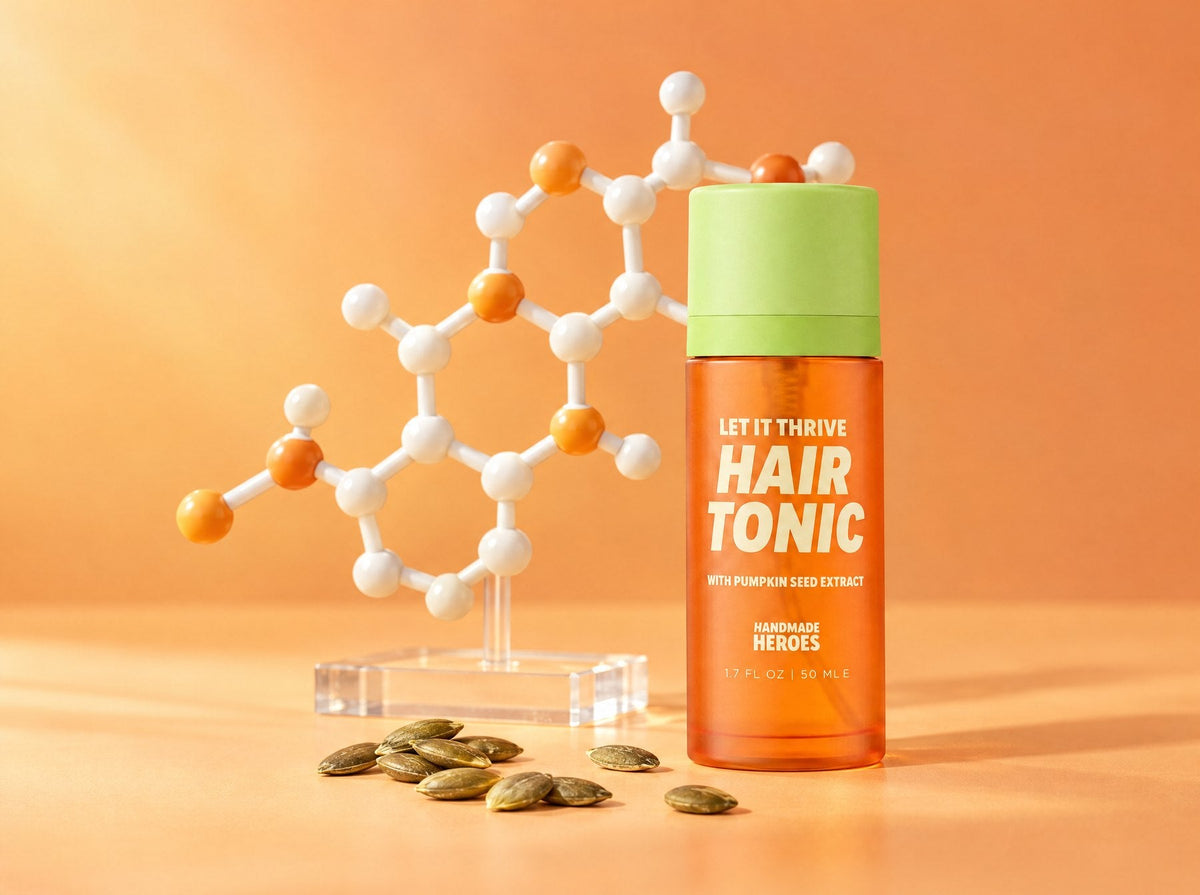
All of this is why our Let It Thrive Hair Tonic is designed as a once-a-day habit rather than something you reach for now and then. It's a lightweight leave-in spray with pumpkin seed extract (listed on the label as Cucurbita pepo (pumpkin) seed oil) and rosemary leaf extract that helps the scalp feel balanced, refreshed and healthy-looking and, with regular use, supports the appearance of fuller, thicker-looking hair. It absorbs fast with no greasy residue, and it's 100% naturally derived and vegan, with no minoxidil, no prostaglandins and no biotin.
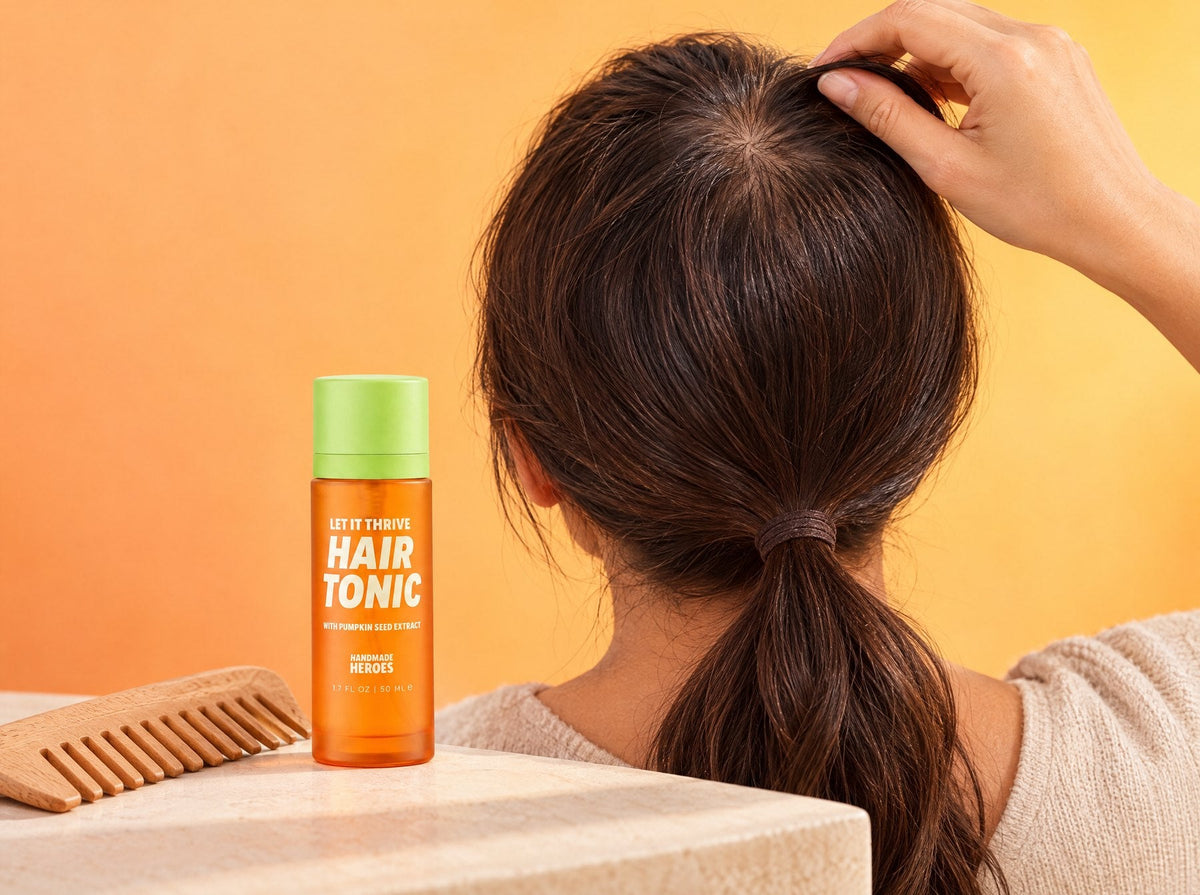
Part your hair, spray onto the scalp, massage with your fingertips for 30–60 seconds, and leave it in, every day (step-by-step in How to Use a Scalp Tonic).
Honest caveat, because we don't do hype: the trial timelines above tell you how slow hair is, not how fast our tonic works. The research on pumpkin seed is why we chose it (more in our pumpkin seed oil explainer), and our FAQ says it plainly: it's a cosmetic conditioning tonic, not a hair-loss treatment.
Start the clock on a steady scalp routine — shop the Let It Thrive Hair Tonic.
When to see a professional
Don't wait out the months if:
- hair loss is sudden or comes out in patches, which can be alopecia areata
- your scalp is painful, burning or looks scarred
- thinning comes with fatigue, irregular periods, acne or facial hair, which can point to thyroid problems, iron deficiency or PCOS
- heavy shedding started after a new medication (don't stop it yourself; ask your prescriber)
- your photos show thinning steadily progressing over several months; see our shedding vs. hair loss guide and book a dermatologist
Hair Cycle and Scalp Tonic FAQ
How long does a scalp tonic take to work?
Plan on at least three to six months of daily use before judging any scalp routine. Hair grows in long cycles, and published trials ran from three months to 24 weeks and longer (Cho et al., 2014; Panahi et al., 2015).
Why does my hair shed more in late summer and fall?
Seasonal shedding is real: in one study, daily hair loss peaked around August and September at about double the winter rate (Randall and Ebling, 1991). If it's heavy or lasts for months, see a dermatologist.
How many hairs a day is normal to lose?
The American Academy of Dermatology says shedding 50 to 100 hairs a day is normal (American Academy of Dermatology). More than that over several weeks is worth getting checked.
What are the three phases of the hair cycle?
Anagen is the growing phase, catagen a brief transition, and telogen the resting phase before the hair sheds (Piérard et al., 2004). On a healthy scalp about 85% of hairs are growing and 15% resting at any time (Hughes et al., 2024).
Sources
- Piérard GE, Piérard-Franchimont C, Marks R, Elsner P, EEMCO group (European Expert Group on Efficacy Measurement of Cosmetics and other Topical Products) (2004). EEMCO guidance for the assessment of hair shedding and alopecia. Skin Pharmacology and Physiology. PubMed 14976387
- Hughes EC, Syed HA, Saleh D (2024). Telogen effluvium. StatPearls. NCBI Bookshelf NBK430848
- Asfour L, Cranwell W, Sinclair R (2023). Male Androgenetic Alopecia. Endotext. PubMed 25905192
- American Academy of Dermatology (n.d.). Do you have hair loss or hair shedding? AAD.org. aad.org
- Cho YH, Lee SY, Jeong DW, Choi EJ, Kim YJ, Lee JG, et al. (2014). Effect of pumpkin seed oil on hair growth in men with androgenetic alopecia: a randomized, double-blind, placebo-controlled trial. Evidence-Based Complementary and Alternative Medicine. PMC4017725
- Verma H (2015). Comment on "effect of pumpkin seed oil on hair growth in men with androgenetic alopecia: a randomized, double-blind, placebo-controlled trial". Evidence-Based Complementary and Alternative Medicine. PMC4396906
- Ibrahim IM, Hasan MS, Elsabaa KI, Elsaie ML (2021). Pumpkin seed oil vs. minoxidil 5% topical foam for the treatment of female pattern hair loss: A randomized comparative trial. Journal of Cosmetic Dermatology. PubMed 33544448
- Panahi Y, Taghizadeh M, Marzony ET, Sahebkar A (2015). Rosemary oil vs minoxidil 2% for the treatment of androgenetic alopecia: a randomized comparative trial. Skinmed. PubMed 25842469
- U.S. National Library of Medicine (2024). Women's 5% minoxidil topical aerosol foam: Drug Facts label. DailyMed. DailyMed
- U.S. National Library of Medicine (2024). Men's 5% minoxidil topical solution: Drug Facts label. DailyMed. DailyMed
- American Academy of Dermatology (2022). Thinning hair and hair loss: could it be female pattern hair loss? AAD.org. aad.org
- Randall VA, Ebling FJ (1991). Seasonal changes in human hair growth. British Journal of Dermatology. PubMed 2003996
- Courtois M, Loussouarn G, Hourseau S, Grollier JF (1996). Periodicity in the growth and shedding of hair. British Journal of Dermatology. PubMed 8745886
- Kunz M, Seifert B, Trüeb RM (2009). Seasonality of hair shedding in healthy women complaining of hair loss. Dermatology. PubMed 19407435
- Dhurat R, Saraogi P (2009). Hair evaluation methods: merits and demerits. International Journal of Trichology. PMC2938572
Real ingredients. Real results.




Leave a comment
This site is protected by hCaptcha and the hCaptcha Privacy Policy and Terms of Service apply.