

TL;DR: That alarming handful of hair around three to four months postpartum is normal — pregnancy’s high estrogen kept your hair in its growing phase, and afterwards it catches up all at once. Dermatologists call it postpartum telogen effluvium, and most people are back to normal fullness by their baby’s first birthday. Be gentle, see a doctor if it drags on, and consider a simple daily scalp habit as your one easy win in a chaotic season.
Why it happens (and why it’s so dramatic)
During pregnancy, higher estrogen keeps more of your hair in its growing phase, so it often looks thick and full. After birth, estrogen drops and all that “held-on” hair shifts into shedding at once — the American Academy of Dermatology calls this postpartum telogen effluvium and notes it usually peaks around four months after delivery (AAD: Hair loss in new moms). Normal shedding is 50–100 hairs a day; postpartum it can be several times that, which is why it looks so scary. But it’s a normal hormonal reset, not your hair giving up, and most people see fullness return by around the first birthday (Cleveland Clinic).
(General information, not medical advice.)
What actually helps
- Know it’s temporary. The AAD’s guidance for new parents is essentially reassurance plus gentle care — it resolves on its own (AAD).
- Be gentle — loose styles, soft handling, easy on the heat while you’re shedding more.
- Cover the basics as best you can — food, water, rest (we know, with a newborn). Your hair is reflecting a big physical event.
- A little scalp care is a small, doable ritual in a chaotic season.
The 10-second daily habit that's yours in a chaotic season
Here's the good news: while your hormones (and your hair) find their new rhythm, you don't have to just watch the shower drain and hope. In a season where so much feels out of your hands, a little daily attention to your scalp is the one move that's completely in your control — and doing something feels a whole lot better than doing nothing.
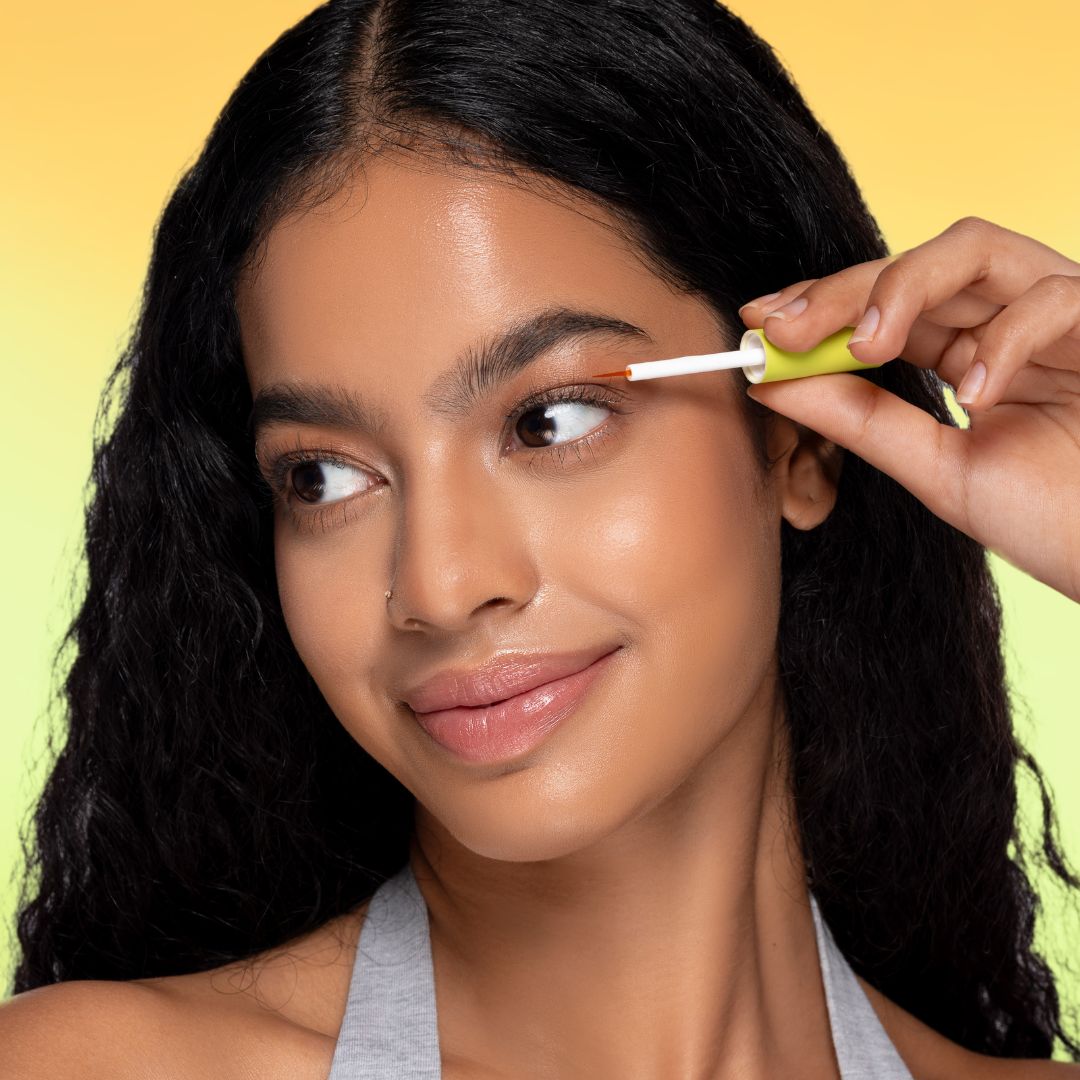
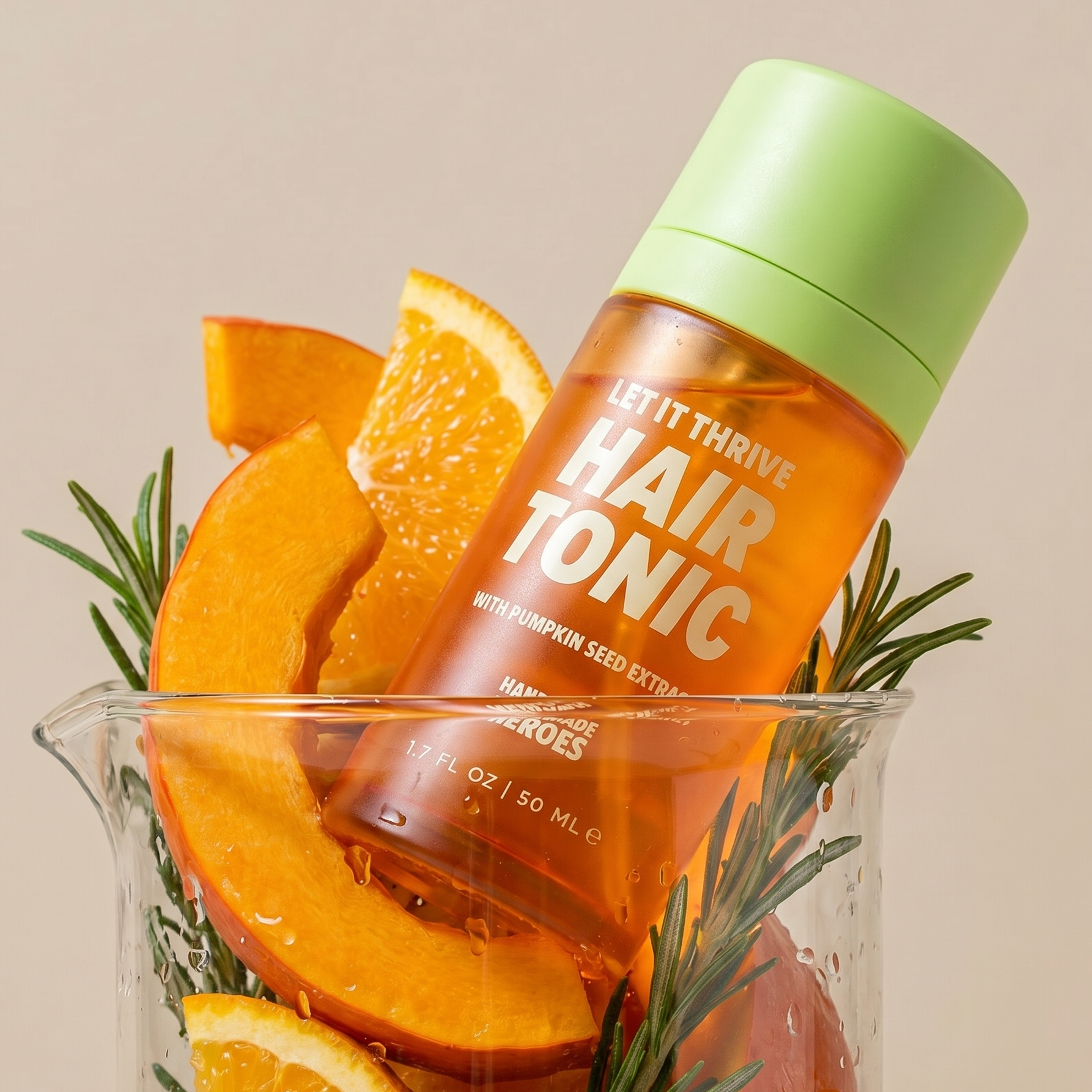
That's exactly what our Let It Thrive Hair Tonic is made for. It's a lightweight, leave-in scalp tonic built on rosemary and pumpkin seed extract — two of the most-researched botanicals in scalp care — that supports a healthy-looking scalp and the appearance of fuller, thicker-looking hair, with no prostaglandins and no biotin. One spray, a 30-second massage, done — easy enough to fit into nap-time.
Why those two botanicals? Rosemary performed comparably to 2% minoxidil for pattern hair loss in a 2015 randomized trial (Panahi et al.) and oral pumpkin seed oil raised hair count versus placebo in 2014 (Cho et al.). Honest caveat, because we don't do hype: those studies were on pattern hair loss — so they're why we chose these botanicals, not a promise about postpartum shedding. It's supportive care, not a treatment, and no replacement for time and the basics.
If you're going to build one small ritual while your hormones rebalance, make it the easy one. Give your scalp its daily 10 seconds — shop the Let It Thrive Hair Tonic. Browse the hair range.
When to see a professional
If the shedding is severe, patchy, or still going strong well past a year — or you feel exhausted beyond normal new-parent tiredness — check in with your doctor; postpartum thyroid changes and low iron are common and treatable (Cleveland Clinic).
Postpartum shedding FAQ
When does postpartum shedding start and stop? It often peaks around three to four months after birth and settles by roughly twelve months (AAD).
Is it permanent? For most people, no — it’s a temporary reset as estrogen normalizes (Cleveland Clinic).
Can I use a scalp tonic while breastfeeding? It’s a cosmetic, leave-in scalp tonic — but if you’re breastfeeding and unsure about any product, check with your doctor first.
Sources
- American Academy of Dermatology — Hair loss in new moms. aad.org
- Cleveland Clinic — Postpartum Hair Loss. my.clevelandclinic.org
- Panahi et al., Skinmed 2015. reference · Cho et al., 2014. PMC4017725
Real ingredients. Real results.

Leave a comment
This site is protected by hCaptcha and the hCaptcha Privacy Policy and Terms of Service apply.