






TL;DR: Nobody has studied a pumpkin seed scalp tonic used alongside minoxidil or finasteride, so there's no evidence it adds benefit or causes harm. What you do have is minoxidil's own directions: apply it to a dry scalp, as often as the label says, and note that the labels warn against using it with other medicines on the scalp. Keep your treatment exactly as prescribed, use any cosmetic tonic at a different time, and make the plan with your dermatologist.
If you're already using minoxidil or taking finasteride, you've made the evidence-backed choice. It's natural to want to do a little more, and a scalp tonic is an easy thing to add. The question is how to add it without getting in the way of the treatment that's doing the heavy lifting.
There's no trial of this exact combination, so this isn't a "the study says" article. It's a "here's what the labels say, and here's a careful way to fit the two together" article, with your dermatologist making the final call.
This article is general information, not medical advice. For sudden, patchy or persistent hair loss, see a board-certified dermatologist.
What do minoxidil's labels say about other scalp products?
Over-the-counter minoxidil comes with Drug Facts labels, and they're worth reading closely:
- How often: the women's 5% foam is used once a day, half a capful (women's 5% foam label); the men's 5% solution and the women's 2% solution are 1 mL twice a day (men's 5% solution label; women's 2% solution label). Using more, or using it more often, won't improve results.
- Other scalp medicines: the labels say not to use minoxidil if you use other medicines on the scalp, or if your scalp is red, inflamed, infected, irritated or painful.
- When to stop and call a doctor: among other things, if scalp irritation or redness develops.
- Who should check first: the labels also say not to use minoxidil if you're under 18, or if your hair loss is sudden or patchy, or you don't know its cause.
- Dry scalp: the American Academy of Dermatology says minoxidil is applied to a dry scalp (American Academy of Dermatology).
What the labels we reviewed don't give is a waiting time before other products, so we won't invent one. A cosmetic tonic isn't a medicine, but it is another product on the same skin, which is exactly why this belongs in a conversation with your dermatologist or pharmacist.
A careful way to layer, if your dermatologist agrees
- Keep minoxidil's routine untouched. Same product, same amount, same schedule, on a dry scalp.
- Use the tonic at a different time of day. With once-daily foam, that might mean minoxidil at night and the tonic in the morning. With twice-daily minoxidil, ask your dermatologist where, or whether, a tonic fits.
- Never mix them in your palm or spray one straight on top of the other while it's still wet.
- Add one new product at a time, and patch test it first (here's how to patch test a scalp product).
- Watch for irritation. Minoxidil can itch on its own: in a six-month trial, scalp itching was more frequent with 2% minoxidil than with rosemary oil (Panahi et al., 2015). If your scalp turns red or itchy, stop the newest product first and tell your doctor, as the label advises.
- Keep a simple log for the first few weeks. Note what you applied and when, so if your scalp reacts, you and your dermatologist can see which product to pause.
- Mind the pets. If you share your home with cats, read our note on minoxidil and cats.
What about finasteride?
Finasteride is a prescription pill, FDA-approved for male pattern hair loss in men, that blocks two forms of 5α-reductase and so reduces the conversion of testosterone to DHT (Zito et al., 2024). According to the American Academy of Dermatology, it's taken long term, results show in about six months if it's going to help, and possible side effects include reduced sex drive, erection problems, breast swelling and tenderness, and depression (American Academy of Dermatology).
No study has looked at a cosmetic scalp tonic used alongside finasteride. One is a pill and the other stays on your scalp, but that's not a reason to skip the conversation: tell your prescriber about everything you use, supplements included. Finasteride is approved for men, so women considering it need that discussion with their doctor too.
Will a tonic make your treatment work better?
There's no evidence that it will. The one trial pitting pumpkin seed oil against minoxidil compared them rather than combining them, and it had no placebo group (Ibrahim et al., 2021). A 2025 review concluded pumpkin seed oil may not be as effective as topical minoxidil (Gupta et al., 2025). We cover that head-to-head in Pumpkin Seed Oil vs. Minoxidil, and our pumpkin seed oil explainer lays out everything the ingredient has and hasn't shown.
What matters most is consistency with the treatment you're on. Minoxidil's labels say continued use is necessary, or hair loss will begin again, and the AAD notes that when you stop, you lose its benefits. So don't swap minoxidil for a tonic, and don't stop a prescription without talking to the person who prescribed it.
If you add our tonic
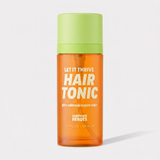
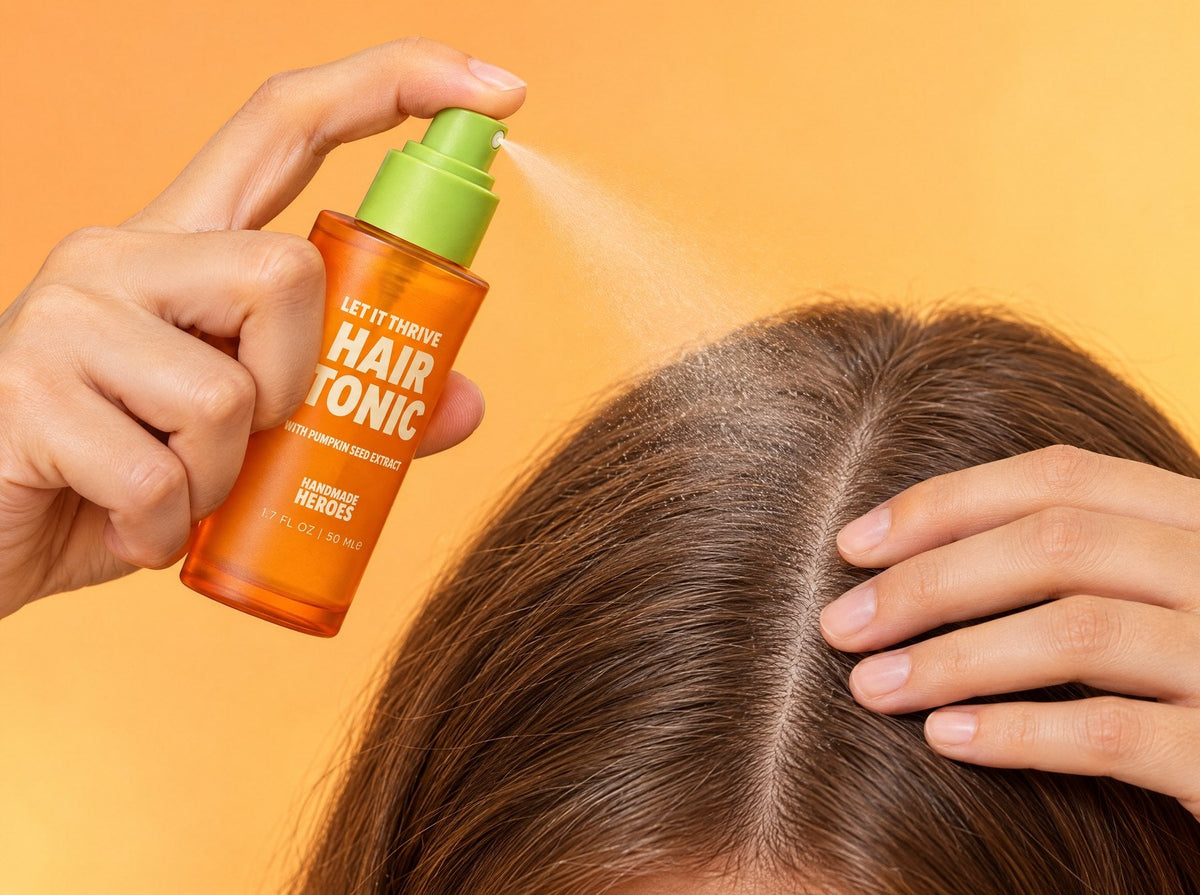
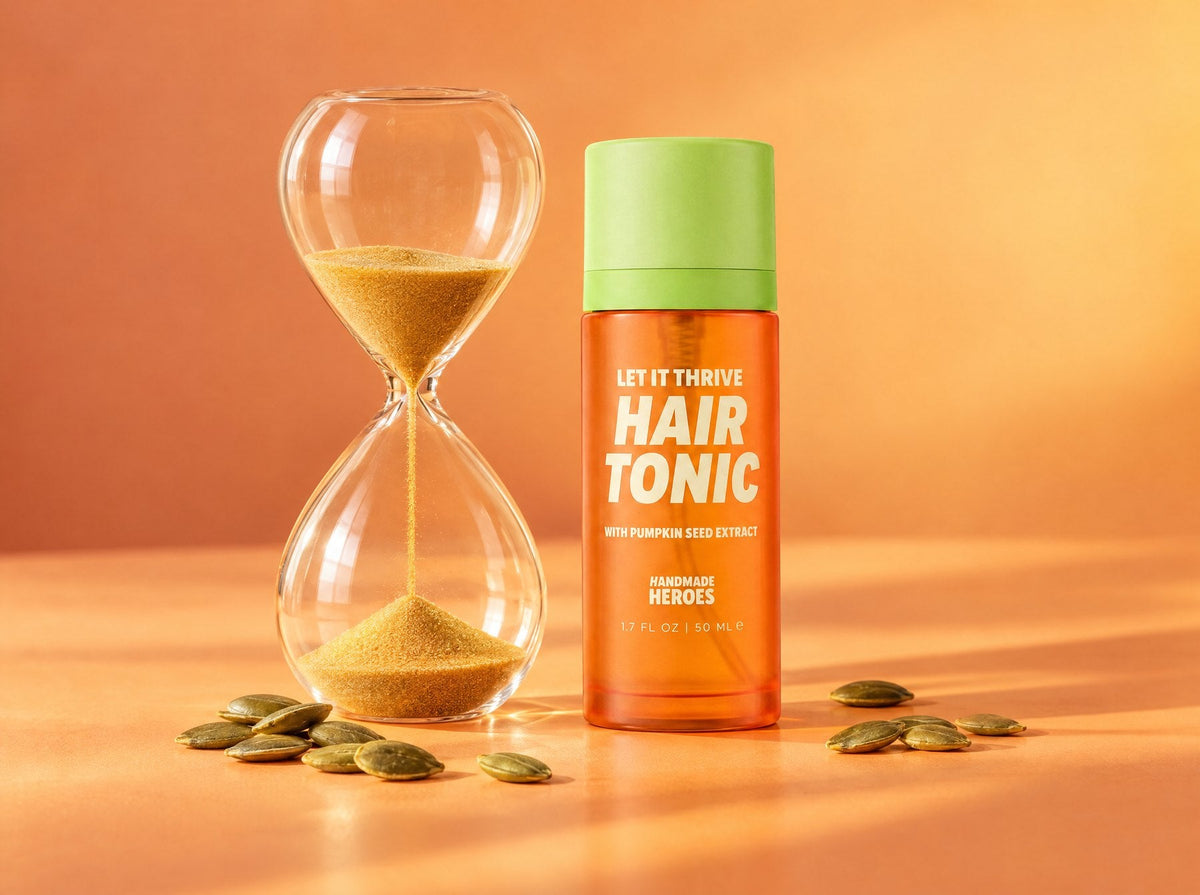
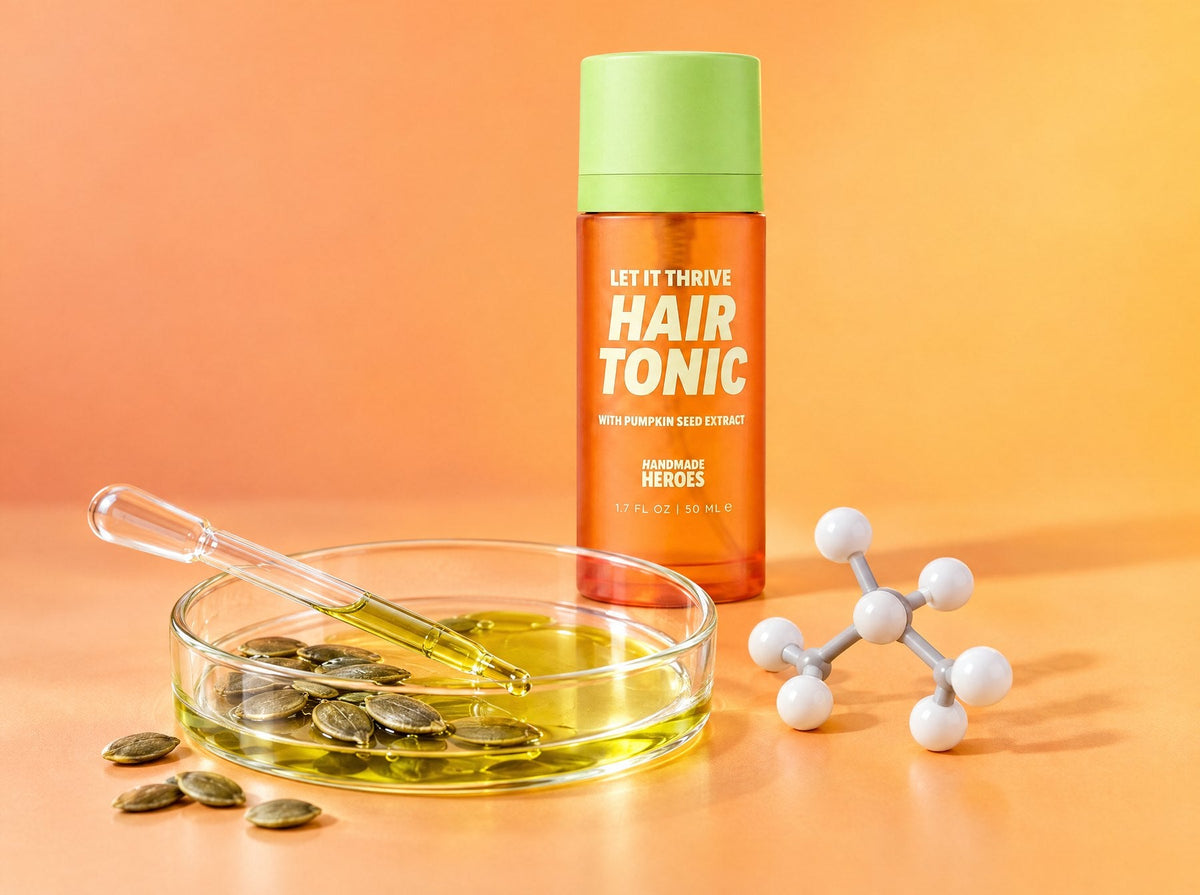
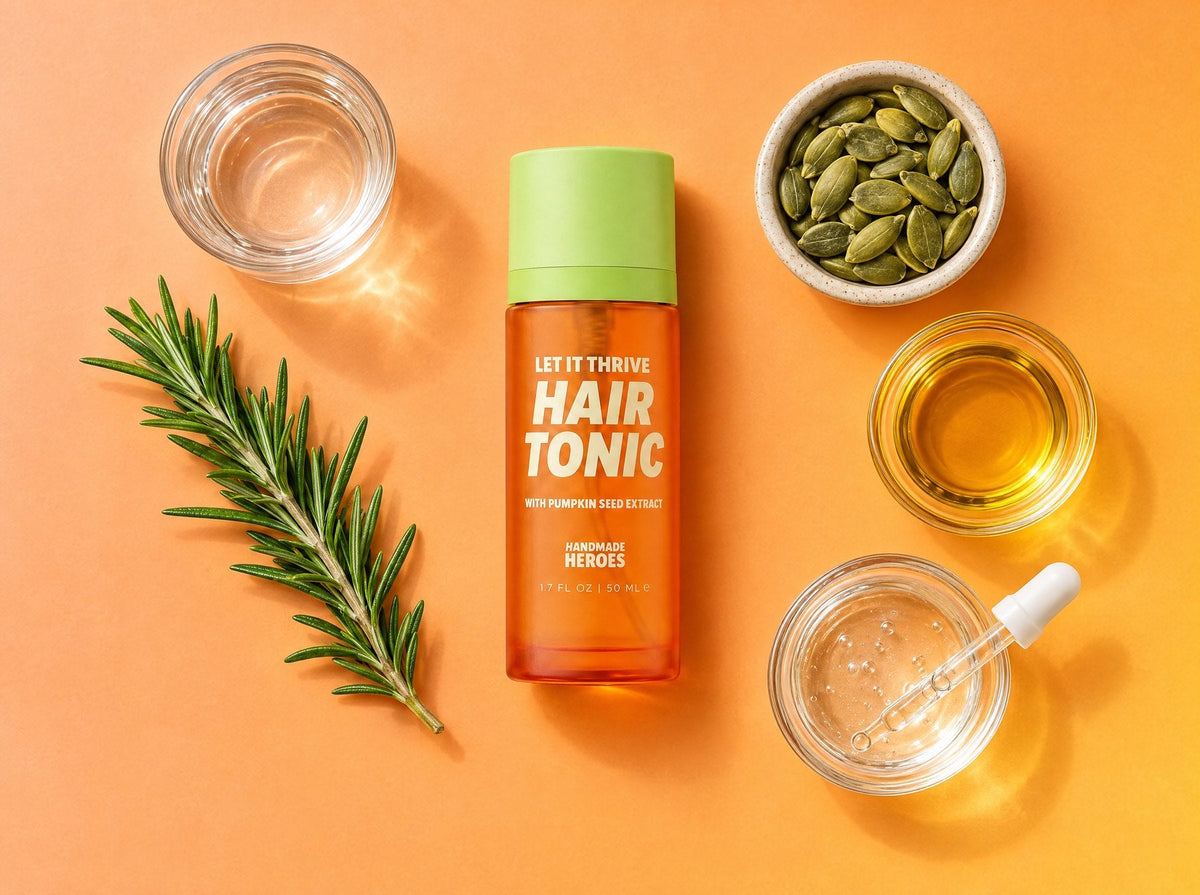
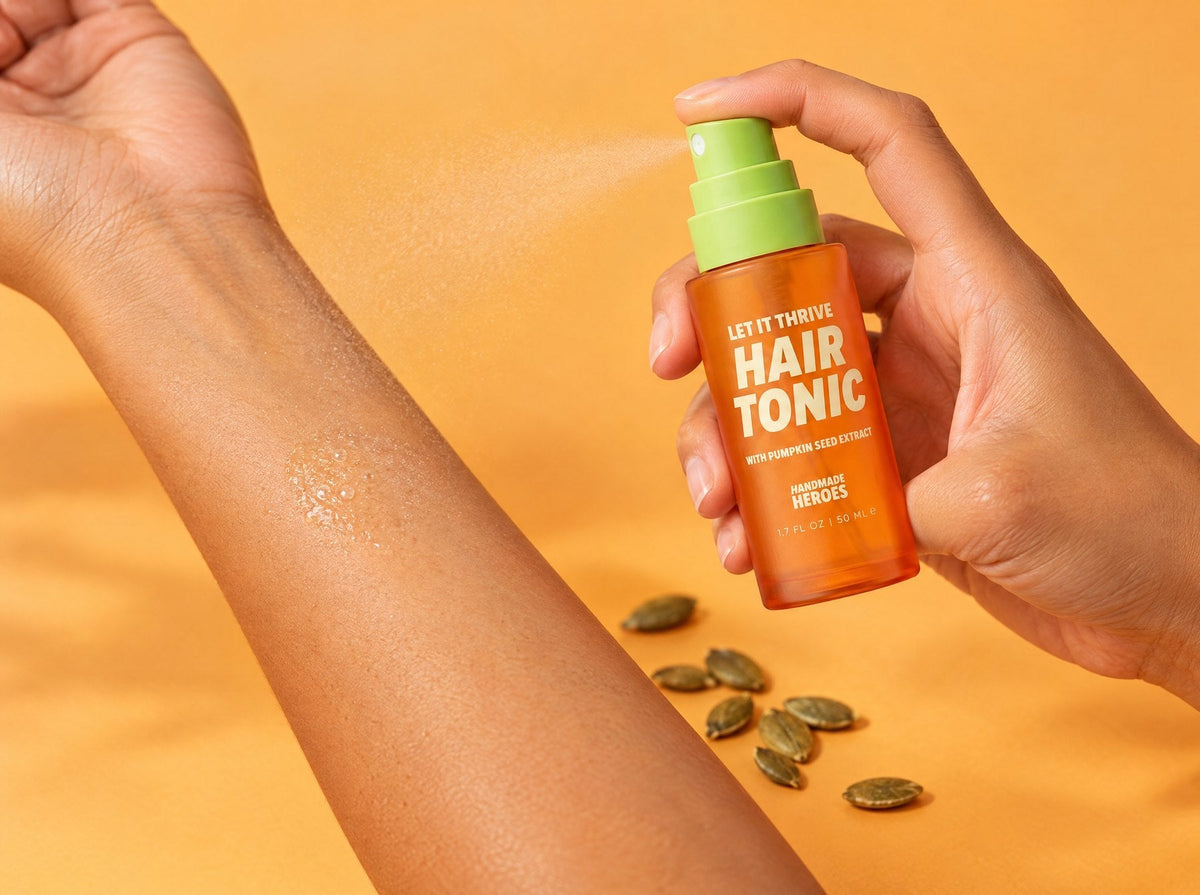
Our Let It Thrive Hair Tonic is a cosmetic, which makes it a different kind of product from minoxidil, and it contains no minoxidil, no prostaglandins and no biotin, so you're not doubling up on drug ingredients (here's why we left those out). It's a lightweight leave-in spray with pumpkin seed extract (listed on the label as Cucurbita pepo (pumpkin) seed oil) and rosemary leaf extract that helps the scalp feel balanced, refreshed and healthy-looking and, with regular use, supports the appearance of fuller, thicker-looking hair. It absorbs fast with no greasy residue and is 100% naturally derived and vegan.
At its time of day, part your hair, spray onto the scalp, massage with your fingertips for 30–60 seconds, and leave it in (more in How to Use a Scalp Tonic).
Honest caveat, because we don't do hype: the pumpkin seed research is why the ingredient is in our formula, not evidence that the tonic adds to minoxidil or finasteride. Our FAQ says it straight: it's a cosmetic conditioning tonic, not a hair-loss treatment.
Ask your dermatologist, then add a gentle scalp step — shop the Let It Thrive Hair Tonic.
When to see a professional
Talk to your dermatologist or prescriber:
- before adding any product to a prescription or over-the-counter hair treatment
- if your scalp becomes red, itchy, irritated or painful
- if you have heart disease, or are pregnant or breastfeeding; minoxidil's labels say to ask a doctor first with heart disease and that it may be harmful in pregnancy or breastfeeding
- if hair loss is sudden or patchy, which can be alopecia areata, or your scalp looks scarred
- if thinning comes with fatigue or irregular periods, which can point to thyroid problems, iron deficiency or PCOS, or began after a new medication
Using a Tonic With Minoxidil or Finasteride FAQ
Can I use a scalp tonic right after minoxidil?
Minoxidil goes on a dry scalp (American Academy of Dermatology), and its labels don't give a waiting time for other products. The cautious approach is to use a cosmetic tonic at a different time of day and to agree on the plan with your dermatologist.
Can you use rosemary with minoxidil?
Rosemary oil has been compared with minoxidil, not combined with it (Panahi et al., 2015), so there's no data on using both. Our tonic contains rosemary leaf extract rather than rosemary oil; ask your dermatologist before layering any rosemary product with minoxidil.
Should I stop minoxidil if I start a natural tonic?
No. Minoxidil's labels say continued use is necessary, or hair loss will begin again (women's 5% foam label). A cosmetic tonic isn't a replacement for it.
Is it safe to use a pumpkin seed tonic while taking finasteride?
The combination hasn't been studied. Finasteride is a prescription pill with its own side effects (American Academy of Dermatology), so tell your prescriber about every product and supplement you use.
Sources
- U.S. National Library of Medicine (2024). Women's 5% minoxidil topical aerosol foam: Drug Facts label. DailyMed. DailyMed
- U.S. National Library of Medicine (2024). Men's 5% minoxidil topical solution: Drug Facts label. DailyMed. DailyMed
- U.S. National Library of Medicine (2024). Women's 2% minoxidil topical solution: Drug Facts label. DailyMed. DailyMed
- American Academy of Dermatology (2022). Thinning hair and hair loss: could it be female pattern hair loss? AAD.org. aad.org
- American Academy of Dermatology. What is male pattern hair loss, and can it be treated? AAD.org. aad.org
- Zito PM, Bistas KG, Patel P, Syed K (2024). Finasteride. StatPearls. PubMed 30020701
- Panahi Y, Taghizadeh M, Marzony ET, Sahebkar A (2015). Rosemary oil vs minoxidil 2% for the treatment of androgenetic alopecia: a randomized comparative trial. Skinmed. PubMed 25842469
- Ibrahim IM, Hasan MS, Elsabaa KI, Elsaie ML (2021). Pumpkin seed oil vs. minoxidil 5% topical foam for the treatment of female pattern hair loss: A randomized comparative trial. Journal of Cosmetic Dermatology. PubMed 33544448
- Gupta AK, Wang H, Wang T, Talukder M (2025). Do Non-Prescription Products Help in Managing Androgenic Alopecia? Skin Appendage Disorders. PMC12136554
Real ingredients. Real results.



Leave a comment
This site is protected by hCaptcha and the hCaptcha Privacy Policy and Terms of Service apply.