
TL;DR: Crash diets and big nutrient gaps — too little food, protein, or iron — can push hair into shedding a couple of months later. Eat enough, eat balanced, be gentle with your scalp, and get your levels checked if it persists. While your nutrition does the real work, a simple daily scalp habit is an easy win in your control.
The diet–hair connection, honestly
Hair is one of the first things your body deprioritizes when resources run low. A very low-calorie or crash diet, rapid weight loss, or months of skimping on protein and iron can tip more hair into its resting-then-shedding phase — again, usually surfacing a couple of months after the change, which makes the link easy to miss. A review of diet and hair loss notes that nutritional deficiency can affect hair structure and growth, and that correcting a documented deficiency is the appropriate fix (Guo & Katta, 2017). Iron is a common culprit: low ferritin (the body’s iron store) is associated with telogen effluvium in women across a number of studies (serum ferritin & telogen effluvium). For most people it’s reversible once eating steadies.
What actually helps
- Eat enough, eat balanced. Protein, iron-rich foods, and simply enough fuel matter more for your hair than any product (Guo & Katta, 2017).
- Go slow with weight goals. Gradual beats crash — your hair (and the rest of you) prefers it.
- Don’t supplement blindly. That same review warns that supplementing without a documented deficiency may not help — and some supplements carry their own risks — so test, don’t guess (Guo & Katta, 2017).
- Support the scalp with a gentle routine while things rebalance.
The 10-second daily habit that's completely in your control
Here's the good news: while your eating gets back on track and your body catches up, you don't have to just watch the shower drain and hope. A little daily attention to your scalp is the one move that's entirely up to you — and doing something feels a whole lot better than doing nothing.
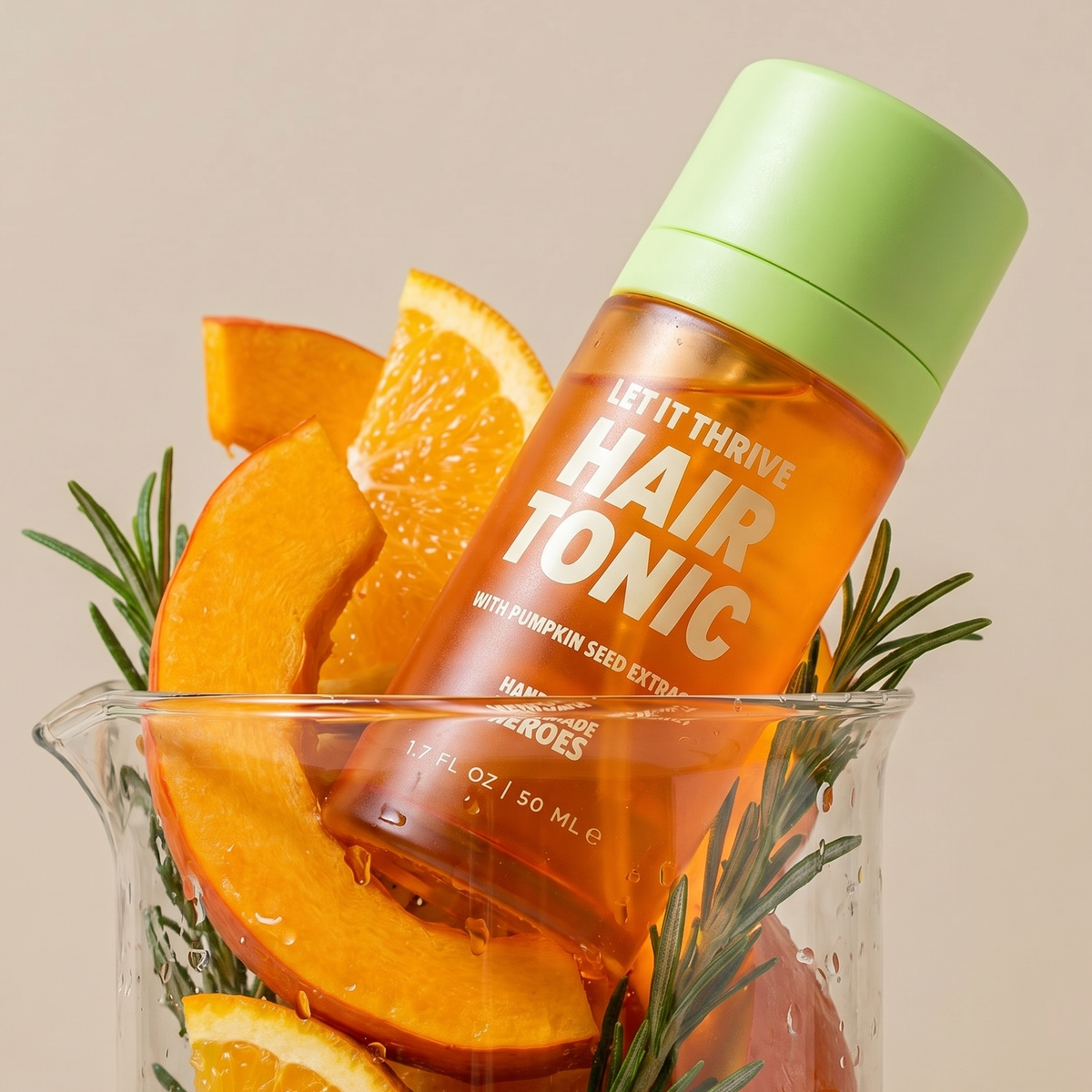
That's exactly what our Let It Thrive Hair Tonic is made for. It's a lightweight, leave-in scalp tonic built on rosemary and pumpkin seed extract — two of the most-researched botanicals in scalp care — that supports a healthy-looking scalp and the appearance of fuller, thicker-looking hair, with no prostaglandins and no biotin. One spray, a 30-second massage, done.
Why those two botanicals? Rosemary performed comparably to 2% minoxidil for pattern hair loss in a 2015 randomized trial (Panahi et al.), and oral pumpkin seed oil raised hair count versus placebo in 2014 (Cho et al.). Honest caveat, because we don't do hype: those studies were on pattern hair loss — so they're why we chose these ingredients, not a promise to fix diet-related shedding. It won't replace eating well; nothing will.
If you're going to build one small ritual while your nutrition does the real work, make it the easy one. Give your scalp its daily 10 seconds — shop the Let It Thrive Hair Tonic. More in the hair range.
When to see a professional
If you’re shedding noticeably, feeling unusually tired, or the thinning continues, ask your doctor to check things like iron (ferritin) and thyroid — nutrient deficiencies are common and very fixable, but worth confirming rather than guessing (ferritin & telogen effluvium).
Diet & hair FAQ
Does dieting really cause thinning? Very restrictive diets and rapid weight loss can, by tipping hair into its shedding phase and through nutrient gaps; balanced eating usually lets it recover (Guo & Katta, 2017).
Which nutrients matter most for hair? Enough overall fuel, protein, and iron are the big ones — a doctor can test ferritin and more if you’re unsure.
Can a scalp tonic help while I sort my diet? It supports a healthy-looking scalp and the look of fuller hair as part of a gentle routine; it’s cosmetic support, not a cure.
(General information, not medical advice.)
Sources
- Guo & Katta, Dermatol Pract Concept 2017 — Diet and hair loss. dpcj.org
- Serum ferritin & telogen effluvium. PMC7882421
- Panahi et al., Skinmed 2015. reference · Cho et al., 2014. PMC4017725
Real ingredients. Real results.


Leave a comment
This site is protected by hCaptcha and the hCaptcha Privacy Policy and Terms of Service apply.