





TL;DR: Pumpkin seed oil has barely been studied in women: one three-month trial of 60 women comparing it with minoxidil foam, plus two mixed-sex studies of a scalp serum and a multi-ingredient supplement. The results lean hopeful, but none tests pumpkin seed oil on its own against a placebo in women. Thinning in women has several possible causes, and some of them need a doctor before they need a serum.
Maybe your part looks wider in photos than it used to. Maybe your ponytail feels thinner in your hand, or the shower drain is busier than it was last year. Search for gentle, natural options and pumpkin seed oil comes up fast.
Fair question, then: has it actually been tested in women? A little. Below is every study we could find that includes women, how much weight each one can carry, and what's worth checking before you pin your hopes on any bottle, ours included.
This article is general information, not medical advice. For sudden, patchy or persistent hair loss, see a board-certified dermatologist.
How does thinning usually show up in women?
Female pattern hair loss is the most common cause of hair loss in women. For most, it begins in midlife — in the 40s, 50s or 60s — though it can start earlier, and the classic early sign is a part that gets wider (American Academy of Dermatology). Unlike men, women usually keep their frontal hairline, with thinning spread across the top of the head (Ho et al., 2024). An expert task force describes two typical patterns: thinning that widens out from the middle of the scalp, and thinning concentrated toward the front in a "Christmas tree" shape along the part (Carmina et al., 2019).
Here's a detail that matters for pumpkin seed oil. Much of the interest in it comes from the idea that it acts on DHT, the hormone that drives male pattern hair loss. But in clinical trials, finasteride, a drug that lowers DHT and helps many men, didn't improve hair in postmenopausal women with female pattern hair loss, which suggests the two conditions don't work the same way (Kaufman, 2002). So a DHT explanation borrowed from men's studies may not carry over neatly to women. We dig into that question in Does Pumpkin Seed Oil Block DHT?
Has pumpkin seed oil actually been studied in women?
Three studies include women. They're very different from one another, so here they are one at a time. (For the full research picture, including the studies in men, see our pumpkin seed oil explainer.)
The topical trial: 60 women, three months
In a randomized comparative trial, 30 women with female pattern hair loss applied pumpkin seed oil to the scalp and 30 used 5% minoxidil foam for three months (Ibrahim et al., 2021). On dermoscopy, the pumpkin seed oil group's hair shaft diversity, a measure of the mix of thick and fine hairs typical of pattern thinning, fell from 30.5% to 24.0%. Fine vellus hairs decreased and short, upright new hairs increased. The minoxidil group improved on the same measures. It's the most relevant study for women, but it's small and short, and with no placebo group it can't separate the oil's effect from ordinary ups and downs. (Full breakdown in Pumpkin Seed Oil vs. Minoxidil.)
The scalp serum study: 42 adults, eight weeks
Researchers built a serum around pumpkin seed oil packaged in niosomes (tiny carrier vesicles) and had 42 adults, 20 men and 22 women, use it twice a day for eight weeks (Teeranachaideekul et al., 2022). In a 60-second combing test, the number of hairs that fell out dropped by 44.42% compared with each person's starting count. In a smaller group of eight (four men and four women), the ratio of growing to resting hairs rose 1.4-fold. There was no comparison group, though, so we can't tell how much of that change came from the serum.
The supplement trial: 80 men and women, six months
This randomized, double-blind, placebo-controlled trial tested a daily capsule containing L-cystine, saw palmetto, Cucurbita pepo (pumpkin), pygeum, vitamins and minerals in 80 men and women with chronic telogen effluvium or pattern hair loss (Piquero-Casals et al., 2025). After six months, hair density in the supplement group had risen by 12.3 hairs per square centimeter from the start, a change that was statistically significant compared with placebo. Two big caveats: pumpkin was one ingredient among many, so its share of any effect is unknowable, and several authors declared employment by, or consulting for, the company ISDIN.
And the study people cite most often, 76 men taking pumpkin seed oil capsules for 24 weeks (Cho et al., 2014), didn't include any women at all.
What the research can't tell you yet
- No women-only, placebo-controlled trial of pumpkin seed oil on its own exists yet, as far as we could find.
- Small numbers: the largest study that included women had 80 people, and only one of the three was women-only.
- Short timelines: eight weeks to six months, when hair changes slowly.
- Different forms: oil on the scalp, a niosome serum and a multi-ingredient capsule aren't interchangeable, so a result from one doesn't automatically carry over to another.
"We don't know yet" is the honest summary. Encouraging, not settled.
Thinning in women isn't always pattern thinning
Before you judge any product, it helps to know which kind of hair loss you're dealing with. Several of the most common causes in women have nothing to do with genetics:
- Shedding after a shock to the system. Telogen effluvium is a burst of excess shedding triggered by things like childbirth, a high fever, surgery, crash dieting, low protein intake, iron deficiency, an underactive thyroid or stopping estrogen-containing medication. Some medicines, including beta-blockers, retinoids and anticoagulants, are known triggers too (Hughes et al., 2024). Our guide to shedding vs. hair loss explains the difference.
- Low iron stores. In a meta-analysis of 36 studies with 10,029 participants, about one in five women with non-scarring hair loss (21%) had very low ferritin, the body's iron store, and on average their ferritin was lower than in women without hair loss (Treister-Goltzman et al., 2022).
- Thyroid problems. Both an overactive and an underactive thyroid can cause widespread shedding (Hussein et al., 2023).
- Hormonal conditions. The same expert task force recommends checking every woman with female pattern hair loss for androgen excess, such as PCOS, and suggests testing iron, zinc, vitamin D, thyroid hormones and prolactin (Carmina et al., 2019). More in our guides to PCOS and thinning hair and menopause and thinning hair.
A gentle scalp step while you work out the why
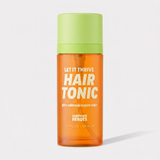
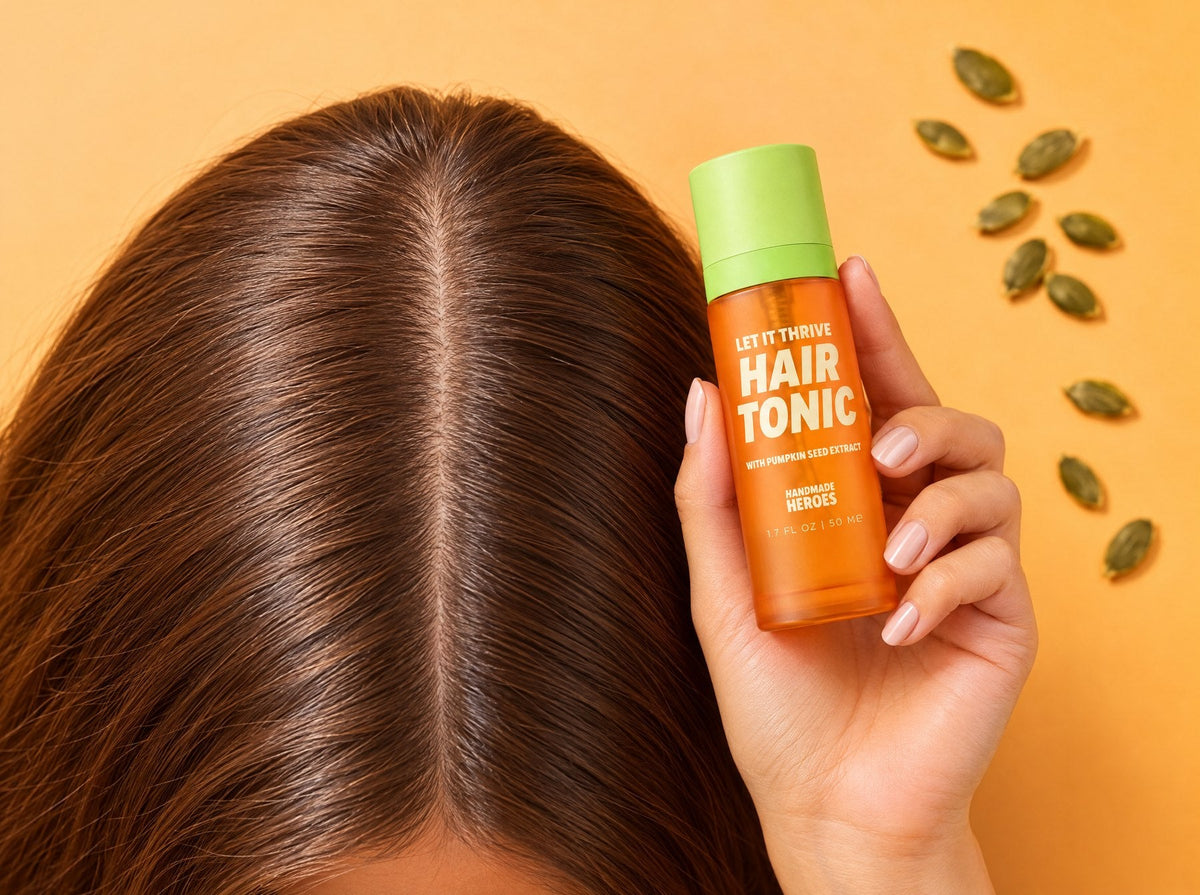
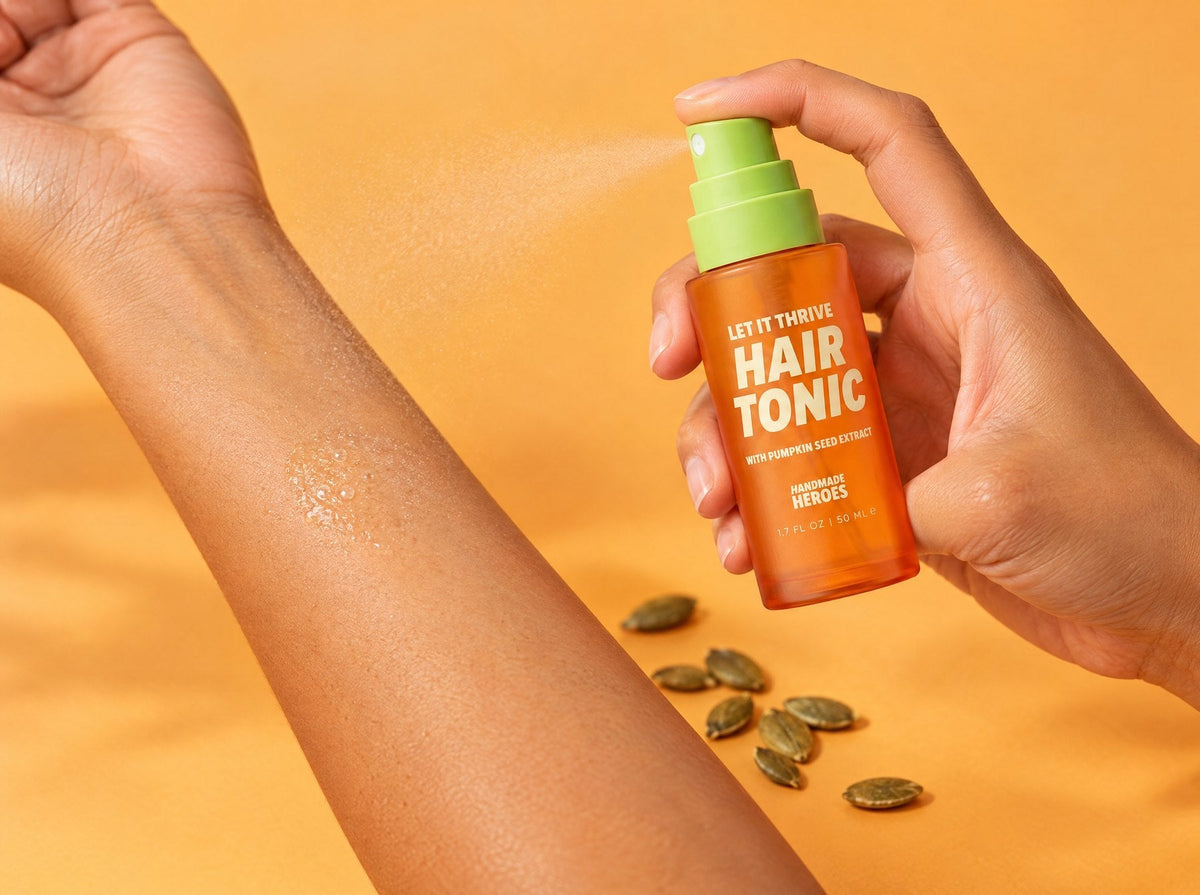
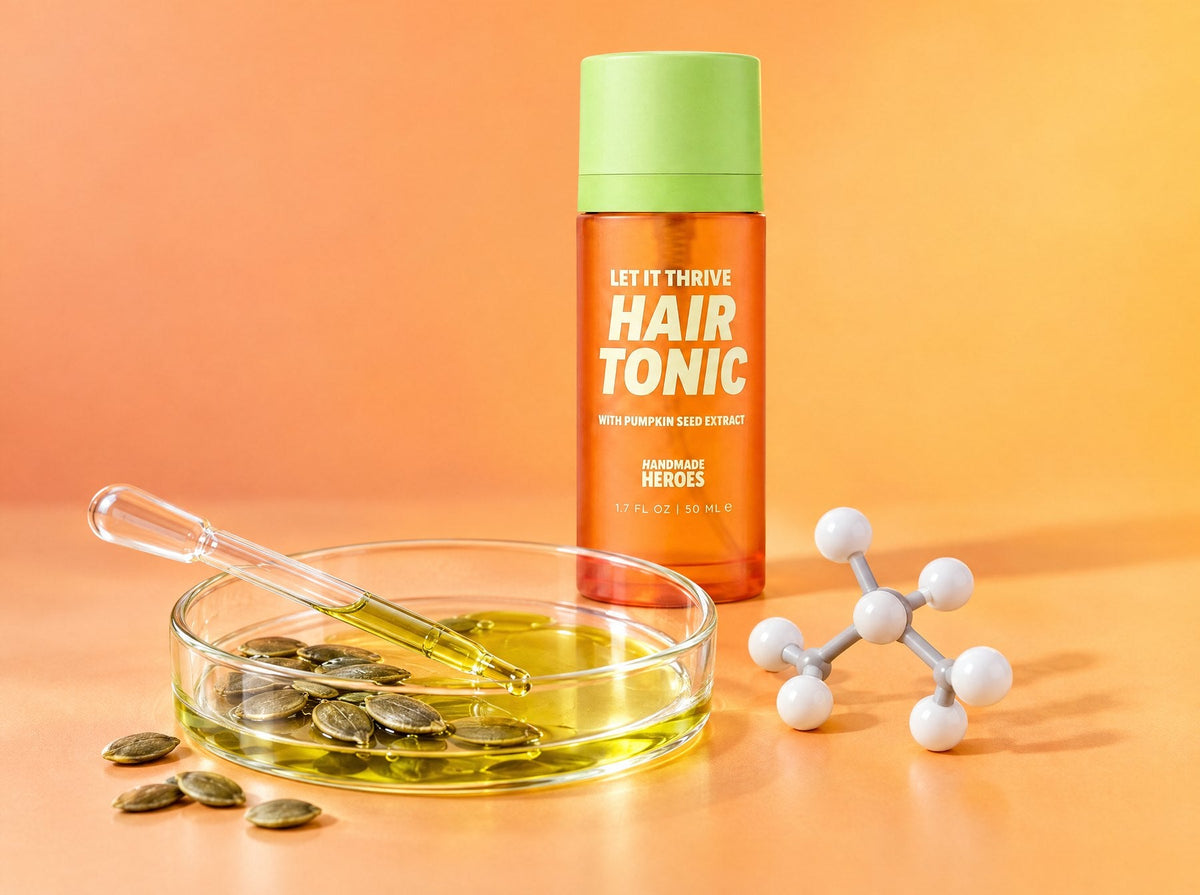
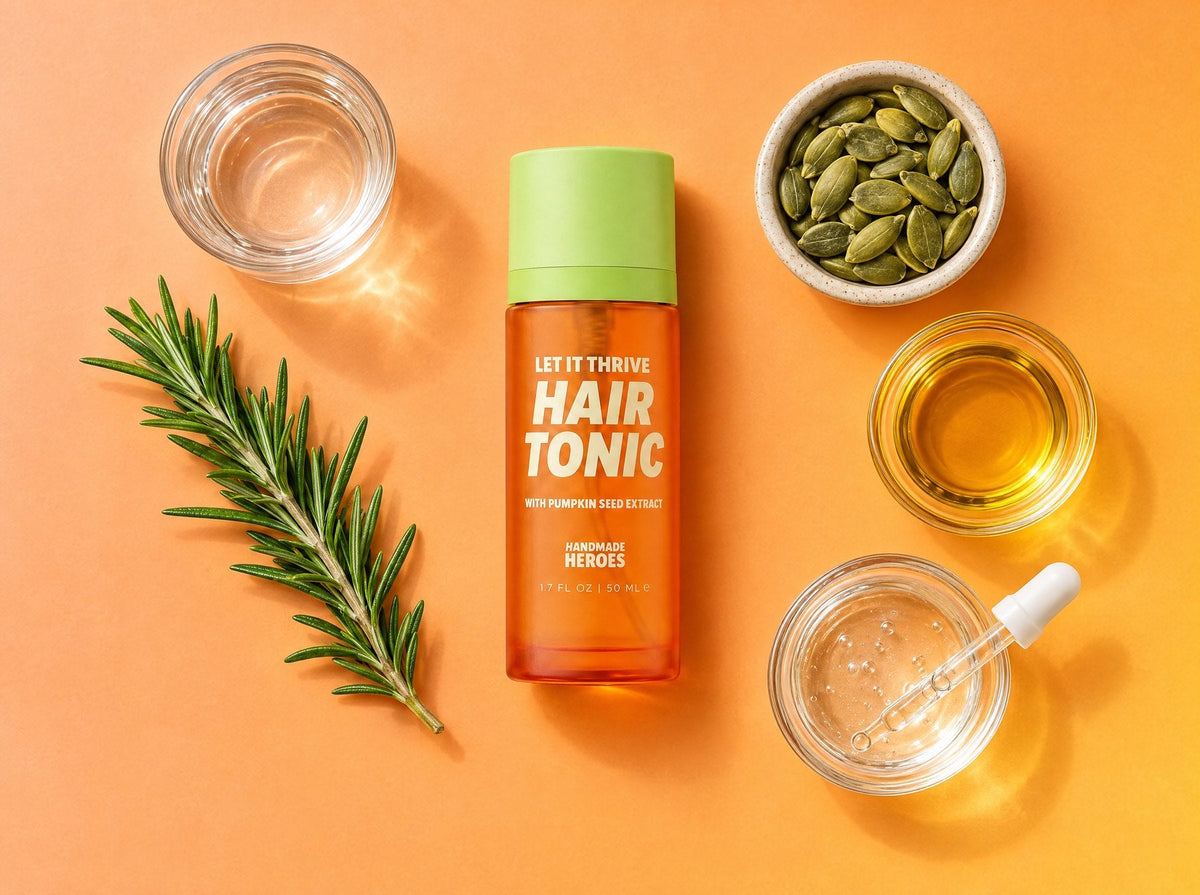
If you've ruled out the medical causes, or you're working through them with your doctor, and you'd like something simple and kind for your scalp, that's the job our Let It Thrive Hair Tonic was made for. It's a water-light leave-in spray with pumpkin seed extract (listed on the label as Cucurbita pepo (pumpkin) seed oil) and rosemary leaf extract. It helps the scalp feel balanced, refreshed and healthy-looking, and with regular use it supports the appearance of fuller, thicker-looking hair. It absorbs fast with no greasy residue, so there's no oily film sitting at your roots. It's 100% naturally derived and vegan, with no minoxidil, no prostaglandins and no biotin.
To use it, part your hair, spray the tonic directly onto your scalp or the area you're focusing on, and massage with your fingertips for 30–60 seconds. Don't rinse; style as usual. Once a day, morning or night, is the whole routine.
Honest caveat, because we don't do hype: the studies above are why pumpkin seed made it into our formula, not proof that a cosmetic tonic will do what a three-month oil trial or a six-month supplement trial reported. Our own FAQ says it plainly: it's a cosmetic conditioning tonic, not a hair-loss treatment.
Start a gentler scalp routine — shop the Let It Thrive Hair Tonic.
When to see a professional
See a board-certified dermatologist or your doctor if you notice:
- sudden or patchy hair loss (alopecia areata is one cause)
- a scalp that hurts, burns or looks scarred
- irregular periods, new acne or extra facial hair alongside thinning, which can point to PCOS or another hormonal condition
- fatigue or other new symptoms that could go with thyroid problems or iron deficiency
- shedding that began after starting or stopping a medication, including birth control (don't change prescribed medicine without your doctor)
- postpartum shedding that hasn't settled; the AAD notes hair tends to regain its normal fullness within six to nine months (American Academy of Dermatology), and our postpartum shedding guide covers the details
If you're pregnant or breastfeeding, check with your doctor before starting any new hair product or supplement.
Pumpkin Seed Oil for Women FAQ
Does pumpkin seed oil work for female hair loss?
It hasn't been proven. The only women-only trial found improvements over three months on scalp-microscope measures, but it had 60 participants and no placebo group (Ibrahim et al., 2021). Treat it as an early, promising lead rather than a treatment.
Is pumpkin seed oil safe during pregnancy or breastfeeding?
We couldn't find any studies of pumpkin seed oil for hair in pregnant or breastfeeding women, so there's no safety data either way. Talk to your doctor before starting any new scalp product or supplement during pregnancy or while nursing. The AAD also advises avoiding minoxidil during this time (American Academy of Dermatology).
Should women take pumpkin seed oil capsules for thinning hair?
The placebo-controlled capsule trial included only men (Cho et al., 2014), and the mixed-sex supplement trial combined pumpkin with several other ingredients (Piquero-Casals et al., 2025). Check with your doctor first, especially if you take other medicines, and ask about blood tests for iron and thyroid.
Why does my part look wider?
A widening part is the classic early sign of female pattern hair loss (American Academy of Dermatology), but heavy shedding can make a part look wider too. A dermatologist can tell the two apart, often with a quick scalp exam.
Sources
- Ibrahim IM, Hasan MS, Elsabaa KI, Elsaie ML (2021). Pumpkin seed oil vs. minoxidil 5% topical foam for the treatment of female pattern hair loss: A randomized comparative trial. Journal of Cosmetic Dermatology. PubMed 33544448
- Teeranachaideekul V, Parichatikanond W, Junyaprasert VB, Morakul B (2022). Pumpkin Seed Oil-Loaded Niosomes for Topical Application: 5α-Reductase Inhibitory, Anti-Inflammatory, and In Vivo Anti-Hair Loss Effects. Pharmaceuticals. PMC9412580
- Piquero-Casals J, Saceda-Corralo D, Aladren S, Bustos J, Fernández-Botello A, Navasa A, et al. (2025). Oral Supplementation with l-Cystine, Serenoa repens, Cucurbita pepo, and Pygeum africanum in Chronic Telogen Effluvium and Androgenetic Alopecia: A Double-Blind, Placebo-Controlled, Randomized Clinical Study. Skin Appendage Disorders. PMC11793890
- Cho YH, Lee SY, Jeong DW, Choi EJ, Kim YJ, Lee JG, et al. (2014). Effect of pumpkin seed oil on hair growth in men with androgenetic alopecia: a randomized, double-blind, placebo-controlled trial. Evidence-Based Complementary and Alternative Medicine. PMC4017725
- Kaufman KD (2002). Androgens and alopecia. Molecular and Cellular Endocrinology. PubMed 12573818
- Carmina E, Azziz R, Bergfeld W, Escobar-Morreale HF, Futterweit W, Huddleston H, et al. (2019). Female Pattern Hair Loss and Androgen Excess: A Report From the Multidisciplinary Androgen Excess and PCOS Committee. Journal of Clinical Endocrinology & Metabolism. PubMed 30785992
- Ho CH, Sood T, Zito PM (2024). Androgenetic alopecia. StatPearls. NCBI Bookshelf NBK430924
- Hughes EC, Syed HA, Saleh D (2024). Telogen effluvium. StatPearls. NCBI Bookshelf NBK430848
- Treister-Goltzman Y, Yarza S, Peleg R (2022). Iron Deficiency and Nonscarring Alopecia in Women: Systematic Review and Meta-Analysis. Skin Appendage Disorders. PMC8928181
- Hussein RS, Atia T, Bin Dayel S (2023). Impact of Thyroid Dysfunction on Hair Disorders. Cureus. PMC10492440
- American Academy of Dermatology (2022). Thinning hair and hair loss: could it be female pattern hair loss? AAD.org. aad.org
- American Academy of Dermatology (n.d.). Do you have hair loss or hair shedding? AAD.org. aad.org
Real ingredients. Real results.



Leave a comment
This site is protected by hCaptcha and the hCaptcha Privacy Policy and Terms of Service apply.