
TL;DR: Most lash serums that promise dramatic length rely on prostaglandin analogs — the same drug class as prescription Latisse. They can work, but they carry documented, sometimes permanent side effects: darkened eyelids, sunken-looking eyes, even a permanent change in eye color. Here’s what the research and regulators actually say, how to spot prostaglandins on a label, and the gentler, prostaglandin-free route. The good news: caring for the lashes you have doesn’t require any of those trade-offs. (General information, not medical advice — see an eye doctor about anything affecting your eyes.)
First — what is a prostaglandin lash serum?
Here’s the tea: a lot of “lash growth” serums work through prostaglandin analogs — lab-made molecules that act on your lash cycle to extend its growing phase, so lashes look longer and fuller over time. The best-known is bimatoprost, the active in prescription Latisse (originally a glaucoma eye-drop, where people noticed their lashes growing as a side effect). Over-the-counter serums often use a cousin called isopropyl cloprostenate and other “-prost” analogs. They’re genuinely effective, which is exactly why they’re everywhere — but they’re working like a drug, and drugs have trade-offs.
The side effects worth knowing about
These aren’t internet rumors — they’re on the FDA-approved label and in the ophthalmology literature. Not everyone experiences them, but they’re well documented:
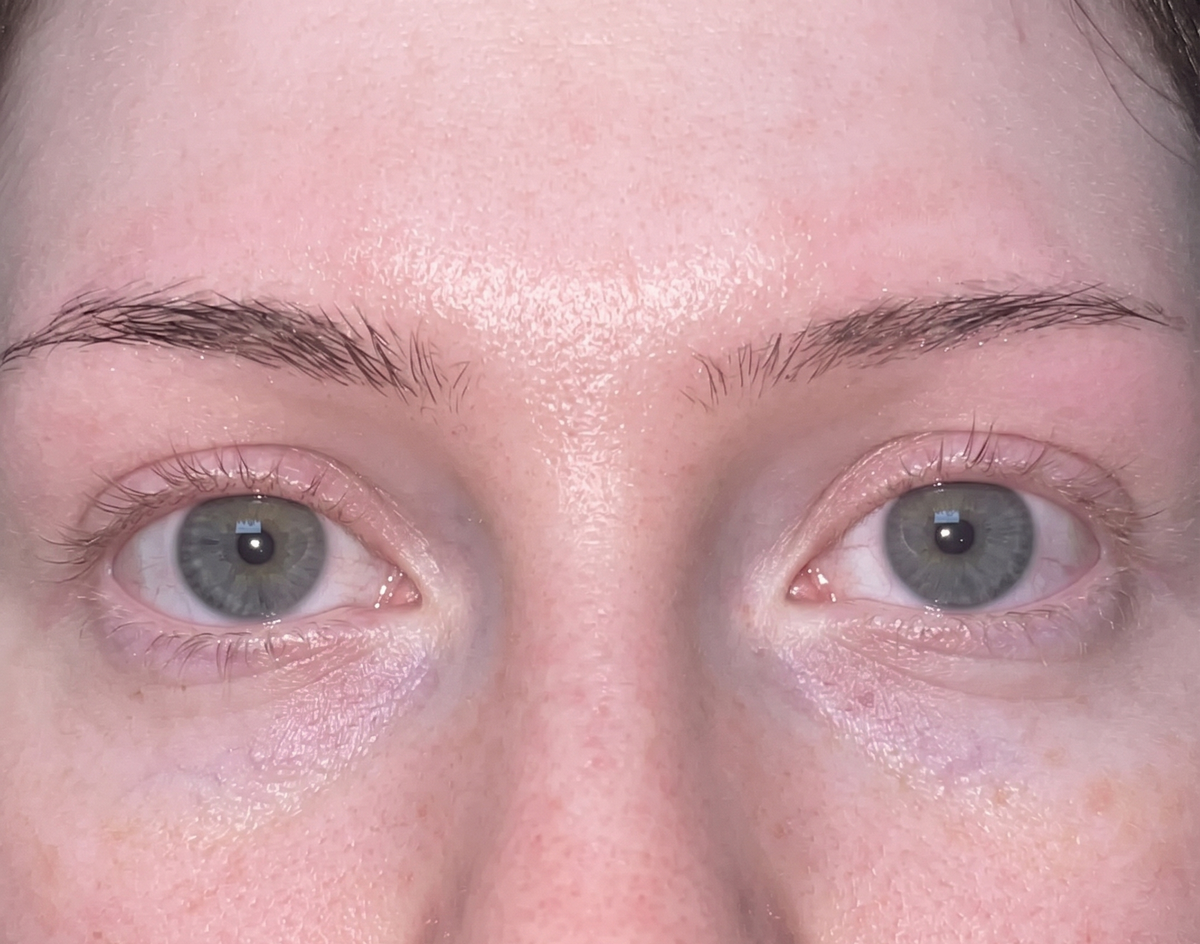
- Permanent eye-color change. Prostaglandins can increase brown pigment in the iris, and the FDA states this darkening is likely permanent. The risk is highest for hazel, green and mixed-color eyes (FDA Latisse prescribing information).
- Sunken-looking eyes (prostaglandin-associated periorbitopathy). The same drug class is linked to fat loss around the eye — a deepening eyelid crease, a hollowed look and the eye sitting further back. Ophthalmologists have a name for it: prostaglandin-associated periorbitopathy (PAP), reported in more than 10% of people using bimatoprost. It’s often partially reversible after stopping, but not always fully (AAO EyeWiki: PAP; Kucukevcilioglu et al., 2014; FDA Latisse label).
- Darkened eyelid skin (hyperpigmentation), often right along the lash line where you apply it — usually reversible, not always.
- Red, itchy, dry or irritated eyes, and in some cases eyelid drooping.
And it’s not only the prescription version. In 2026 the EU’s Scientific Committee on Consumer Safety (SCCS) reviewed the cosmetic prostaglandin analog isopropyl cloprostenate (and two relatives) and concluded they cannot be considered safe for use in cosmetic products marketed for eyelash and eyebrow growth (Opinion SCCS/1680/25). That’s a regulator looking at the over-the-counter ingredient, not the prescription drug.
How to spot a prostaglandin on the label
If you’d rather steer clear, scan the ingredient list — the tell is usually “-prost” or “-cloprostenate”:
- Bimatoprost
- Isopropyl cloprostenate
- Dechloro dihydroxy difluoro ethylcloprostenolamide (DDDE)
- Methylamido dihydro noralfaprostal (MDN), and other “-prost” / “-amide” prostaglandin cousins
None of these are cartoon villains — they work — but if the side-effect list gives you pause, you’ll want a serum that simply doesn’t use them.
The gentler way to care for the lashes you already have
Here’s the good news: you don’t have to choose between doing nothing and risking a permanently different eye. A little daily attention to the lashes you already have is completely in your control — and doing something feels a whole lot better than gambling on side effects.
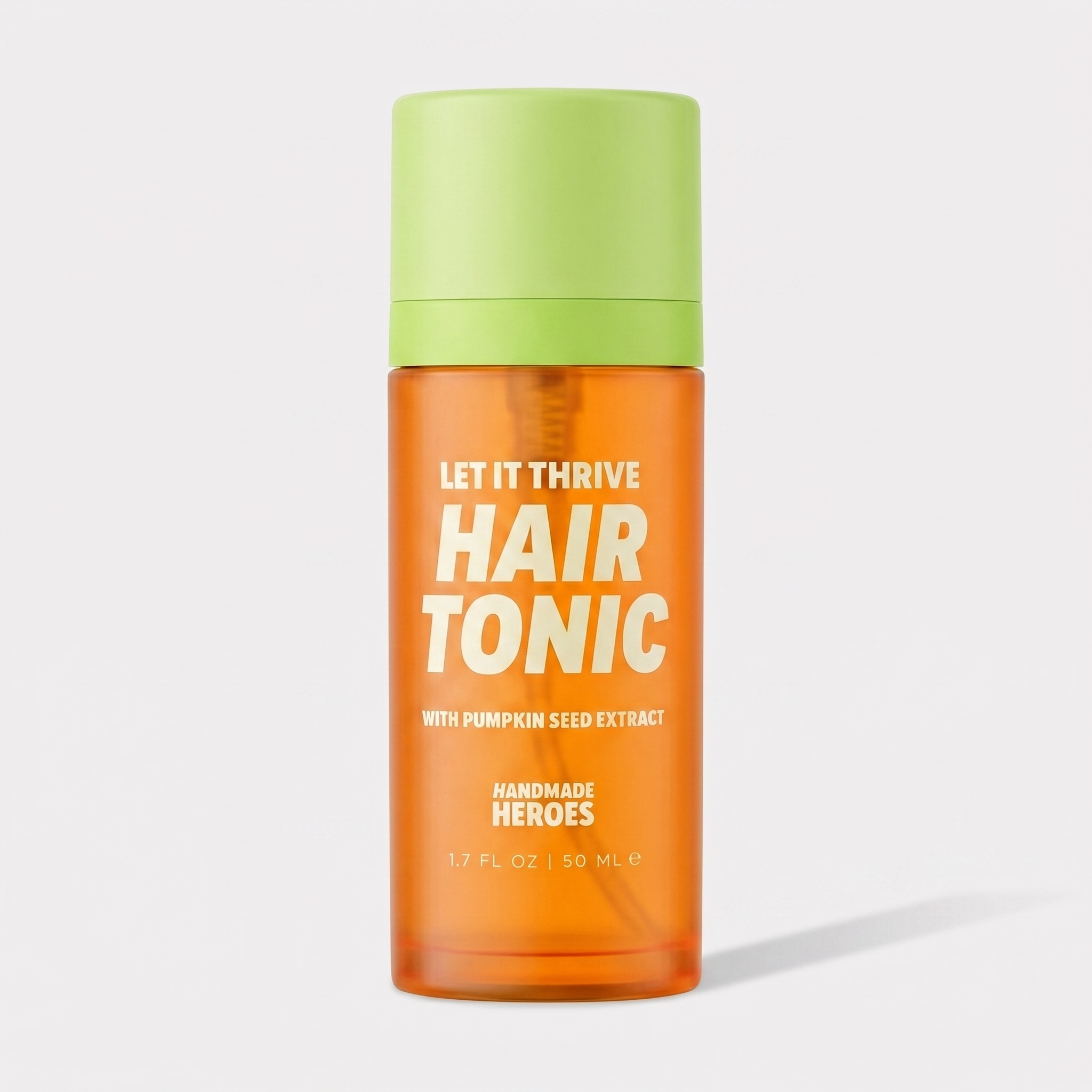
That’s exactly what our Let It Thrive Eyelash Serum is made for. It’s a cosmetic conditioning serum built on pumpkin seed extract and rosemary — two of the most-studied botanicals in hair and scalp care — that conditions lashes and supports the appearance of fuller, healthier-looking lashes, with no prostaglandins and no biotin. Sweep it along the lash line morning and night, and it becomes as easy as any other step in your routine.
Why these ingredients? Pumpkin seed and rosemary are among the most-studied botanicals in hair and scalp care — honest caveat, because we don’t do hype: that research is mostly on scalp hair, not lashes specifically, so treat it as why we like these botanicals, not a lash-growth promise. It’s supportive, cosmetic lash care; it won’t replace a prescription route if that’s genuinely what you’re after.
If the side-effect list above gave you pause, this is the daily habit that doesn’t ask you to take that risk. Shop the Let It Thrive Eyelash Serum, or browse the full face range. For realistic expectations on what a conditioning serum can and can’t do, read do natural lash serums actually work?
When to see an eye doctor
Whatever you’re using near your eyes: if you notice redness, irritation, darkening of the lids, a change in your eye color, or anything affecting your vision, stop and see an eye doctor. Eyes aren’t the place to wait and see.
Prostaglandin lash serum FAQ
Do prostaglandin lash serums actually work? For many people, yes — they lengthen and thicken lashes by acting on the lash cycle. The real question is whether the documented side effects are a trade you want to make.
Are the side effects permanent? Some are reversible (eyelid darkening often fades); others — iris color change, and some of the periorbital fat loss — may be permanent or only partially reverse. That’s the part worth weighing.
Is Let It Thrive a prostaglandin serum? No. It’s a prostaglandin-free conditioning serum — cosmetic lash care, not a growth drug.
Will a prostaglandin-free serum give the same dramatic length? Be realistic: a conditioning serum cares for the lashes you have so they look fuller and healthier; it isn’t doing what a prostaglandin drug does. Different tool, different trade-off.
Sources
- FDA — Latisse (bimatoprost) Prescribing Information (iris pigmentation; periorbital changes). accessdata.fda.gov
- AAO EyeWiki — Prostaglandin-Associated Periorbitopathy. eyewiki.org
- Kucukevcilioglu et al., Clin Exp Ophthalmol 2014 — PAP with bimatoprost, latanoprost, travoprost. onlinelibrary.wiley.com
- Cleveland Clinic — “What To Know About the Drug That Grows Thick Eyelashes.” health.clevelandclinic.org
- EU Scientific Committee on Consumer Safety (SCCS) — Opinion SCCS/1680/25 (2026).
Real ingredients. Real results.


Leave a comment
This site is protected by hCaptcha and the hCaptcha Privacy Policy and Terms of Service apply.