
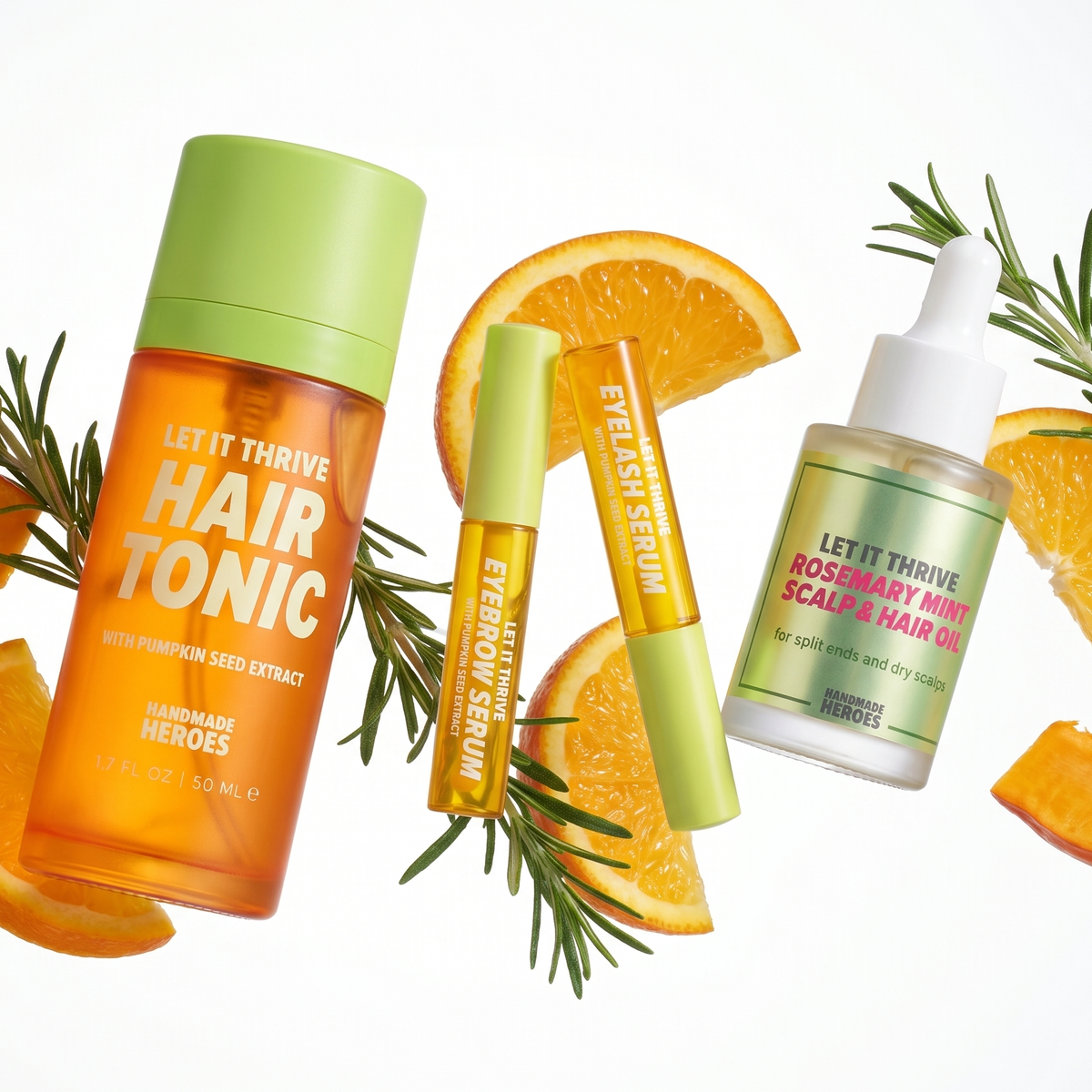
Rosemary oil has had a serious glow-up from pantry staple to scalp serum ingredient. The internet is full of before-and-after videos — but behind the hype, there’s actually some real science worth knowing. Let’s look at what the studies show, what they don’t show, and what that means for your routine.
This article is general information, not medical advice. For persistent, patchy, or sudden hair loss, please consult a board-certified dermatologist.
The Study Everyone Cites (Panahi et al., 2015)
The most-referenced piece of evidence is a randomized controlled trial by Panahi et al. (2015), which compared topical rosemary oil to 2% minoxidil in participants with androgenetic alopecia (pattern hair loss) over 6 months. Both groups saw increased hair count at the 6-month mark. Both groups also reported scalp itching as a side effect — more so in the minoxidil group.
What the study doesn’t do: it doesn’t prove rosemary “regrows” hair or treats hair loss definitively. It was a single trial with a specific population (androgenetic alopecia), and the mechanism wasn’t fully established in humans. Replication studies at this scale are limited.
How Might Rosemary Work? The Mechanism Study
A separate study by Murata et al. (2013) investigated rosemary leaf extract in mice and found it inhibited 5α-reductase — the enzyme that converts testosterone into DHT, a hormone linked to follicle miniaturization in pattern hair loss. This is the same target as some clinical hair loss treatments.
The honest caveat: this was a mouse model. Mouse studies provide useful mechanistic clues, but they don’t automatically translate to humans. They’re a foundation — not a conclusion.
What Rosemary Is Good At (Realistically)
Even setting aside the clinical data on pattern loss, rosemary has a credible track record as a scalp-supportive ingredient:
- Circulation: Topical application may help support blood flow to the scalp — a plausible route by which follicles could receive more nutrients.
- Antioxidant properties: Rosemary is rich in rosmarinic acid and carnosic acid, compounds with documented antioxidant activity.
- Scalp conditioning: Many users report a refreshed, tingling sensation that supports consistency in scalp massage routines — and the massage itself has its own evidence base.
What Rosemary Is Not
Rosemary oil is a cosmetic ingredient, not a drug. It doesn’t treat, cure, or prevent hair loss. If you’re experiencing pattern hair loss or significant shedding, a dermatologist is the right first call — not a serum.
That said, for everyday scalp conditioning and supporting the appearance of a healthier-looking scalp? Rosemary is one of the better-studied botanical options in the space.
The 10-second daily habit that puts the research to work
Here's the good news: you don't need a lab coat or a six-month clinical protocol to bring rosemary into your routine — you need about 10 seconds and a light hand. A little daily attention to your scalp is the one move that's completely in your control, and doing something feels a whole lot better than doing nothing.
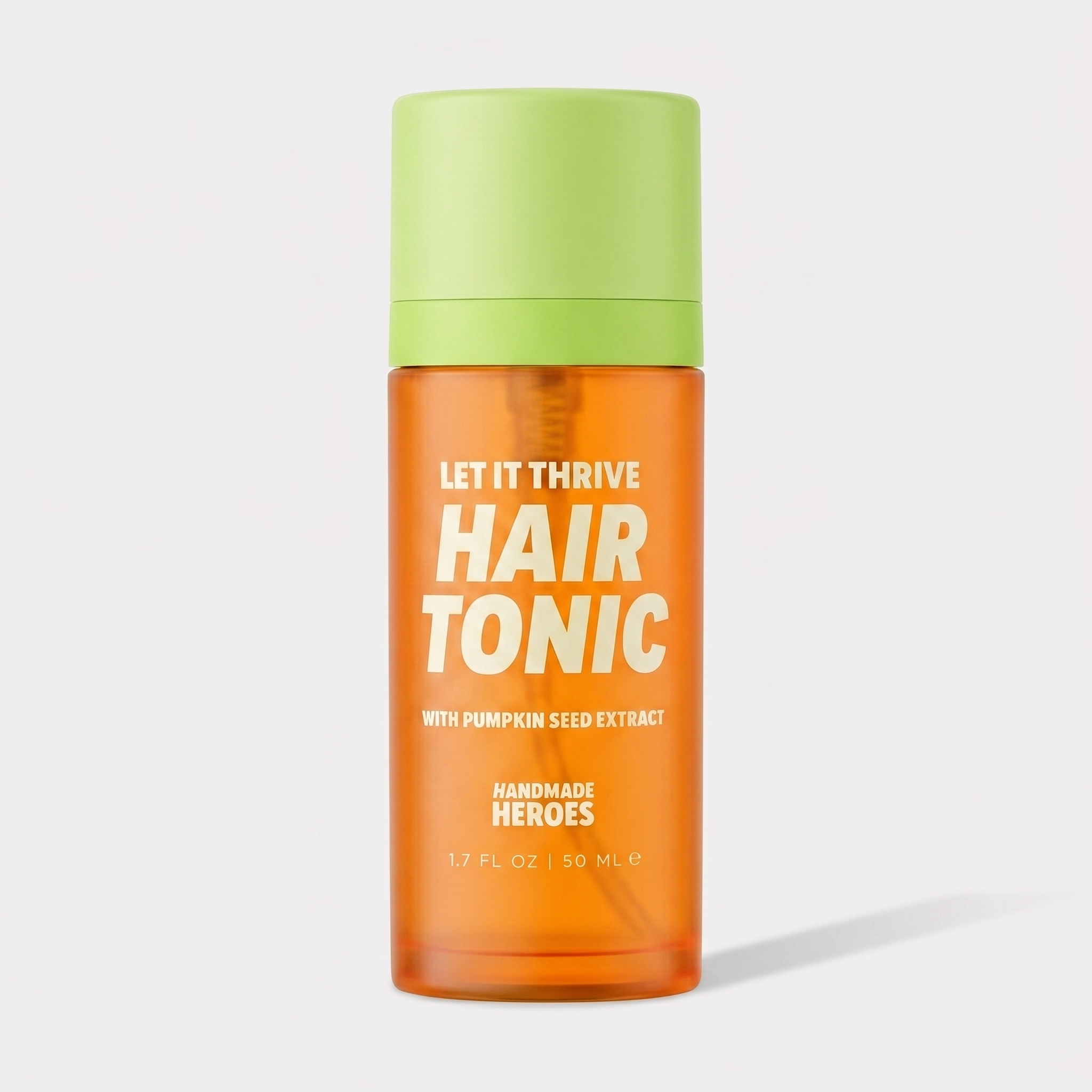
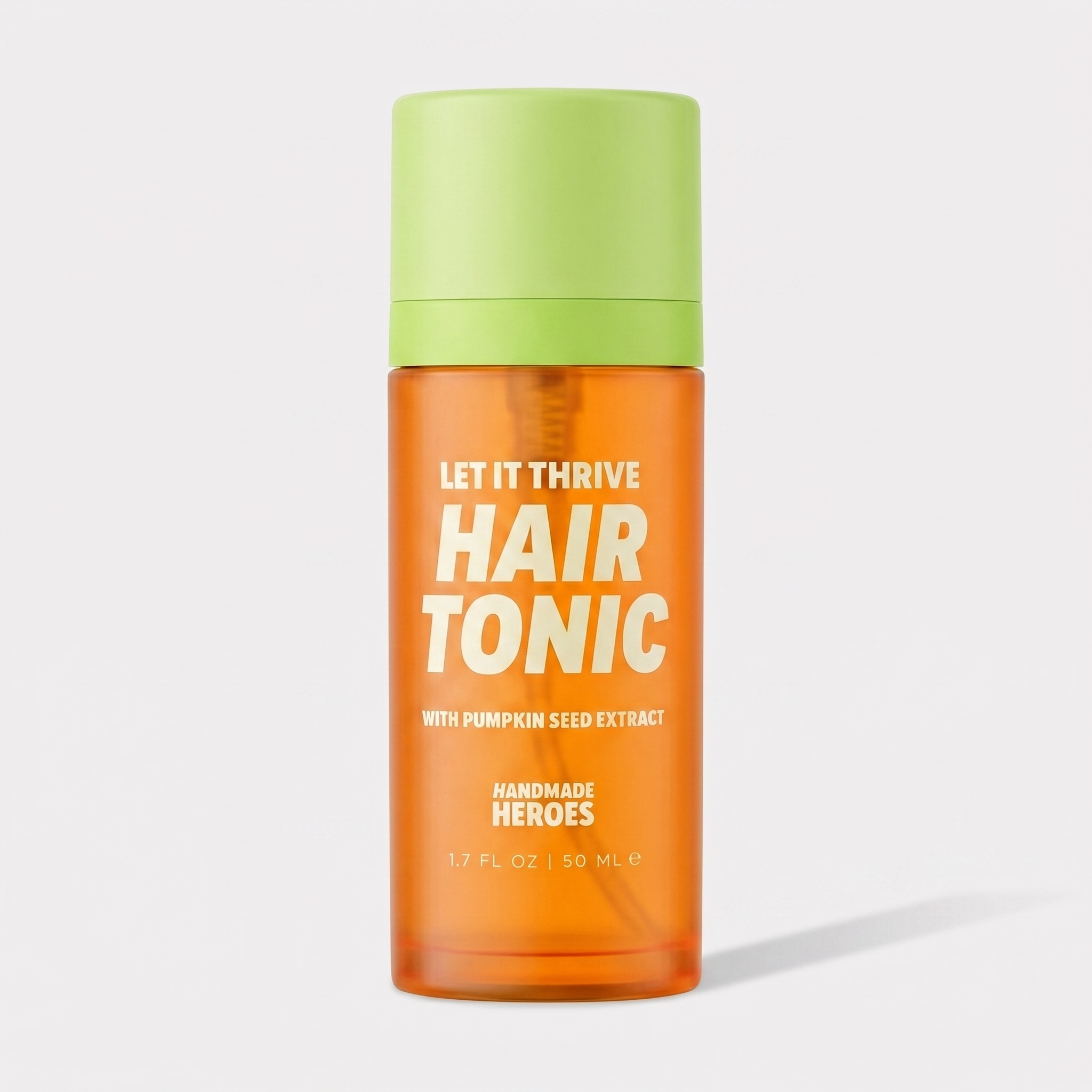
That's exactly what our Let It Thrive Hair Tonic is made for. It's a lightweight, leave-in scalp tonic built on rosemary and pumpkin seed extract — rosemary being the same botanical behind the research above — that supports a healthy-looking scalp and the appearance of fuller, thicker-looking hair, with no prostaglandins and no biotin. One spray, a 30-second massage, done.
Why rosemary, specifically? As covered above, it performed comparably to 2% minoxidil for pattern hair loss in the 2015 Panahi trial, and separate mechanism research points to a plausible route via 5α-reductase inhibition. Honest caveat, because we don't do hype: that's one trial in a specific population, plus a mouse mechanism study — real signal, not a guarantee, and not a substitute for seeing a dermatologist if you're dealing with pattern hair loss.
If you're going to build one small ritual around what the research points to, make it the easy one. Give your scalp its daily 10 seconds — shop the Let It Thrive Hair Tonic. Explore the full hair care collection.
Is rosemary oil better than minoxidil?
The Panahi 2015 study found comparable results to 2% minoxidil at 6 months in their specific participant group. That’s notable, but it’s one trial. Minoxidil has decades of clinical data behind it. Rosemary is a promising complementary option — not a proven replacement. Talk to a dermatologist.
How long does rosemary oil take to work?
In the Panahi trial, results were measured at 6 months. Hair cycling is slow — expect at minimum 3–6 months of consistent use before drawing conclusions about any topical scalp product.
Can I use rosemary oil every day?
Topical rosemary oil in a properly formulated product is generally well-tolerated for daily use. Undiluted essential oil applied directly to the scalp can cause irritation — always opt for a formulated product with appropriate concentration.
Sources
- Panahi Y. et al. (2015) — Rosemary oil vs. minoxidil 2% for androgenetic alopecia (SCIRP)
- Murata K. et al. (2013) — Rosemary leaf extract and 5α-reductase inhibition in mice (PubMed)
Real ingredients. Real results.

Leave a comment
This site is protected by hCaptcha and the hCaptcha Privacy Policy and Terms of Service apply.