



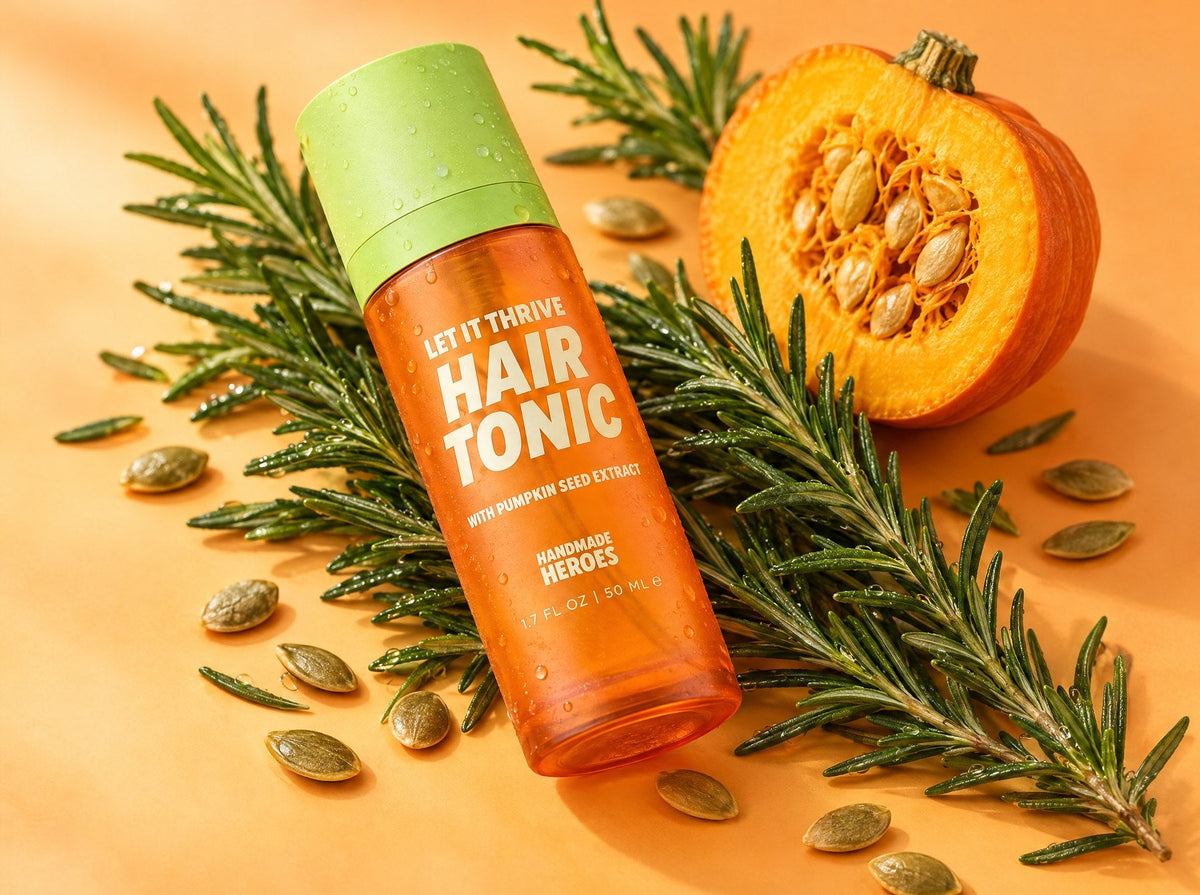
TL;DR: We paired pumpkin seed and rosemary because each has its own small body of research worth paying attention to: pumpkin seed oil in a capsule trial and a topical trial, rosemary oil in a six-month trial, and rosemary leaf extract in mouse and lab studies. Nobody has tested the two together, and our tonic uses rosemary leaf extract, not the rosemary oil from the famous trial. Here's the reasoning, with its limits stated up front.
If you're going to put something on your scalp every day, it's fair to ask why it contains what it contains. Our Let It Thrive Hair Tonic is built around two botanicals, pumpkin seed and rosemary, and we'd rather show you the reasoning than ask you to take the pairing on faith.
That means being as clear about what the research doesn't say as about what it does. Some of what follows is encouraging. Some of it is "we don't know yet."
This article is general information, not medical advice. For sudden, patchy or persistent hair loss, see a board-certified dermatologist.
Why pumpkin seed?
Pumpkin seed oil has the most direct human research of the two ingredients. In a randomized, double-blind, placebo-controlled trial, 76 men with mild to moderate pattern hair loss took 400 mg of pumpkin seed oil a day in capsules for 24 weeks; their average hair counts rose 40% versus 10% on placebo, though hair thickness didn't change (Cho et al., 2014). On the topical side, 60 women with female pattern hair loss applied pumpkin seed oil to the scalp or used 5% minoxidil foam for three months, and both groups improved on scalp-microscope measures, with no placebo group for comparison (Ibrahim et al., 2021). In the lab, a pumpkin seed oil formulation also inhibited 5α-reductase, the enzyme that makes DHT, in cultured cells (Teeranachaideekul et al., 2022).
Small studies, real caveats. We cover them in full in our pumpkin seed oil explainer.
Why rosemary?
Rosemary's research comes in two very different forms, and the difference matters:
- Rosemary oil in people: in a randomized comparative trial, 100 people with pattern hair loss used either rosemary oil or 2% minoxidil for six months. Neither group's hair count changed at three months; both rose by six months, with no difference between the groups. Scalp itching increased in both, but was more frequent with minoxidil. There was no placebo group (Panahi et al., 2015).
- Rosemary leaf extract in mice and the lab: applied to the skin of mice whose hair growth had been interrupted with testosterone, rosemary leaf extract improved regrowth. In test-tube assays it inhibited 5α-reductase by 82.4% and 94.6% at two concentrations, and the researchers identified 12-methoxycarnosic acid as an active compound (Murata et al., 2013).
Reviews keep rosemary near the top of the natural-options list. One recent review of natural alternatives for pattern hair loss gave it special emphasis (Bin Rubaian et al., 2024), and a systematic synthesis of 16 randomized trials of herbal remedies counted rosemary among those with promising results, while warning that study design limitations and inconsistent outcomes call for more rigorous research (Allam et al., 2025). For the full rosemary story, see Rosemary Oil for Hair: What the Research Actually Says.
Rosemary leaf extract vs. rosemary oil: not the same thing
This is the part most rosemary marketing skips. Rosemary essential oil is a distilled mix of volatile aroma compounds. Analyses of oils from six countries found them dominated by α-pinene (13.5% to 37.7%) and 1,8-cineole (16.1% to 29.3%), with smaller amounts of compounds like camphor and borneol (Satyal et al., 2017). A leaf extract is a different preparation of the plant, and the researchers who studied the leaf extract traced part of its enzyme activity to 12-methoxycarnosic acid, which isn't one of those aroma compounds (Murata et al., 2013).
Our tonic contains rosemary leaf extract. So, to be precise about it:
- The six-month human trial used rosemary oil. Its results don't transfer to a leaf extract.
- The study that used leaf extract was in mice and test tubes, which makes it a closer ingredient match but much weaker evidence.
- We couldn't find any human trial of rosemary leaf extract applied to the scalp. If one is published, we'll tell you what it found.
Has anyone tested pumpkin seed and rosemary together?
No, not that we could find. Every study above tested one ingredient on its own, or alongside other ingredients that weren't the other half of this pair. So we can't tell you whether pumpkin seed and rosemary do more together than either does alone.
Our reasoning for pairing them was simpler: each brings its own separate line of research, both have been studied around the same enzyme pathway in lab or animal work, and both sit comfortably in a water-light leave-in you'd actually use every day. That's a formulation rationale, not a clinical result — and we think you deserve to know the difference.
What about safety?
Both ingredients have a reassuring but incomplete record. The Cosmetic Ingredient Review panel assessed 10 rosemary-derived cosmetic ingredients and concluded they're safe as used when formulated to be nonsensitizing (Fiume et al., 2018). Rosemary can still cause allergic contact dermatitis in rare cases, from both extracts and the raw plant (Miroddi et al., 2014), including one published case traced to rosemary leaf extract in a cleansing gel (Inui and Katayama, 2005). Pumpkin seed allergy is rare but documented. Our guide Is Pumpkin Seed Oil Safe for Your Scalp? covers that and how to patch test.
The tonic built around the pair
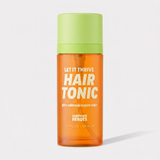
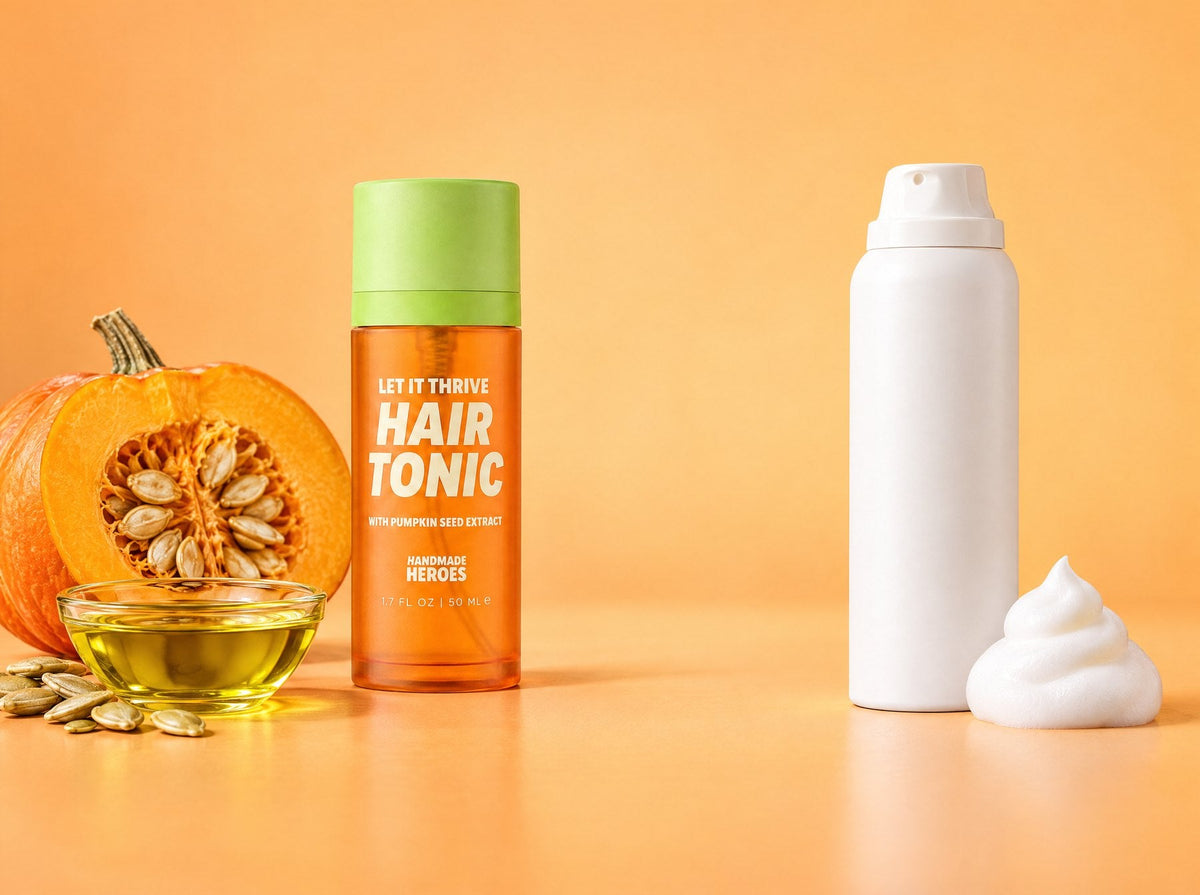
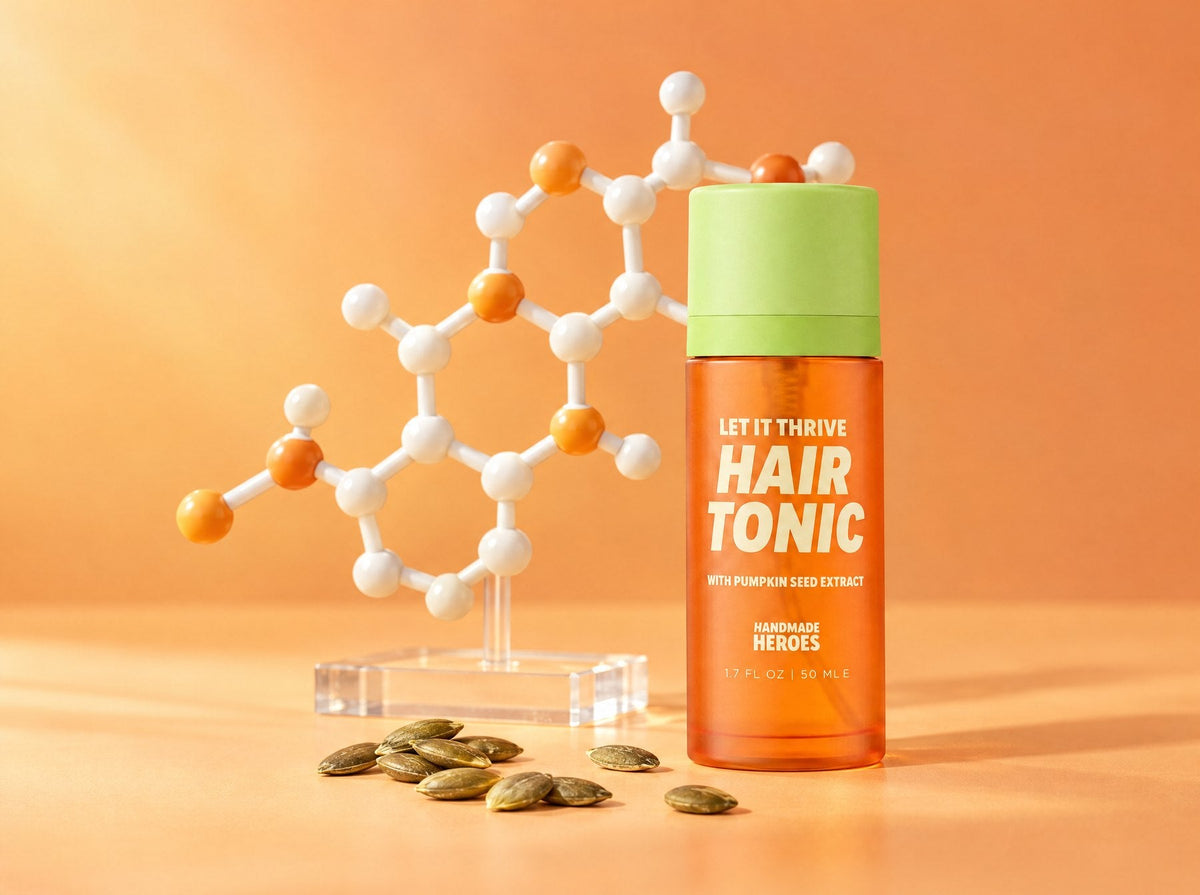
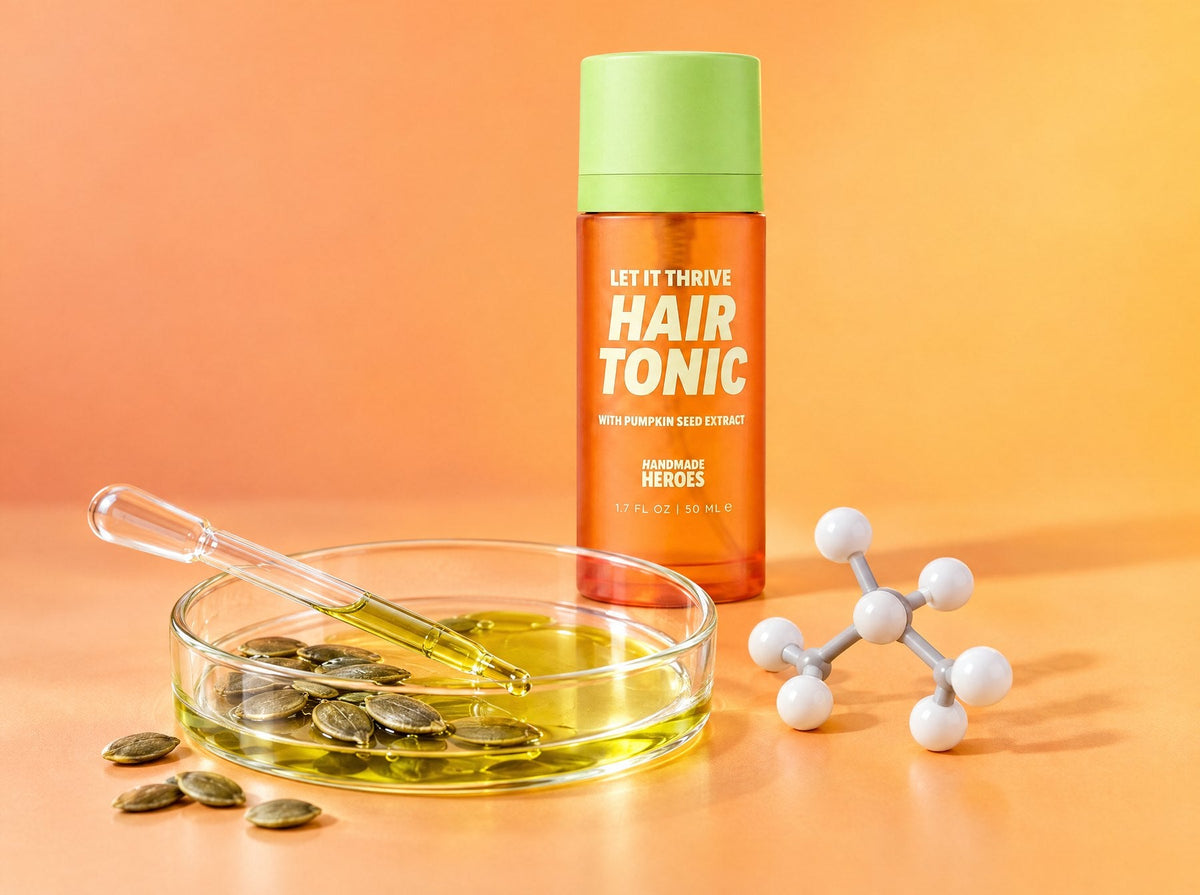
Here's where the reasoning ends up. Our Let It Thrive Hair Tonic combines pumpkin seed extract (listed on the label as Cucurbita pepo (pumpkin) seed oil) with rosemary leaf extract in a lightweight leave-in spray. It helps the scalp feel balanced, refreshed and healthy-looking and, with regular use, supports the appearance of fuller, thicker-looking hair. It absorbs fast with no greasy residue, it's 100% naturally derived and vegan, and there's no minoxidil, no prostaglandins and no biotin. Every other ingredient, and what it's doing there, is in Every Ingredient in Let It Thrive Hair Tonic, Explained.
Honest caveat, because we don't do hype: everything in this article explains why we chose these two ingredients, not what the tonic will do for you. The trials used capsules, concentrated oils and, in rosemary's case, a different form of the plant. Our FAQ puts it in one line: it's a cosmetic conditioning tonic, not a hair-loss treatment.
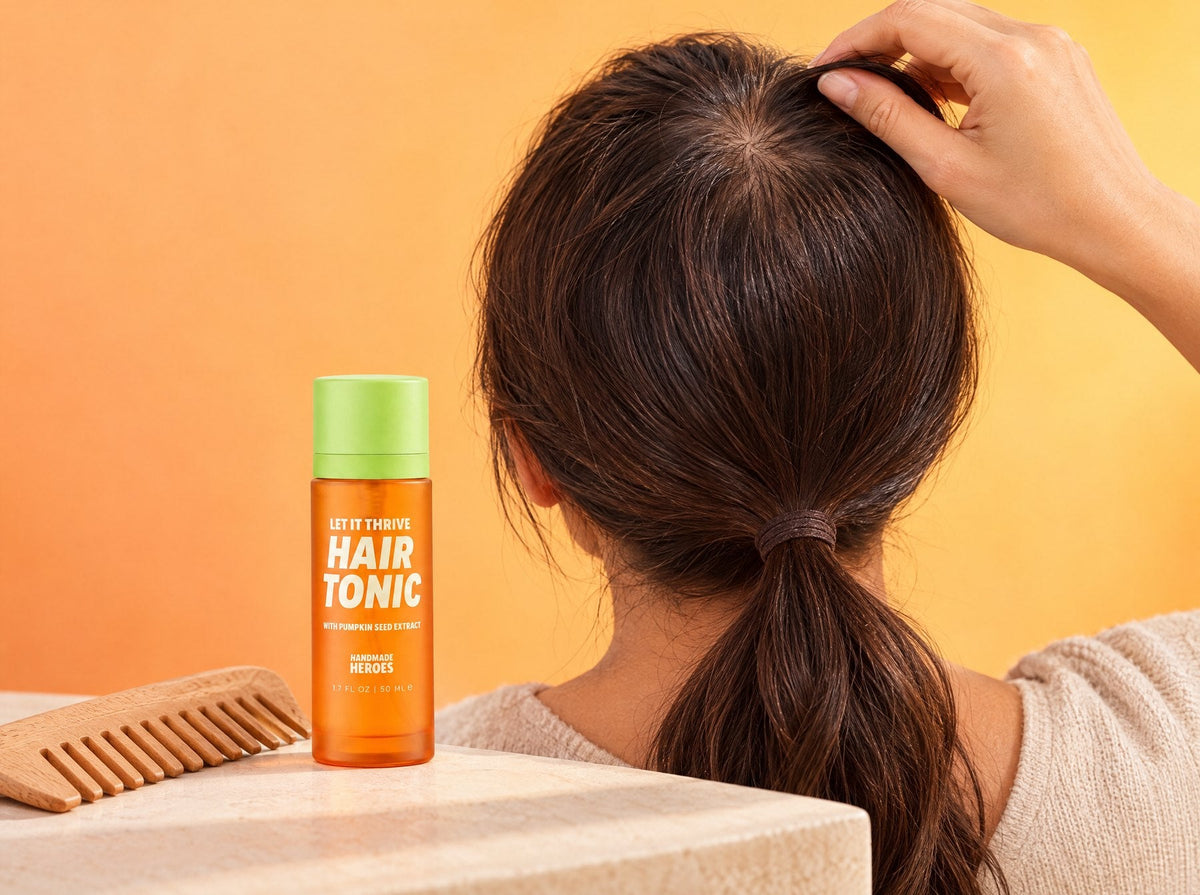
Using it takes about a minute: part your hair, spray onto your scalp, massage with your fingertips for 30–60 seconds, and leave it in. Once a day, morning or night.
Meet the pair in one spray — shop the Let It Thrive Hair Tonic.
When to see a professional
See a board-certified dermatologist if:
- your hair loss is sudden or patchy, which can be alopecia areata
- your scalp is painful, burning or looks scarred
- thinning comes with fatigue, irregular periods, acne or new facial hair, which can point to thyroid problems, iron deficiency or PCOS
- shedding began after you started or stopped a medication (don't change a prescription on your own)
- a product leaves your scalp itchy, red or rashy; stop using it, and get help if it doesn't settle
Pumpkin Seed and Rosemary FAQ
Is rosemary leaf extract as good as rosemary oil for hair?
They've never been compared. The human trial used rosemary oil for six months (Panahi et al., 2015), while the leaf extract research is in mice and lab assays (Murata et al., 2013). They're different preparations, so results from one shouldn't be assumed for the other.
Can I mix my own rosemary oil and pumpkin seed oil?
You can, but a homemade blend hasn't been tested, and rosemary preparations can cause contact dermatitis in some people (Miroddi et al., 2014). Patch test anything new, and avoid applying undiluted essential oil to your scalp.
Does rosemary block DHT?
Rosemary leaf extract inhibited 5α-reductase, the enzyme that makes DHT, in lab tests (Murata et al., 2013). That hasn't been shown in people, so "may influence the pathway in lab studies" is as far as the evidence goes.
How long should you use a pumpkin seed and rosemary tonic before judging it?
The trials behind both ingredients ran three to six months, and the rosemary oil trial saw no change at three months (Panahi et al., 2015). Give a daily scalp routine at least a few months; How Long Does a Scalp Tonic Take? explains why.
Sources
- Cho YH, Lee SY, Jeong DW, Choi EJ, Kim YJ, Lee JG, et al. (2014). Effect of pumpkin seed oil on hair growth in men with androgenetic alopecia: a randomized, double-blind, placebo-controlled trial. Evidence-Based Complementary and Alternative Medicine. PMC4017725
- Ibrahim IM, Hasan MS, Elsabaa KI, Elsaie ML (2021). Pumpkin seed oil vs. minoxidil 5% topical foam for the treatment of female pattern hair loss: A randomized comparative trial. Journal of Cosmetic Dermatology. PubMed 33544448
- Teeranachaideekul V, Parichatikanond W, Junyaprasert VB, Morakul B (2022). Pumpkin Seed Oil-Loaded Niosomes for Topical Application: 5α-Reductase Inhibitory, Anti-Inflammatory, and In Vivo Anti-Hair Loss Effects. Pharmaceuticals. PMC9412580
- Panahi Y, Taghizadeh M, Marzony ET, Sahebkar A (2015). Rosemary oil vs minoxidil 2% for the treatment of androgenetic alopecia: a randomized comparative trial. Skinmed. PubMed 25842469
- Murata K, Noguchi K, Kondo M, Onishi M, Watanabe N, Okamura K, et al. (2013). Promotion of hair growth by Rosmarinus officinalis leaf extract. Phytotherapy Research. PubMed 22517595
- Bin Rubaian NF, Alzamami HFA, Amir BA (2024). An Overview of Commonly Used Natural Alternatives for the Treatment of Androgenetic Alopecia, with Special Emphasis on Rosemary Oil. Clinical, Cosmetic and Investigational Dermatology. PMC11549889
- Allam AT, El-Shiekh RA, El-Dessouki AM, Gamil NM, Eisa NM, Ayoub MM, et al. (2025). Pathophysiology, conventional treatments, and evidence-based herbal remedies of hair loss with a systematic review of controlled clinical trials. Naunyn-Schmiedeberg's Archives of Pharmacology. PMC12678491
- Satyal P, Jones TH, Lopez EM, McFeeters RL, Ali NA, Mansi I, et al. (2017). Chemotypic Characterization and Biological Activity of Rosmarinus officinalis. Foods. PMC5368539
- Fiume MM, Bergfeld WF, Belsito DV, Hill RA, Klaassen CD, Liebler DC, et al. (2018). Safety Assessment of Rosmarinus officinalis (Rosemary)-Derived Ingredients as Used in Cosmetics. International Journal of Toxicology. doi:10.1177/1091581818800020
- Miroddi M, Calapai G, Isola S, Minciullo PL, Gangemi S (2014). Rosmarinus officinalis L. as cause of contact dermatitis. Allergologia et Immunopathologia. PubMed 23827646
- Inui S, Katayama I (2005). Allergic contact dermatitis induced by rosemary leaf extract in a cleansing gel. Journal of Dermatology. PubMed 16334869
Real ingredients. Real results.



Leave a comment
This site is protected by hCaptcha and the hCaptcha Privacy Policy and Terms of Service apply.