
Jade, rose quartz, stainless steel — every gua sha tool claims to be the "right" one. Here's what the material actually changes, and what's just aesthetics.
Same motion, different material
Strip away the marketing and gua sha is a simple mechanical idea: a smooth-edged tool, dragged across oiled skin, in one direction. The technique is what does the work — cheek to temple, jaw to ear, light pressure. The material of the tool doesn't change that motion. What it changes is hygiene, durability, and how the tool feels in your hand — and those are worth caring about, since this is something you're pressing against your face.
Stone is porous, and that matters more than it sounds
Jade and rose quartz are natural stone — beautiful, steeped in centuries of tradition, and genuinely porous at a microscopic level. That means facial oil, product residue, and whatever your skin left behind can settle into the surface instead of wiping off clean. Cleveland Clinic's advice on gua sha tools is blunt about upkeep: keep it clean, and if it chips or cracks, stop using it and replace it. Stone is also just physically fragile. Drop it on a tile bathroom floor and there's a real chance it cracks or shatters — and a cracked edge is exactly the kind of thing that can snag skin instead of gliding over it.
Stainless steel is the hygienic pick
Solid 304 stainless steel is non-porous by nature — the same reason it's a standard material for surgical and medical instruments, which need a smooth surface that's genuinely easy to clean and sterilize between uses. There's no microscopic texture for oil or bacteria to hide in. A rinse and a wipe is the whole cleaning routine. That's a real advantage if you're prone to breakouts and don't want to think too hard about tool hygiene — though remember, no gua sha tool, in any material, should go anywhere near active breakouts, broken skin, or a sunburn.
The cold-touch trick
Steel also does something stone can't do as well: it holds a chill. Pop a stainless steel gua sha in the fridge for a few minutes and it stays noticeably cold through a whole massage session, which feels great swept along a puffy morning face. Stone cools down too, but it's a poorer conductor, so it warms back up to skin temperature faster and loses that cold-glide feeling sooner.
Where stone still wins
None of this makes stone the "wrong" choice. Jade and bian stone are the tools gua sha was actually built around, historically, and plenty of people love the weight, the ritual, and the cool, smooth feel of natural stone in hand. If you already own one and take care of it, there's no reason to abandon it. This is a hygiene-and-durability comparison, not a verdict — the choice comes down to what you value more: tradition and feel, or easy hygiene and a tool that survives a drop.
Meet the tool: Jaw Drop
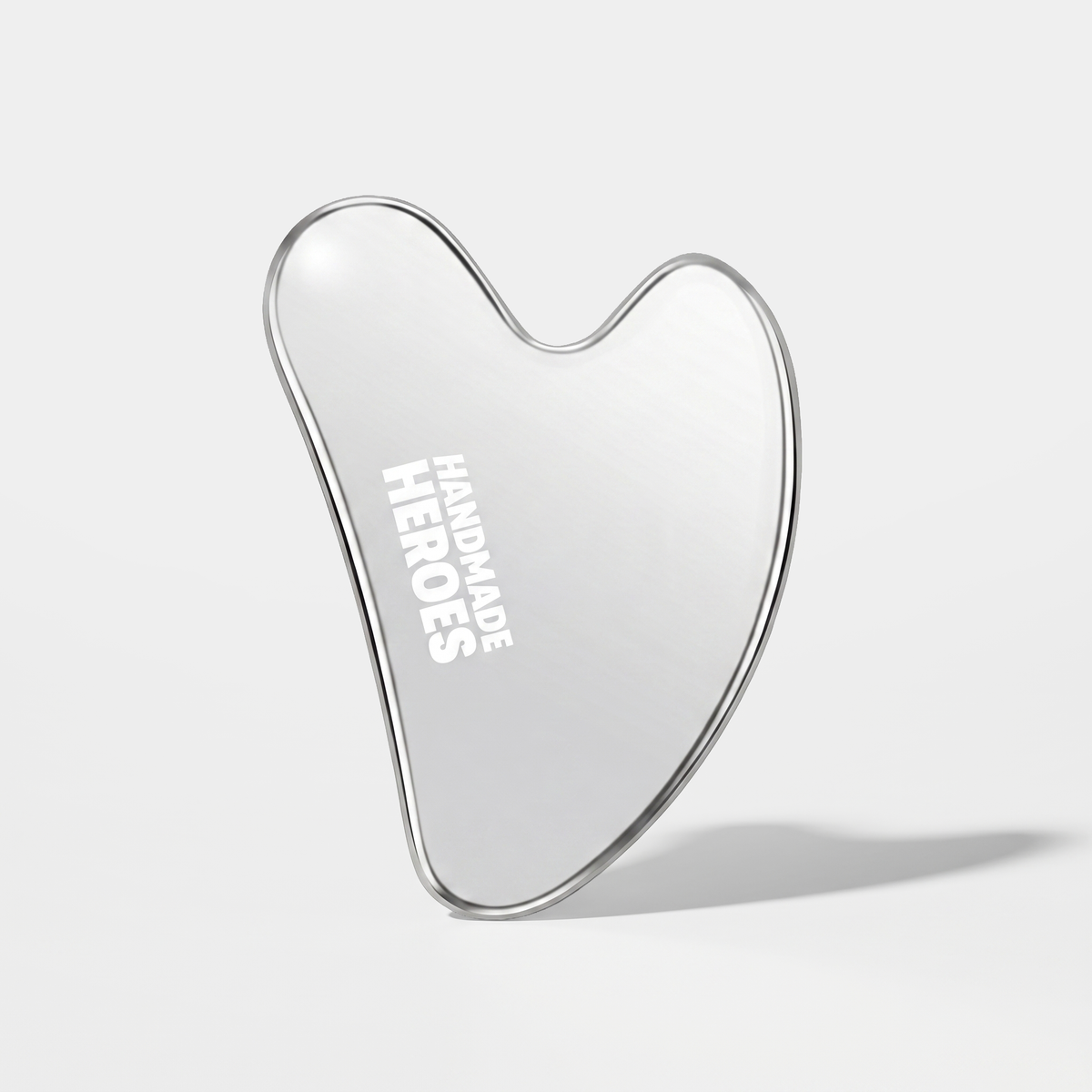
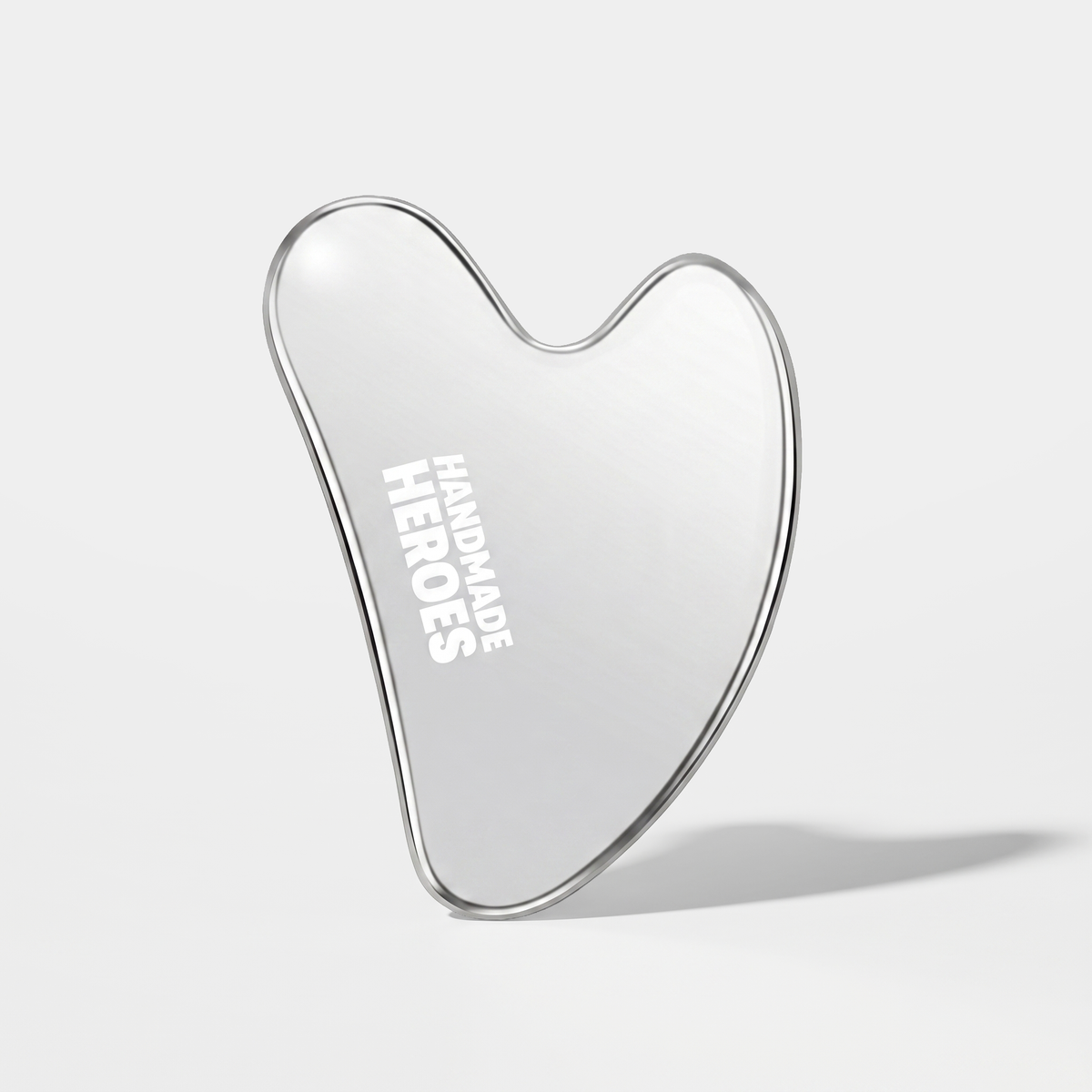
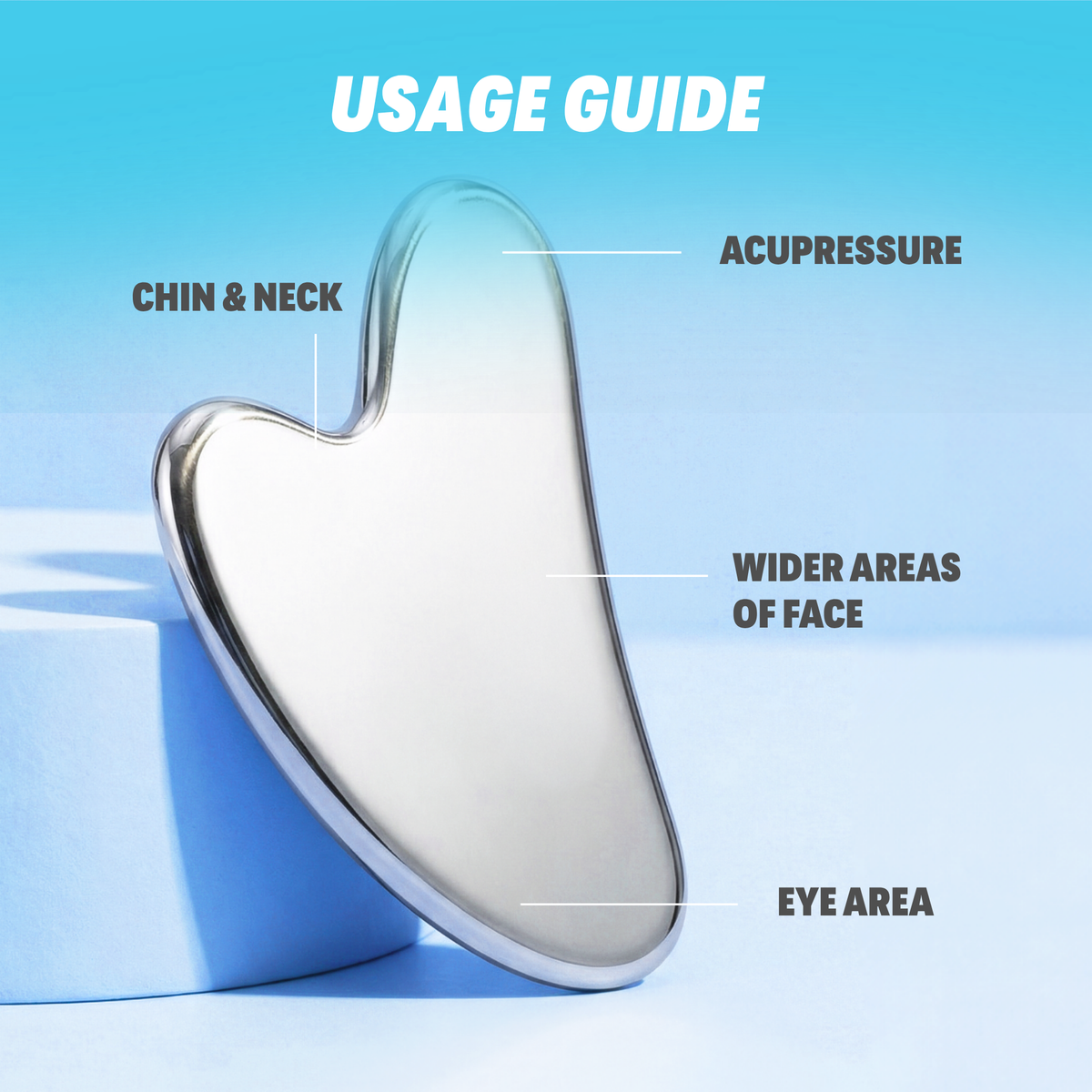
Jaw Drop is one sculpted piece of solid, food-grade 304 stainless steel — no coating, no seams, nothing to chip off onto your face. It's cool to the touch straight out of the drawer, colder from the fridge, and the polished edges glide over oiled skin without snagging or tugging. Use it for a jaw release, a facial gua sha routine, or a slower lymphatic-drainage-style pass. Sweep it outward on damp skin over a few drops of face oil — the Super Glow Vitamin C Oil works well underneath it — in light passes, 3 to 5 per section, and wash it after every use since it wipes clean in seconds. Shop the Jaw Drop Stainless Steel Gua Sha.
FAQ
Is jade or rose quartz gua sha unsafe?
No — it just needs more careful cleaning and gentler handling, since stone is porous and can crack if dropped.
Does the material change how well gua sha works?
Not meaningfully. The technique — light pressure, outward strokes — is what drives the ritual. Material is about hygiene, durability, and feel.
Can I really put a steel gua sha in the fridge?
Yes. That's a big part of the appeal — cold steel feels noticeably good on a puffy morning face.
Related reading
- Does Gua Sha Actually Work? An Honest Look at the Evidence
- How to Clean Your Gua Sha
- Gua Sha for the Jawline: What It Can (and Can't) Do
Sources
Cleveland Clinic. "Gua Sha: What It Is and How To Do It." health.clevelandclinic.org
gSource. "Surgical-Grade Stainless Steel: A Buyer's Guide to Quality Instruments." gsource.com
General information, not medical advice.
Real ingredients. Real results.

Leave a comment
This site is protected by hCaptcha and the hCaptcha Privacy Policy and Terms of Service apply.