
A mushroom that hydrates skin sounds like a stretch until you look at what is actually inside one.
What hyaluronic acid actually does
Hyaluronic acid's whole reputation is built on one property: it is exceptional at holding onto water. Cleveland Clinic notes that a quarter-teaspoon of hyaluronic acid can hold about one and a half gallons of water, which is why it shows up in moisturizing creams, lotions, and serums far more than almost any other ingredient. On skin specifically, it helps skin stretch and flex, and is linked to a reduced appearance of wrinkles and fine lines.
What snow mushroom brings to the mix
Tremella fuciformis, also called snow mushroom or snow fungus, has been used in traditional Chinese medicine for skin care for centuries, long before "snow mushroom" showed up on an ingredient list. A 2025 study published in the journal Foods examined what is actually inside a Tremella fuciformis extract at the molecular level, using nuclear magnetic resonance, infrared spectroscopy, and mass spectrometry. The researchers found that the most abundant polysaccharide in the extract — accounting for roughly 88% of it — was structurally and chemically comparable to hyaluronic acid itself. In other words, snow mushroom is not a totally separate hydration story from hyaluronic acid; it is a plant-derived source that shares a strikingly similar molecular profile.
Why The Ultimate Snow Shroom Hyaluronic Acid Serum uses both
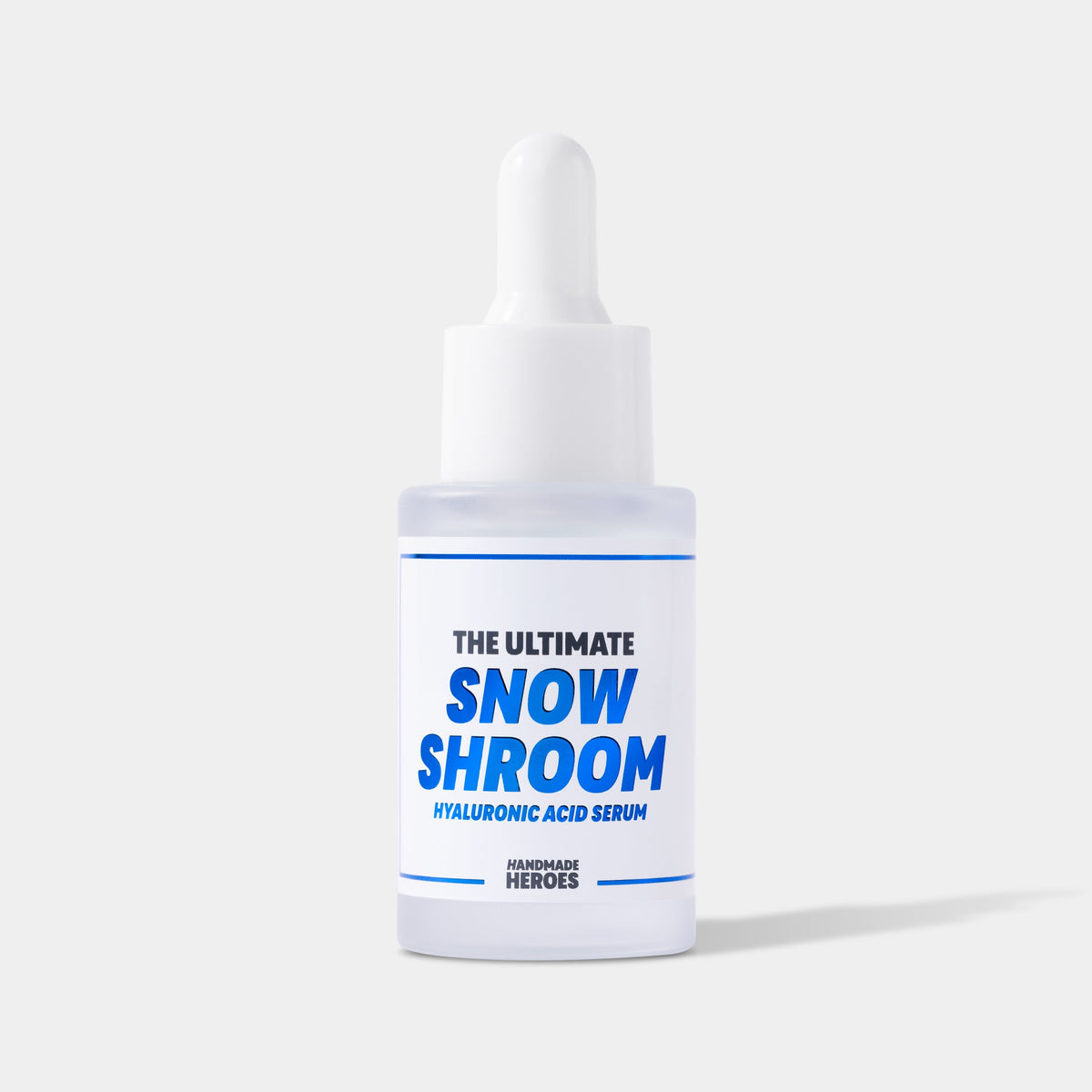
Rather than picking a side, the formula leans on both. It combines snow fungus (tremella) with tamarindus and seven distinct molecular weights of hyaluronic acid, because different molecular weights of HA sit at different depths of skin. The result is hydration delivered at multiple layers rather than just sitting on the surface — skin looks plumper and feels bouncier, not just temporarily dewy. Applied to slightly damp skin, the formula has water to draw in immediately, and a few drops morning and night is the full routine.
Do you actually need both ingredients?
You do not strictly need every hydrating ingredient that exists, but layering complementary ones is different from layering redundant ones. Because snow mushroom and hyaluronic acid work at overlapping but not identical molecular weights and depths, combining them is less about doubling up and more about covering more ground — surface comfort and deeper, longer-lasting water retention in the same few drops.
Shop The Ultimate Snow Shroom Hyaluronic Acid Serum — seven molecular weights of HA plus snow mushroom, in one serum.
FAQ
Is snow mushroom just a trendier way to say hyaluronic acid? Not quite — it is a plant-derived source with a comparable molecular profile to hyaluronic acid, not simply a rebrand of it.
Do I still need a separate moisturizer if I use this serum? Yes. A hydrating serum draws water in; a moisturizer or facial oil on top helps seal it there.
Related reading
- Where Does a Hydrating Serum Go in Your Routine?
- Gel Mask 101: What It Does and How Often to Use One
- Bakuchiol Oil vs. Serum: Which Format Is Right for You?
Sources
- "Non-Animal Hyaluronic Acid from Tremella fuciformis: A New Source with a Structure and Chemical Profile Comparable to Hyaluronic Acid." Foods, 2025;14(8):1362.
- Cleveland Clinic. "Hyaluronic Acid: What It Is, Benefits, How To Use & Side Effects."
Real ingredients. Real results.

Leave a comment
This site is protected by hCaptcha and the hCaptcha Privacy Policy and Terms of Service apply.