

Here's a sentence that doesn't make it onto most gua sha boxes: wash your tool like you mean it. It touches oiled skin every single day, which means it's collecting everything your skin collects. The good news — if your gua sha is stainless steel, cleaning it right takes about as long as reading this sentence.
Why Cleaning It Actually Matters
A gua sha tool spends its whole life doing one thing: gliding across oiled, freshly touched skin. That means it picks up residue every single time — oil, product, whatever your skin shed that day. Left alone, that buildup is exactly the kind of thing you don't want sitting on a tool you're about to press against your face again tomorrow.
The AAD's guidance on other face-touching tools, like makeup brushes, makes the same point: unclean tools that touch your skin can harbor bacteria and contribute to breakouts and irritation. A gua sha tool isn't any different just because it's smooth and cool.
Stone vs. Steel
Traditional gua sha stones — jade, rose quartz — are porous. That means they need gentler care: no harsh scrubbing, no soaking, and real patience making sure they're fully dry before they go back in a drawer, since trapped moisture is where problems start.
Stainless steel skips all of that. 304 stainless steel is non-porous, so there's no surface for residue to sink into and nothing for moisture to hide in. It's the difference between a tool that needs a whole routine and one that just needs a rinse.
How to Clean Stainless Steel (the Easy Version)
Warm water, a little soap, a quick wipe. That's really it. Work the soap over the whole surface, edges included, rinse it clean, then dry it properly with a towel before you set it down.
That last step is the one people skip, and it's the one that actually keeps steel pristine — a tool that air-dries in a puddle is more likely to spot than one that's towel-dried right away. The whole process takes seconds, not minutes.
Make It a Habit
Wash your gua sha after every use, not just when you remember. And keep it to yourself: sharing a tool that touches your face means sharing whatever it picked up last time, now on someone else's skin too. It's a small habit that costs almost nothing.
When to Replace It
Stone tools have a shelf life. A chip or a crack means it's time for a new one, since a rough edge catches on skin instead of gliding over it. Steel is a different story: solid stainless steel doesn't chip under normal use, so a well-cared-for one can stick around for a very long time.
The Tool That Was Built to Skip the Fuss
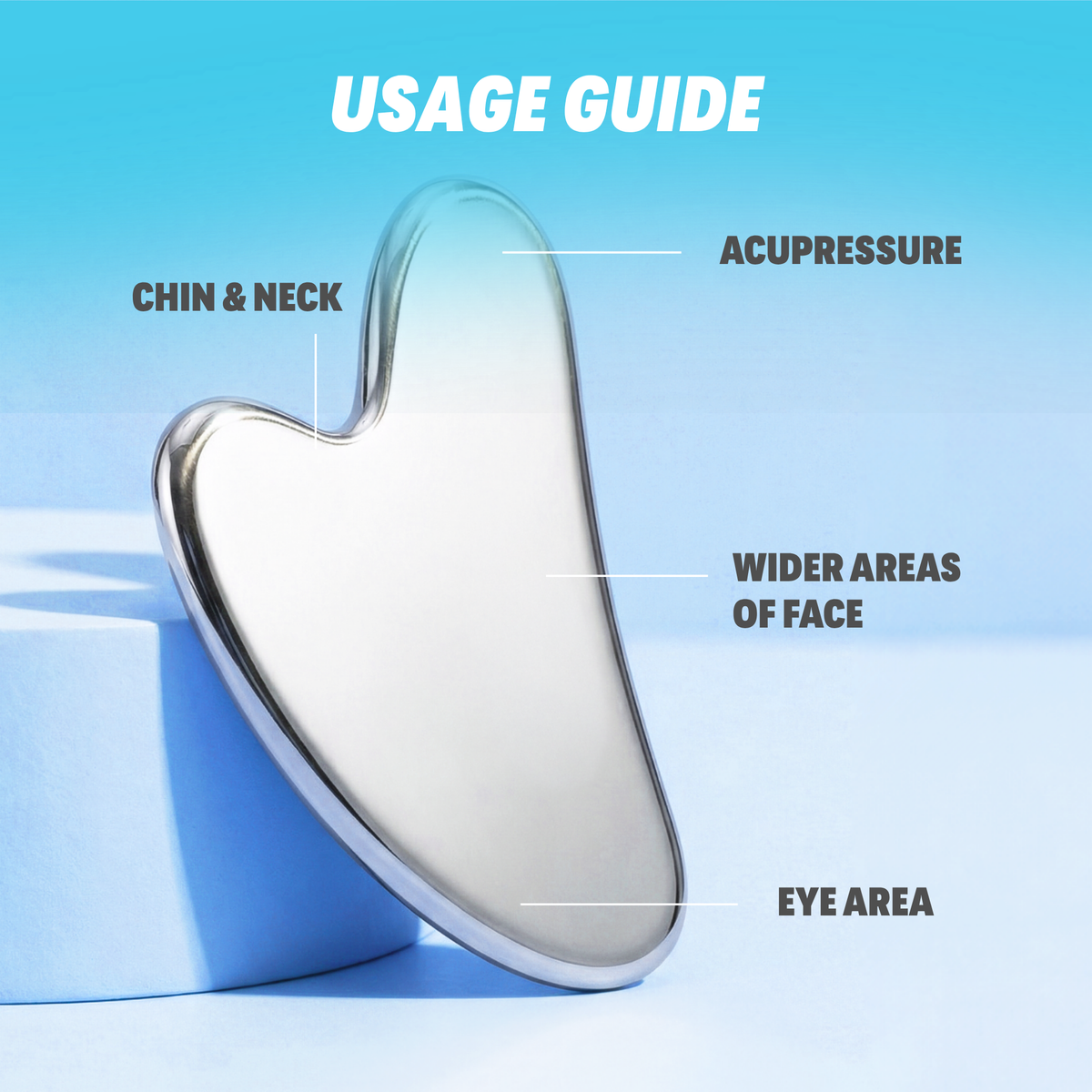
The Jaw Drop Stainless Steel Gua Sha is solid food-grade 304 stainless steel: non-porous, won't chip, and wipes clean in seconds. No soaking rituals, no worrying about moisture trapped somewhere you can't see — just warm water, soap, and a towel.
FAQ
Can I use rubbing alcohol on my gua sha?
Warm water and a little soap is really all steel needs. If you want an extra step, a quick wipe with alcohol won't hurt stainless steel — just make sure it's fully dry before it touches your face again.
Is it safe to put it in the fridge after washing?
Yes, just make sure it's dry first. A cool, dry tool is exactly what you want; a damp one in a cold fridge is just inviting moisture to sit somewhere it shouldn't.
How often should I deep clean it, versus a quick rinse?
A quick warm water and soap clean after every use is the whole routine for steel. There's no separate deep-clean step to remember, which is most of the point.
Related reading
- Stainless Steel vs. Stone Gua Sha
- How to Use a Gua Sha on Your Face (Without Tugging Your Skin)
- Does Gua Sha Actually Work?
Sources
Cleveland Clinic — Gua Sha: Benefits and How To Do It
American Academy of Dermatology — How to Clean Your Makeup Brushes
Real ingredients. Real results.


Leave a comment
This site is protected by hCaptcha and the hCaptcha Privacy Policy and Terms of Service apply.