
The fifteen-second video makes it look effortless — tool glides, jaw looks lighter, done. Skip the part that happens before the camera starts rolling, though, and that same tool turns into a butter knife dragging across dry skin. The order of operations is the whole trick: oil first, a flat angle, three sweeps, light hands. Here's how it actually works.
Start With Oil — Never Bare, Dry Skin
A gua sha tool needs something to glide on. A few drops of face oil on clean, damp skin — that's the setup, every time, no exceptions. Bare dry skin creates drag, and drag is what turns a smooth pass into a tug. Tugging stretches skin instead of massaging it, which is the opposite of the point.
Damp skin, straight out of the shower or after a quick spritz, helps the oil spread thin and even before the steel ever touches down.
Hold the Tool Almost Flat
The most common angle mistake is holding a gua sha like a spoon — tilted up, with the edge digging in at a steep angle. That's how a smooth pass turns into a red line instead.
Keep the tool close to flat against your skin, so the curve makes broad contact instead of one edge doing all the work. Flat angle, light hand, slow sweep.
The Three Sweeps
Once the oil is down and the angle is right, there are three passes worth learning:
- Jaw to ear — start at the chin and sweep along the jawline up toward the ear.
- Cheek to temple — start beside the nose and sweep out toward the temple.
- Brow to hairline — start above the brow and sweep up toward the hairline.
Three to five light passes per section is plenty. One direction, outward and up — no scrubbing back and forth.
Pressure: Light, Not Heavy
A good rule of thumb: if it leaves a mark, ease off. This isn't a deep-tissue tool, and the face doesn't need the pressure a shoulder might. The goal is glide, not grip.
Done right, it should feel good on a tight jaw, not sore afterward. Most people notice the look of a calmer, less puffy face right after a few passes — not a permanent change, just a nice few minutes.
When to Reach for It
Morning is when most people reach for theirs, since that's when puffiness is easiest to see and the difference feels the most obvious. A few minutes in the fridge beforehand makes the tool colder still — solid stainless steel is already cool to the touch, and the fridge just turns that up.
Mistakes Worth Skipping
The short list: pressing too hard, skipping the oil, holding the tool at too steep an angle, and reaching for it over active breakouts, broken skin, a sunburn, or anywhere your skin already feels irritated. Give that skin a day off instead.
One more: if your jaw actually hurts — aching, clicking, sore from clenching — that's not something a gua sha tool is going to fix. That's a conversation for a dentist. This is general information, not medical advice.
The Tool That Makes the Technique Easy
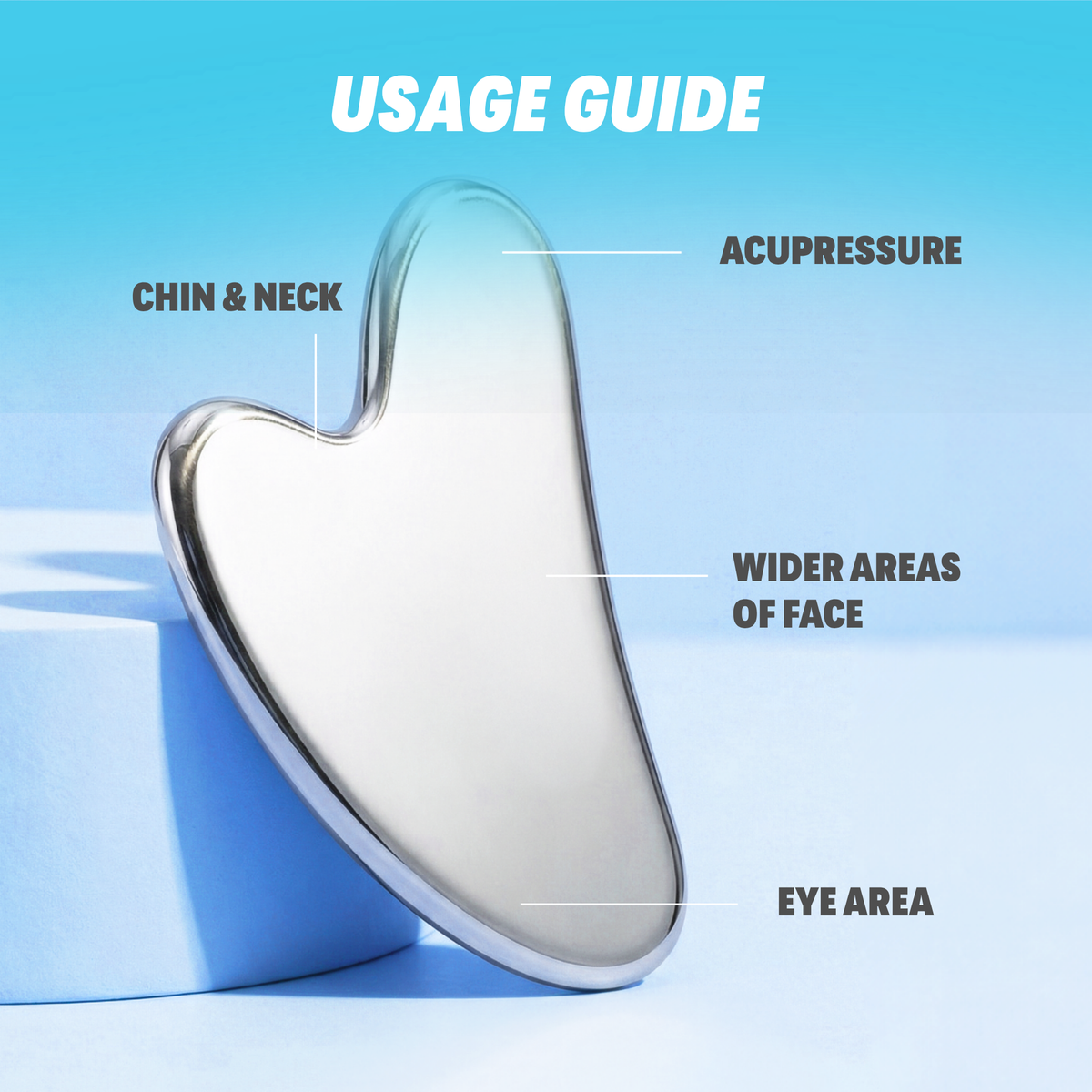
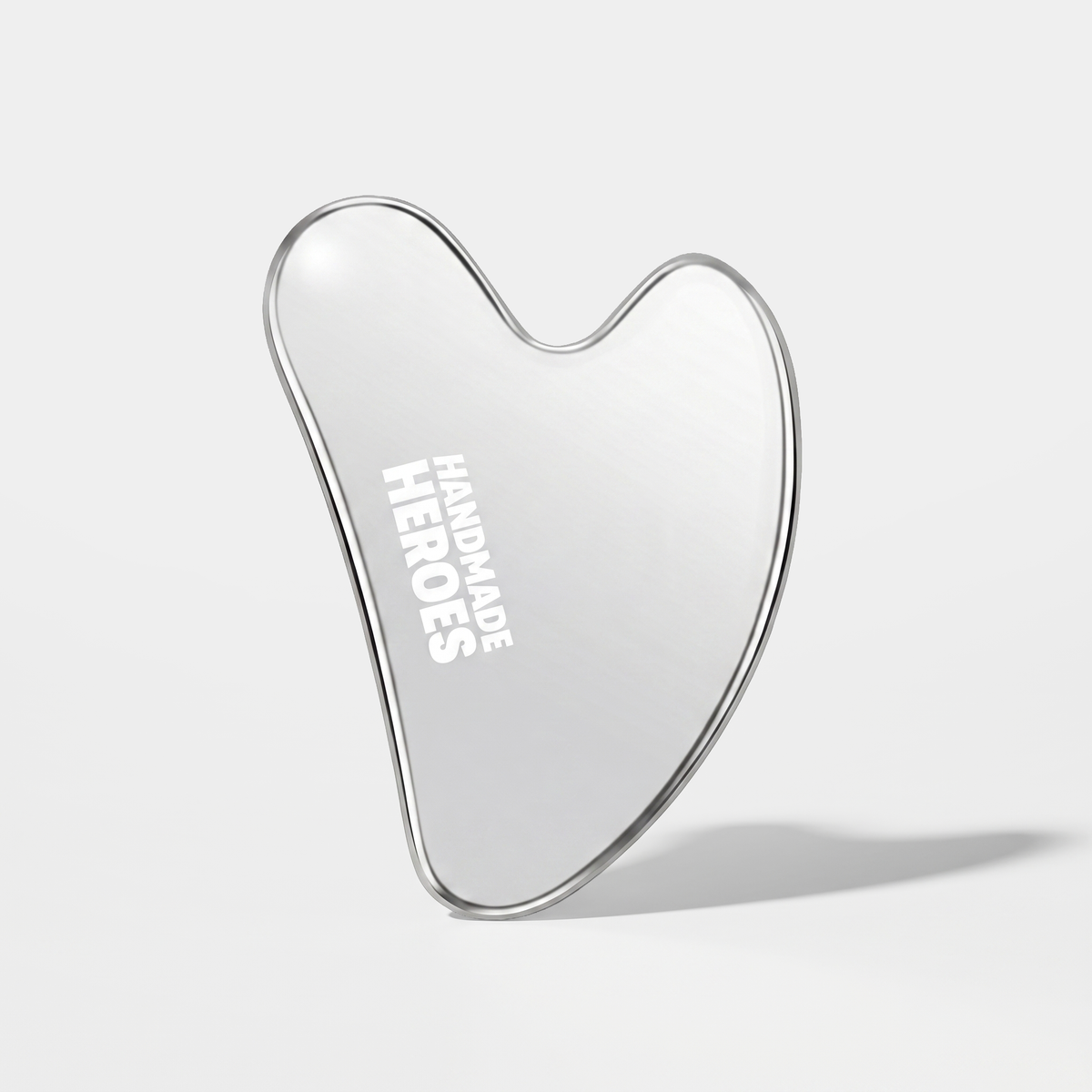
The Jaw Drop Stainless Steel Gua Sha is solid food-grade 304 stainless steel — cool to the touch before it even sees the fridge, with polished edges built to glide over oiled skin without catching. It wipes clean in seconds, it's non-porous, and it won't chip the way stone tools eventually do.
Pair it with a few drops of face oil (more on our two picks in the next article) and the whole ritual takes under five minutes.
FAQ
Can I use a gua sha every day?
Most people do — a few minutes each morning is a common routine. Just listen to your skin: if it feels irritated, take a day off.
Do I need a face oil, or will lotion work?
Oil gives the best glide. Lotion can absorb too fast through your passes, which brings back the drag you're trying to avoid.
Why does my jaw feel sore afterward?
That usually means too much pressure — ease up on the next pass.
Related reading
- Does Gua Sha Actually Work?
- The Best Oil for Gua Sha (and Why You Need One at All)
- How to Clean a Gua Sha (and Why Steel Makes It Easy)
Sources
Cleveland Clinic — Gua Sha: Benefits and How To Do It
Real ingredients. Real results.


Leave a comment
This site is protected by hCaptcha and the hCaptcha Privacy Policy and Terms of Service apply.