
Gua sha shows up in a lot of skincare feeds promising a permanently sculpted jaw or an overnight lift. We went looking for the actual research behind it — not the caption, the study.
What gua sha actually is
Gua sha is a facial massage technique that uses a smooth-edged tool to stroke the skin in one direction, usually with a slip of oil underneath. Cleveland Clinic describes it as a tool-assisted massage rooted in traditional Chinese medicine that may help increase blood flow to the surface of the skin. It's gentle on the face — nothing like the deeper scraping version sometimes used on the back or shoulders for muscle soreness.
The 2025 study, and what it actually measured
The most useful recent data point is a randomized controlled trial published in the Journal of Cosmetic Dermatology in May 2025. Researchers put 34 women, ages 20 to 50 — a small group, but a controlled one — through eight weeks of either facial roller or gua sha massage, 10 minutes a day, five days a week. That's 40 sessions, not one. At the end, they measured three things with actual instruments: facial surface distances with a 3D scanner, muscle tone at the masseter (jaw muscle) with a device called a MyotonPRO, and skin elasticity with a Cutometer.
Here's what showed up. Facial contour measurements — including one specific to the jawline — shrank by 2.23 to 2.40 mm in the gua sha group (p < 0.001). The gua sha group also saw a real drop in masseter muscle tension: oscillation frequency down 2.02 Hz, dynamic stiffness down 56.46 N/m, changes the facial-roller group didn't show. On the flip side, the roller group improved on skin elasticity (about 8.6% on one measure), while the gua sha group didn't move the needle there. Two different tools, two different jobs. Researchers used a dual-sided massage tool for the trial, not any specific brand — the point is the technique and the repetition, not the label on the handle.
What's temporary, and why that's the honest answer
None of this is a permanent change. The contour measurements reflect fluid and surface-level shifts — the kind linked to the same lymphatic-style, one-direction motion that Cleveland Clinic says may help ease facial puffiness. They're upfront that this specific puffiness benefit hasn't been directly studied, even though the mechanism is plausible. Puffiness, by definition, comes back. The 2025 study itself only measured people after eight straight weeks of near-daily use, not after one pass on a Tuesday morning, and the researchers noted they didn't test whether results hold beyond that. That's the real finding here: consistency, not magic — and even then, the evidence is still early.
What gua sha can't do
It's worth saying plainly: gua sha does not dissolve fat, does not reshape bone, and does not permanently lift or slim your face. No massage tool does. What the research supports is a temporary, appearance-level change — a calmer, less puffy look and a looser feeling in the jaw — built through repetition. If you're dealing with jaw pain, clenching, or a clicking jaw, that's a conversation for a dentist or doctor, not a tool.
Meet the tool: Jaw Drop
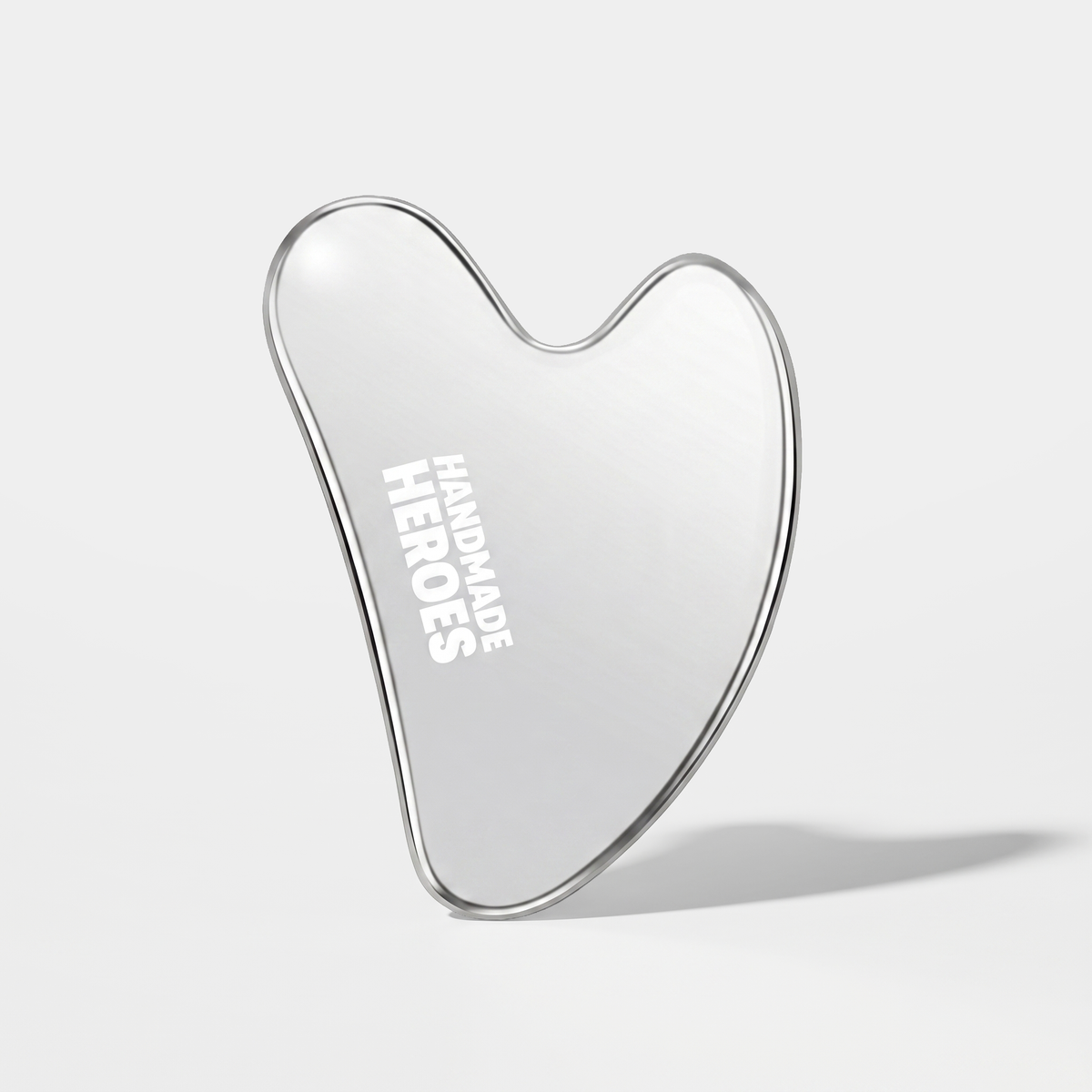
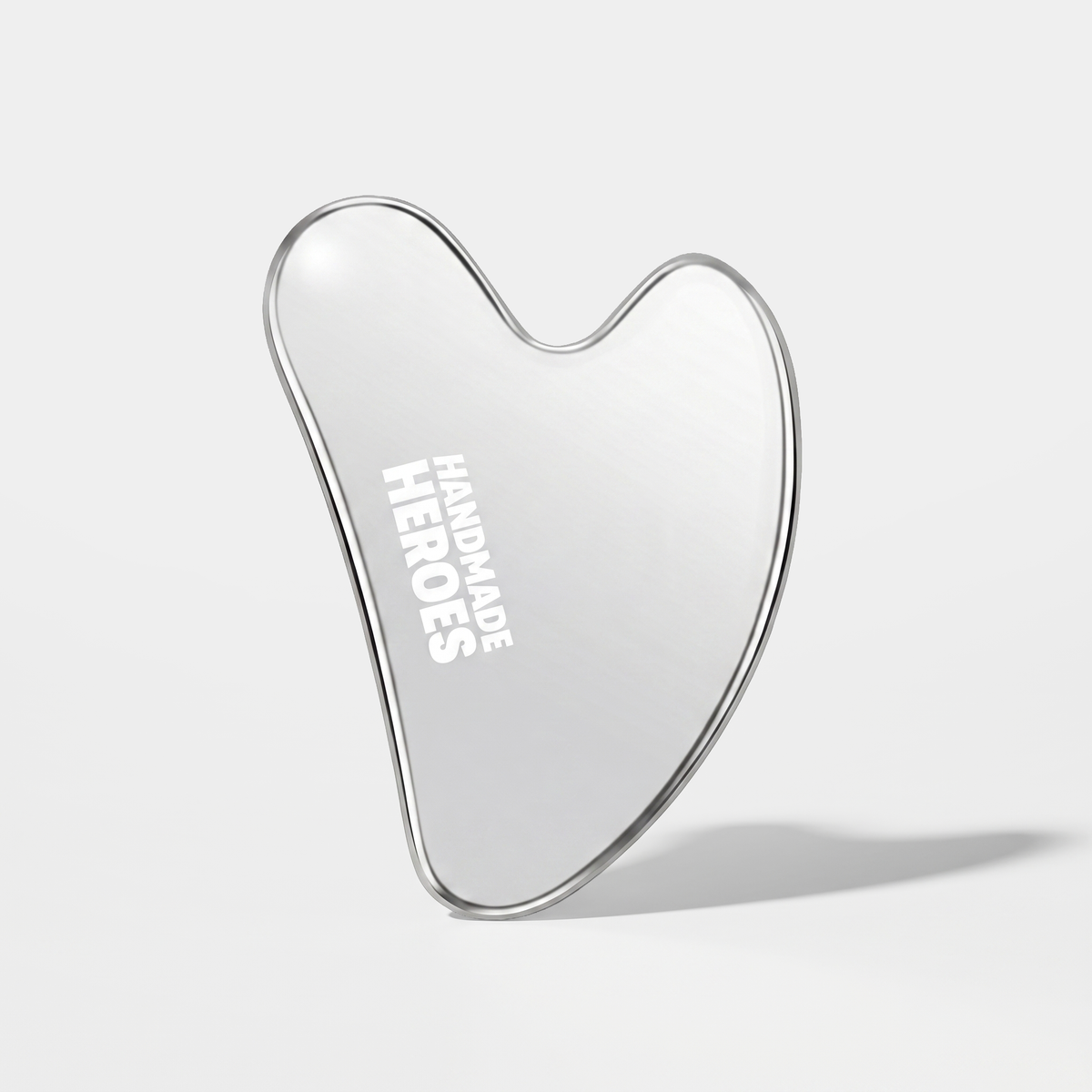
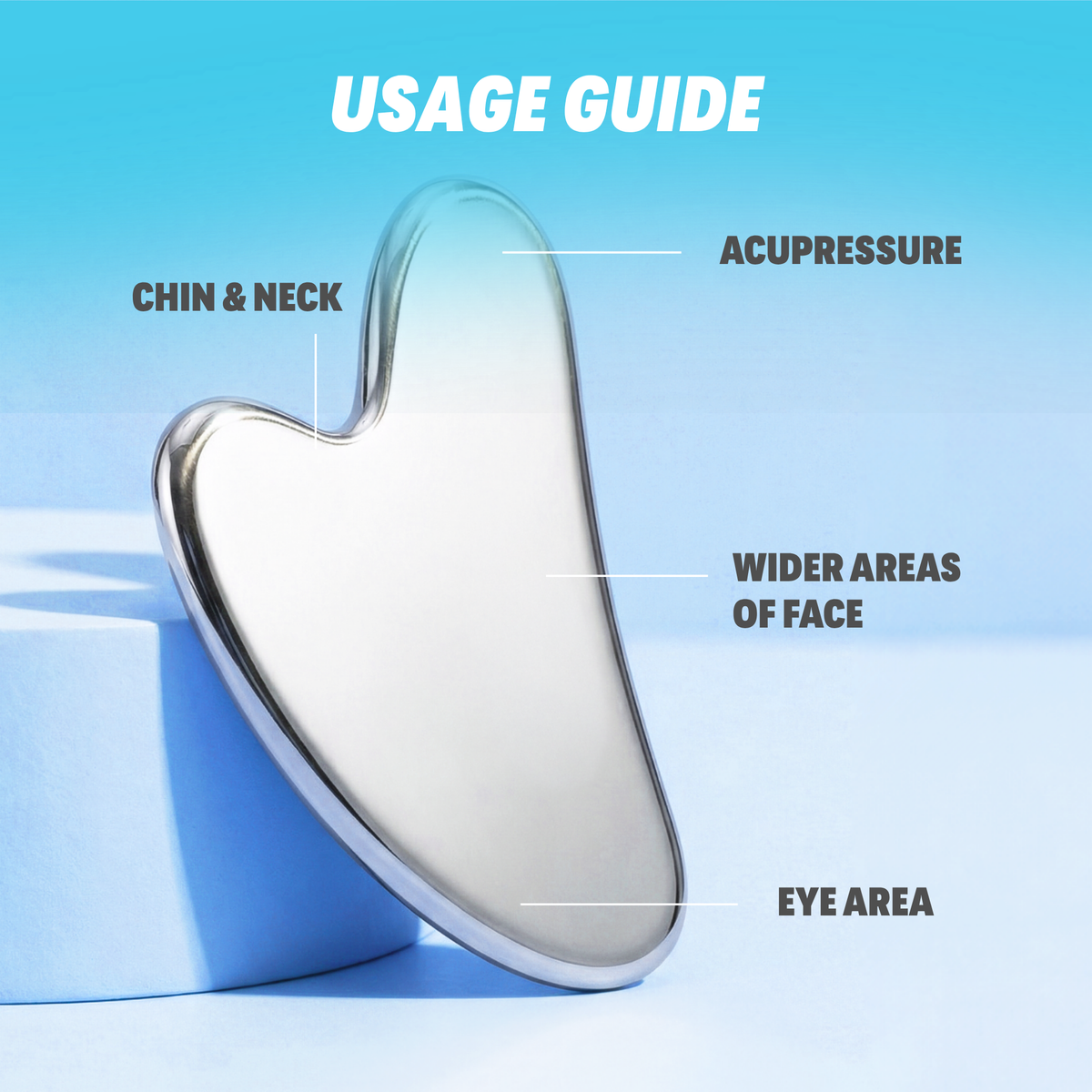
If you want to try it properly, Jaw Drop is one sculpted piece of solid, food-grade 304 stainless steel — no seams, no coating to wear off. It's cool to the touch on its own and colder straight from the fridge, and the polished edges are smooth enough to glide over oiled skin without snagging. Use it for a jaw release, a full facial gua sha routine, or a slower lymphatic-drainage-style pass — one tool, three ways to use it. It wipes clean in seconds because stainless steel is non-porous, so nothing sits in the surface between uses, and it won't chip or shatter if you drop it on the bathroom floor.
Work it on damp skin over a few drops of face oil — the Bakuchiol Booster Oil gives it good glide — sweeping outward and upward (jaw to ear, cheek to temple, brow to hairline) in light, slow passes, 3 to 5 per section. Never drag it over bare, dry skin, wash it after every use, and skip it entirely over active breakouts, broken skin, a sunburn, or general irritation. Shop the Jaw Drop Stainless Steel Gua Sha.
FAQ
Is the slimming effect from gua sha permanent?
No. The research shows temporary, appearance-level changes that build with consistent use over weeks — not a one-time transformation.
Can gua sha treat TMJ or jaw clenching?
No. It's a feel-good massage ritual, not a medical treatment. Ongoing jaw pain, clicking, or clenching should be checked out by a dentist or doctor.
How often do I actually need to use it?
The 2025 study used five sessions a week for eight weeks. Treat it like a habit, not a once-in-a-while touch-up.
Related reading
- Stainless Steel vs Jade or Rose Quartz Gua Sha: What Actually Matters
- Gua Sha for the Jawline: What It Can (and Can't) Do
- How to Use a Gua Sha
Sources
Ahn S., Hwang U., Han H., et al. "Comparative Effects of Facial Roller and Gua Sha Massage on Facial Contour, Muscle Tone, and Skin Elasticity: Randomized Controlled Trial." Journal of Cosmetic Dermatology, May 2025. onlinelibrary.wiley.com/doi/10.1111/jocd.70236
Cleveland Clinic. "Gua Sha: What It Is and How To Do It." health.clevelandclinic.org
General information, not medical advice.
Real ingredients. Real results.

Leave a comment
This site is protected by hCaptcha and the hCaptcha Privacy Policy and Terms of Service apply.