
TL;DR: Ask which vitamin C is the gold standard, and almost everyone says L-ascorbic acid. Ask a formulator which one is the most stable, and you get a completely different answer. Here's an honest look at how the major forms of vitamin C compare — potency, stability, and irritation — and why an oil-soluble derivative called tetrahexyldecyl ascorbate ended up in our own face oil.
L-ascorbic acid: the most researched, and the most fragile
L-ascorbic acid is the form of vitamin C most of the clinical research is built on, and it's genuinely potent — a 2013 dermatology review describes it as a powerful topical antioxidant with real evidence behind its use for photoaging and hyperpigmentation (Telang PS. Indian Dermatol Online J. 2013;4(2):143–146). That's the case for L-ascorbic acid, and it's a real one.
It's also the least stable ingredient in most people's skincare cabinets. L-ascorbic acid oxidizes on contact with air, light, and heat, which is why a bottle can turn from clear to amber-brown within weeks of opening. Once it oxidizes, it stops working the way it's supposed to. It also needs a low pH — around 3.5 — to absorb into skin, and that acidity is exactly what makes it a common source of stinging and redness, particularly for reactive or already-compromised skin. The same review notes that formulating a stable, deliverable dose of vitamin C is one of the central challenges in the ingredient's use, which is exactly why so many derivatives exist in the first place.
What "derivative" actually means
A vitamin C derivative is L-ascorbic acid with something attached — a phosphate group, a sugar, a fatty chain — that changes how the molecule behaves. Skin enzymes cleave that attachment after application, releasing active ascorbic acid over time. The trade-off is consistent across the category: derivatives are more stable and generally gentler than raw L-ascorbic acid, but that stability comes at the cost of some raw potency, and the research base behind any single derivative is smaller than the decades of data behind L-ascorbic acid itself.
A few of the more common ones:
- Sodium ascorbyl phosphate (SAP) — water-soluble, well tolerated, a common choice for sensitive-skin formulas.
- Ascorbyl glucoside — a glucose-bound form, water-soluble and stable, converted to active vitamin C by skin enzymes.
- Magnesium ascorbyl phosphate (MAP) — another water-soluble ester with a reasonable research base of its own.
- Tetrahexyldecyl ascorbate (THD ascorbate) — the outlier of the group, because it's oil-soluble rather than water-soluble.
Why oil-soluble changes the stability equation
Most of L-ascorbic acid's instability is a water problem — oxidation in an aqueous, exposed environment is fast chemistry. Take the water out, and a lot of that reaction pathway disappears. Tetrahexyldecyl ascorbate is built to dissolve in oil, not water, which makes it a natural fit for an anhydrous formula — a product with no water in it at all. In that kind of base, there's no aqueous oxidation cycle running every time the bottle is opened, so the formula can hold up over its shelf life without refrigeration or an airless pump doing all the work.
That's also why THD ascorbate isn't a drop-in replacement for L-ascorbic acid in a water-based serum — it's a different tool built for a different format. It's most at home in an oil.
Where this landed for us
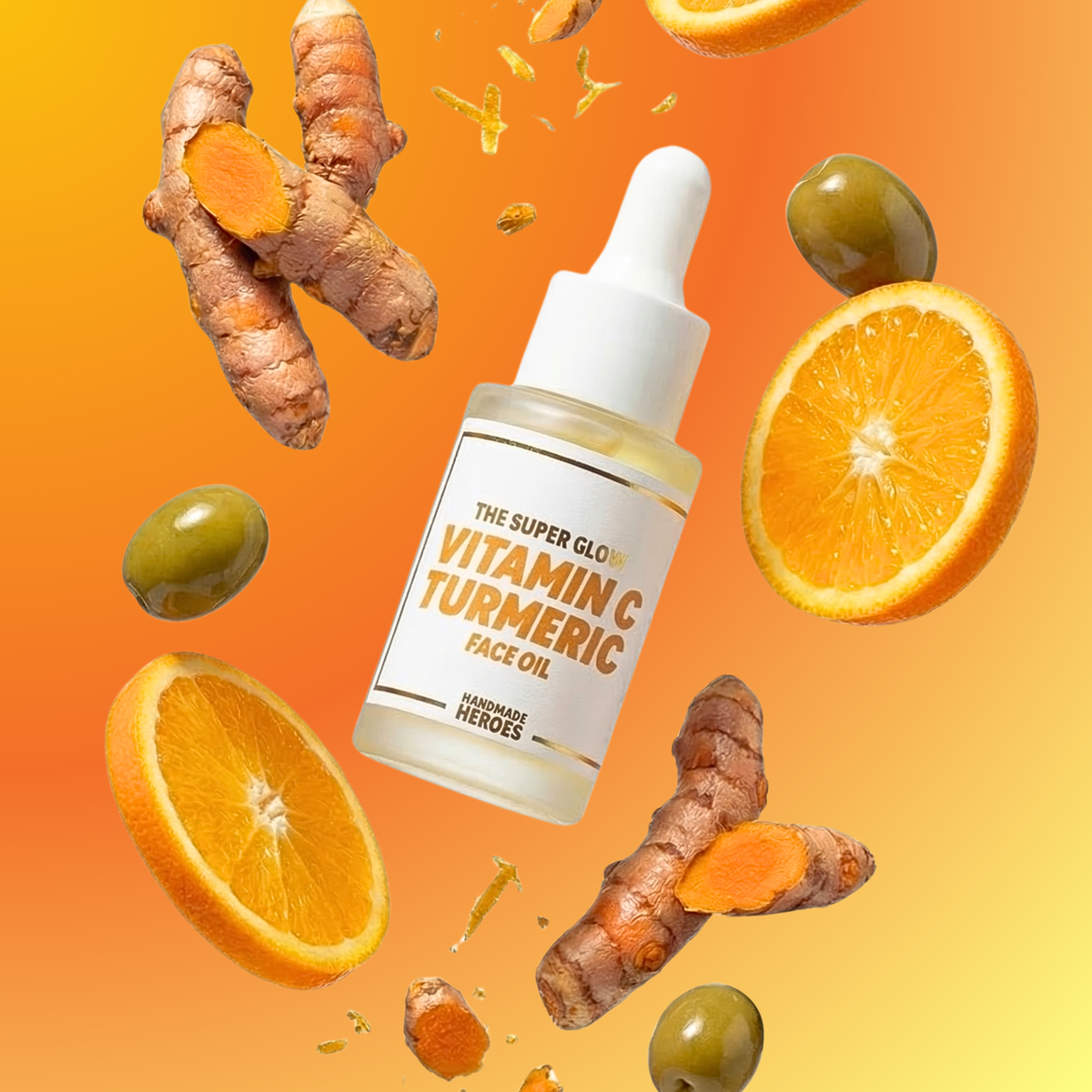
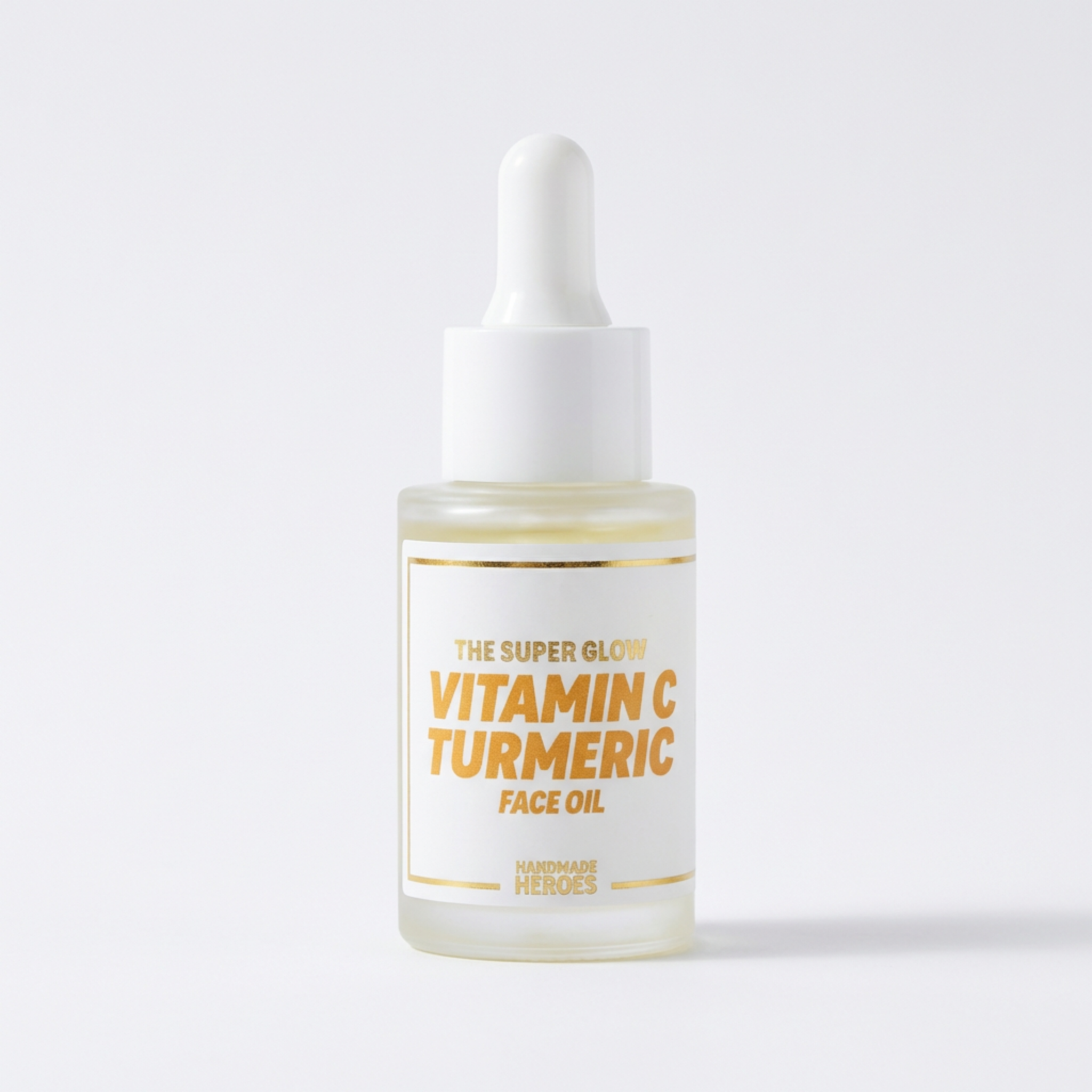
The Super Glow Vitamin C Turmeric Face Oil is built around tetrahexyldecyl ascorbate for exactly that reason: it's the form of vitamin C that's chemically suited to an anhydrous oil, paired here with turmeric root oil in a short ingredient list. Together, they're formulated to help brighten the look of dull, uneven-looking skin — without asking you to store a serum in the fridge or race a bottle to the finish line before it turns brown. It's vegan, cruelty-free, and lab-formulated.
Shop The Super Glow Vitamin C Turmeric Face Oil
FAQ
Is L-ascorbic acid better than vitamin C derivatives?
"Better" depends on what you're optimizing for. L-ascorbic acid has the deepest research base and the most direct potency. Derivatives like tetrahexyldecyl ascorbate trade some of that raw strength for stability and gentler wear — which matters if the alternative is a serum that's already oxidized by the time you get to the bottom of the bottle.
What is tetrahexyldecyl ascorbate, exactly?
It's an ester of vitamin C — ascorbic acid bonded to a fatty chain, which makes it oil-soluble instead of water-soluble. Skin enzymes convert it toward active vitamin C after it's applied.
Can a vitamin C derivative still brighten the look of my skin?
Yes. Stability and cosmetic benefit aren't opposites — a derivative that actually survives on the shelf and stays intact until you use it can outperform a more potent form that's already broken down. This article is general information about ingredient research, not medical advice.
Related reading
- Vitamin C serum vs vitamin C oil: which actually lasts?
- Why vitamin C serum turns orange
- Turmeric vs vitamin C for the look of dark spots
Sources
- Telang PS. Vitamin C in Dermatology. Indian Dermatology Online Journal. 2013;4(2):143–146. pmc.ncbi.nlm.nih.gov/articles/PMC3673383
- Farris PK. Topical Vitamin C: A Useful Agent for Treating Photoaging and Other Dermatologic Conditions. Dermatologic Surgery. 2005;31(7 Pt 2):814–817. pubmed.ncbi.nlm.nih.gov/16029672
Real ingredients. Real results.

Leave a comment
This site is protected by hCaptcha and the hCaptcha Privacy Policy and Terms of Service apply.