

TL;DR: That vitamin C serum in your bathroom cabinet — the one that's gone from clear to the color of weak tea — isn't "still working, just slower." It's oxidized. Water-based vitamin C serums and oil-based vitamin C formulas break down through different chemistry, and that difference decides how long each one actually lasts. Here's the honest, format-by-format comparison.
The serum problem: water is where oxidation happens fast
Most vitamin C serums are built around L-ascorbic acid dissolved in water, usually at a low pH to help it absorb into skin. That combination — water, oxygen exposure every time the cap comes off, and light — is exactly the environment L-ascorbic acid breaks down in fastest. A 2013 dermatology review on vitamin C in skincare points to instability and delivery as the central formulation challenge with this ingredient, which is why so much reformulation work has gone into finding ways to stabilize it or replace it (Telang PS. Indian Dermatol Online J. 2013;4(2):143–146).
That's also why serious vitamin C serums come with rules attached: store them away from light, keep the cap on tight, some brands recommend the fridge, and almost all of them are sold in dark glass or opaque airless pumps rather than the clear dropper bottles that look nice on a shelf but do the formula no favors. Color change is the tell — a fresh L-ascorbic acid serum is colorless to pale yellow; once it drifts to gold, amber, or brown, the active has largely oxidized and isn't delivering what the label promises anymore.
The oil problem, or rather, the oil advantage
An anhydrous oil — a formula with no water in it — sidesteps a lot of that chemistry by design. Oxidation of L-ascorbic acid is largely a water-and-light reaction; remove the water and swap in a vitamin C form that's built to dissolve in oil instead, and the degradation pathway that wrecks a serum in a sunny bathroom simply doesn't run the same way. That's the logic behind using tetrahexyldecyl ascorbate — an oil-soluble vitamin C ester — in an oil base instead of trying to force water-soluble L-ascorbic acid into a lipid formula it was never suited for.
There's a second, more practical layer here too: oils don't just resist degradation better, they also bring a moisturizing, occlusive feel that a thin water-based serum doesn't. That's a format difference, not just a stability one — some skin wants the lightweight glide of a serum, other skin wants the cushion of an oil, and that's a legitimate personal-preference call, not just a chemistry one.
What each format is actually good at
To be fair to serums: L-ascorbic acid has the longest, deepest research record of any vitamin C form, and a well-stabilized, properly stored serum can deliver real results while it's fresh. The honest trade-off is that "properly stored and used before it turns" is doing a lot of work in that sentence, and a lot of serums don't make it to the bottom of the bottle before they've quietly stopped pulling their weight.
An oil built around a stable, oil-soluble derivative trades some of that raw, decades-deep research pedigree for a formula that's simpler to keep intact — no fridge, no race against the clock, no watching the color for signs of trouble. Neither format is a universal upgrade over the other. They're solving the stability problem in different ways, and it's fair to pick based on which trade-off you'd rather make.
Where Super Glow fits
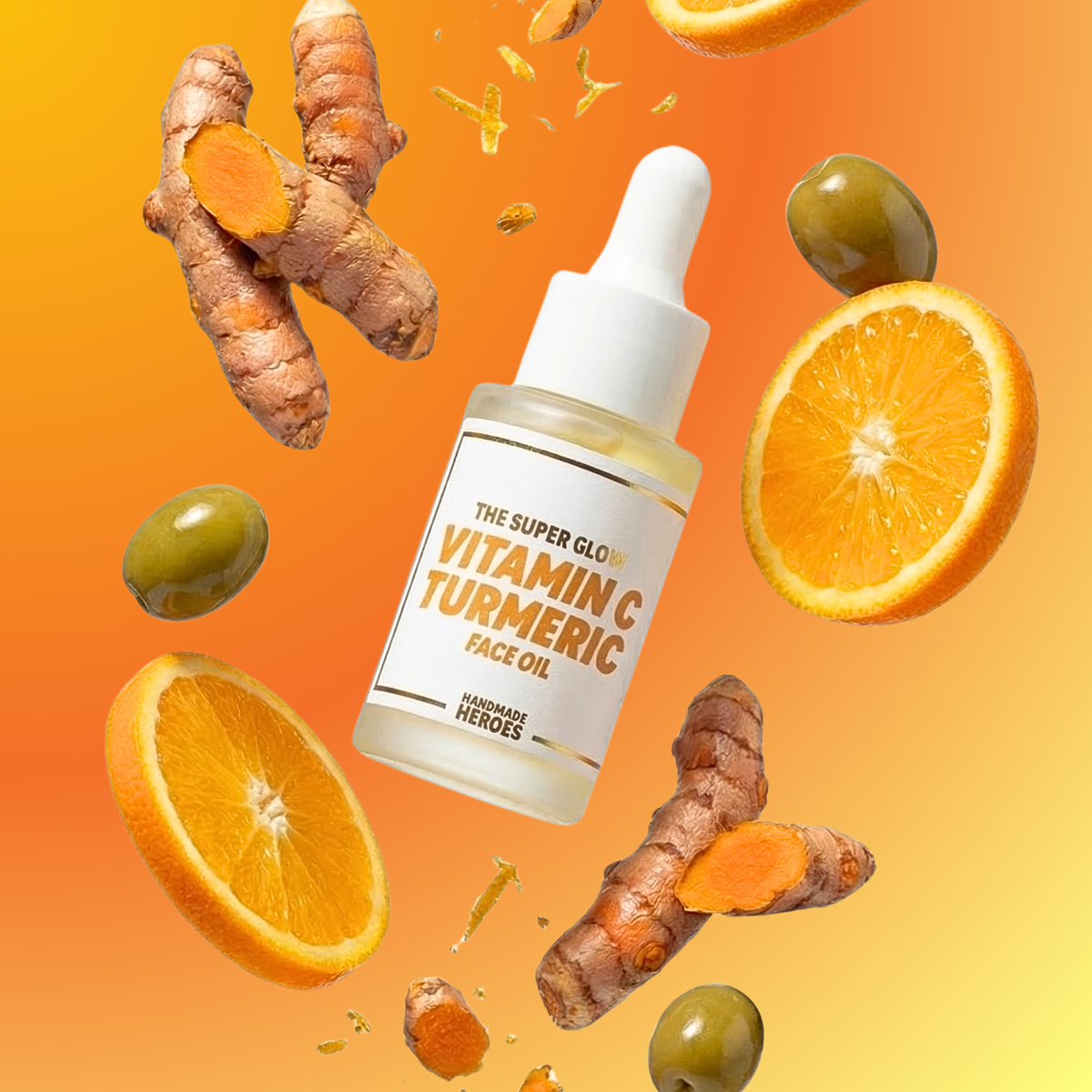
The Super Glow Vitamin C Turmeric Face Oil is our answer for the oil side of that trade-off — tetrahexyldecyl ascorbate paired with turmeric root oil in a short, anhydrous formula built to hold up on a bathroom shelf rather than a fridge door. It's formulated to help brighten the look of dull, uneven-looking skin, and it's vegan, cruelty-free, and lab-formulated.
Shop The Super Glow Vitamin C Turmeric Face Oil
FAQ
How do I know if my vitamin C serum has oxidized?
Color is the simplest signal. A fresh L-ascorbic acid serum is clear to very pale yellow. If it's turned gold, amber, or brown, it's likely oxidized and won't perform the way it did when new.
Is vitamin C oil less effective than vitamin C serum?
Not necessarily less effective — differently built. Oil formats generally trade some of L-ascorbic acid's raw research pedigree for a more stable delivery system, which matters if a serum realistically won't be used up before it degrades.
Can I use a vitamin C oil and a vitamin C serum together?
Layering actives from the same family isn't usually necessary and can increase the odds of irritation. Most people are better served picking the format that fits their skin and routine, rather than doubling up. This is general information, not medical advice — check with a dermatologist if you have reactive or compromised skin.
Related reading
- The most stable form of vitamin C (it's not L-ascorbic acid)
- Why vitamin C serum turns orange
- Vitamin C and turmeric together
Sources
- Telang PS. Vitamin C in Dermatology. Indian Dermatology Online Journal. 2013;4(2):143–146. pmc.ncbi.nlm.nih.gov/articles/PMC3673383
- Farris PK. Topical Vitamin C: A Useful Agent for Treating Photoaging and Other Dermatologic Conditions. Dermatologic Surgery. 2005;31(7 Pt 2):814–817. pubmed.ncbi.nlm.nih.gov/16029672
Real ingredients. Real results.


Leave a comment
This site is protected by hCaptcha and the hCaptcha Privacy Policy and Terms of Service apply.