
Somewhere out there is a photo of someone's yellow-tinged sink, a ruined washcloth, and a hairline that looks faintly spray-tanned. That's turmeric doing exactly what turmeric does. It's also the reason a lot of people try one DIY turmeric mask, love the idea, and never touch the spice again.
Why Turmeric Stains in the First Place
The compound responsible is curcumin — "what gives turmeric that bright, yellow color," according to Cleveland Clinic. It's a vivid, potent plant pigment, which is exactly why a pinch of turmeric can tint an entire pot of curry, and why the same pinch mixed into a bowl of yogurt for a homemade mask can tint skin, towels, and countertops right along with it. Fair skin tends to show it most, but nobody is fully immune once the pigment has something to bind to.
The good news: a stain from a DIY mask is not permanent. It typically fades within hours to a day or two as the outermost layer of skin cells naturally turns over. The less good news: nobody wants to spend that day or two looking like they missed a spot self-tanning.
The Detail Most DIY Recipes Miss: Curcumin Is Oil-Soluble
Here's the fact that explains almost everything about turmeric's staining reputation: curcumin is fat-loving, not water-loving. Dermatology researchers note that one of curcumin's real formulation hurdles is poor solubility in water, since it dissolves far more readily in oils. A kitchen-cupboard mask made from turmeric powder stirred into yogurt, honey, or water is mixing a fat-soluble pigment into a water-based paste with nothing to carry it evenly or lift it back off again. The pigment just sits there, on skin, binding as it pleases.
The same fact runs in reverse, which is the part most people never hear: because curcumin dissolves in oil, oil is also what removes a turmeric stain fastest. An oil cleanser, or even plain coconut or olive oil on a cotton pad, breaks a turmeric stain down far more efficiently than soap and water alone.
The Fix Is the Base, Not the Ingredient
None of this means turmeric doesn't belong in a routine — it means loose powder was never the right delivery system. A turmeric root oil, formulated into an oil base at a controlled ratio, carries the same botanical without leaving it to bind directly and unevenly onto skin the way raw powder does. A few practical habits help regardless of what you're using: patch test anything turmeric-based on your inner arm for 24 hours before it goes near your face, skip the kitchen-powder version if you have somewhere to be that day, and reach for an oil first if a stain does show up. As with any new active, anyone with sensitive skin or a history of allergies is better off patch testing first and checking with a dermatologist before adding it to a routine.
Where This Shows Up in the Range
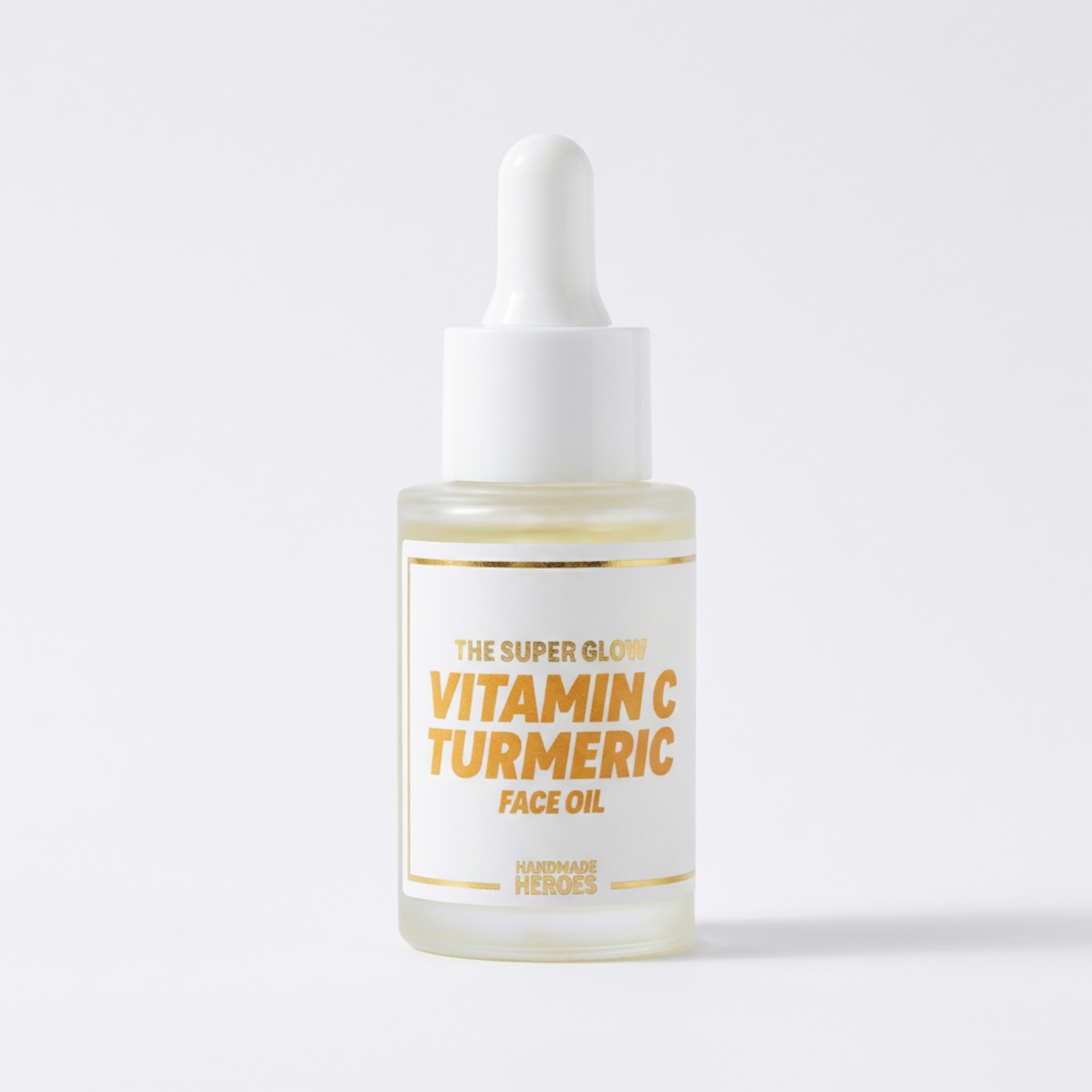
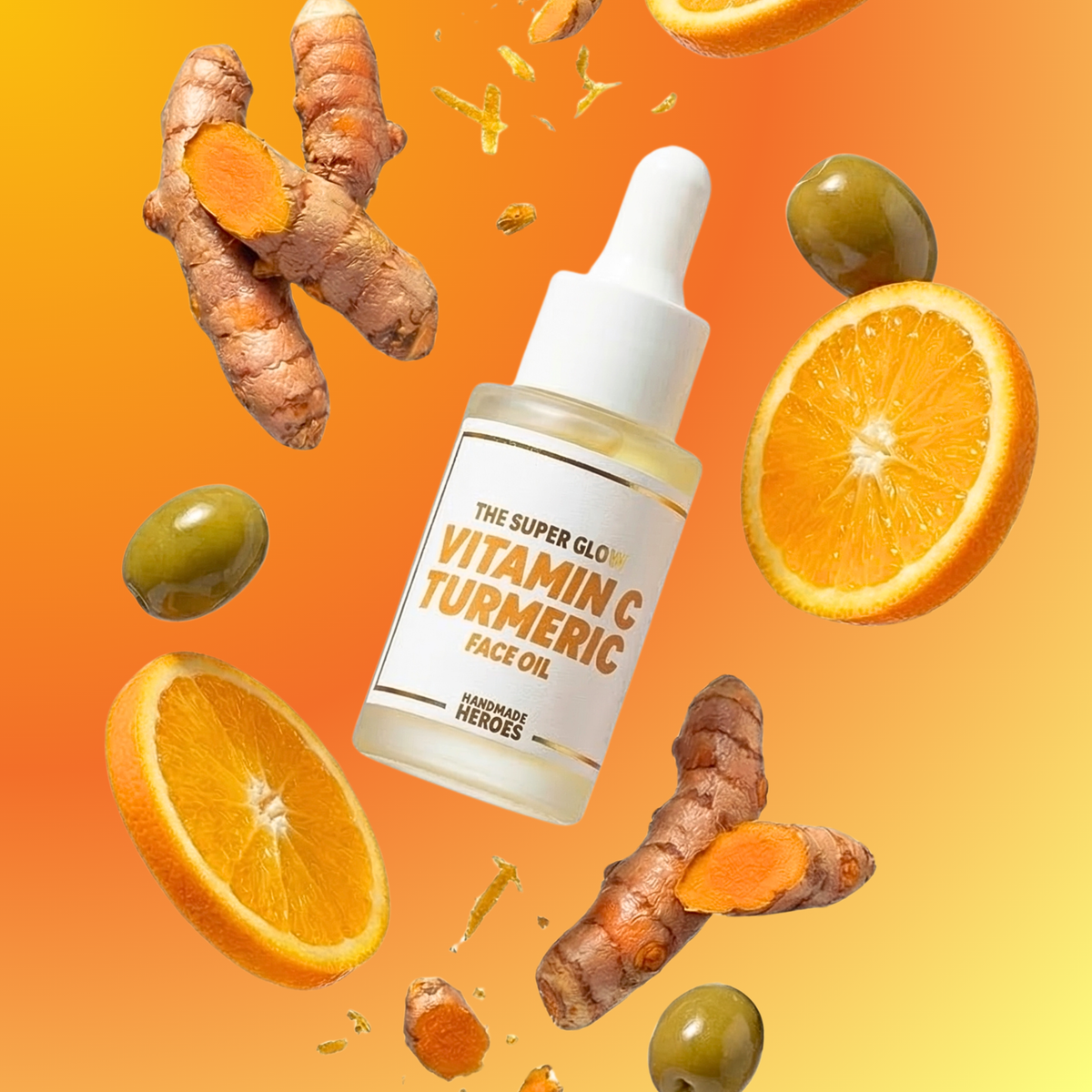
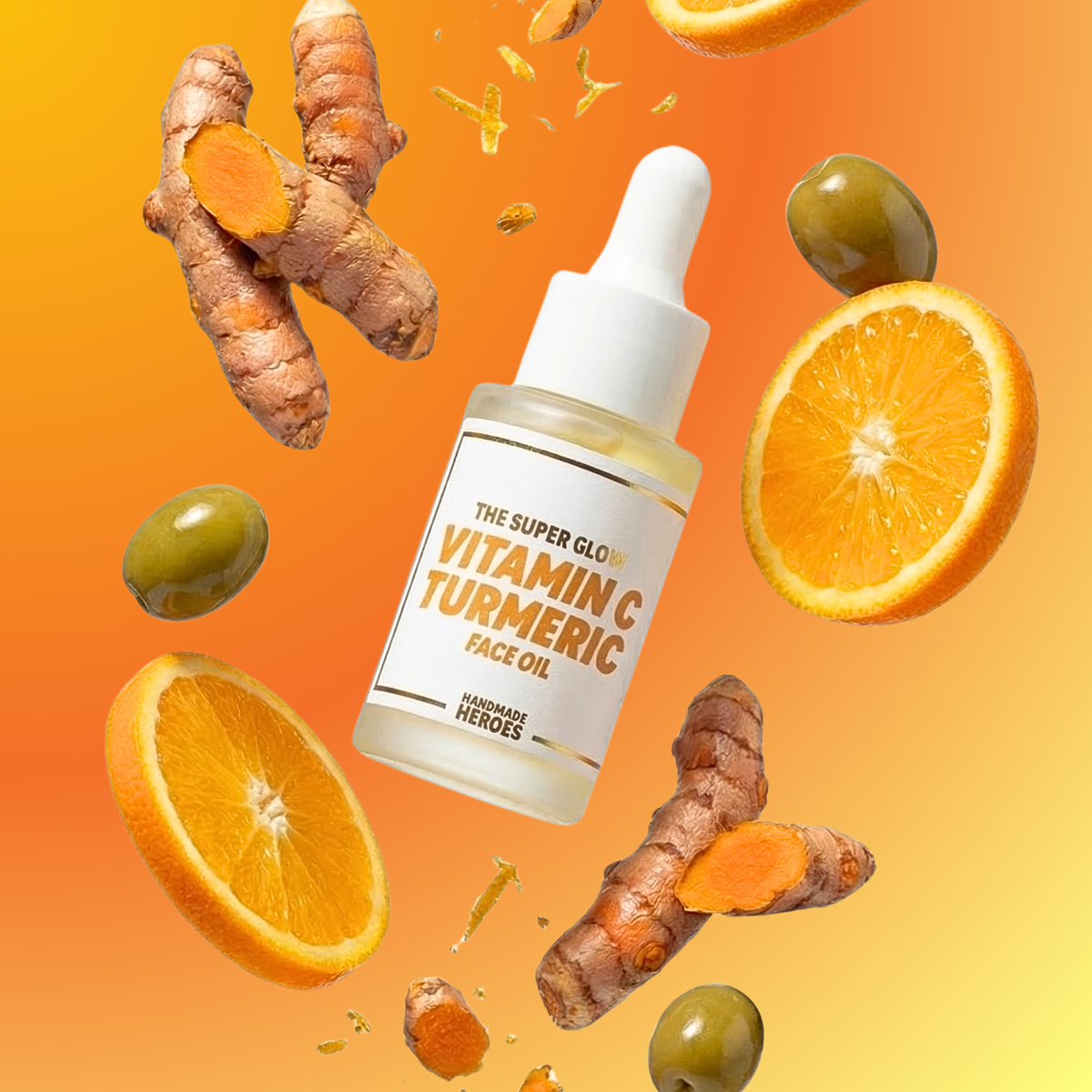
The Super Glow Vitamin C Turmeric Face Oil uses turmeric root oil already carried in a formulated oil base, alongside stable, oil-soluble vitamin C (tetrahexyldecyl ascorbate). The ingredient list is short, the formula is vegan, cruelty-free, and lab-formulated, and the job is to brighten the look of dull, uneven-looking skin — turmeric's warm, earthy note included, minus the sink drama. Shop The Super Glow Vitamin C Turmeric Face Oil.
FAQ
Will Super Glow stain my skin or pillowcase? The turmeric root oil is already carried in the formula's oil base rather than sitting as loose powder, so it's built to behave differently than a DIY paste. As with any new product, patch test first if you're stain-prone.
How long do turmeric stains actually last? Typically hours to a couple of days, as skin naturally sheds its outer layer. This is general information, not medical advice — see a dermatologist for anything that lingers or irritates.
What actually gets a turmeric stain off? Oil before soap. Because curcumin is oil-soluble, an oil cleanser or plain kitchen oil on a cotton pad lifts it faster than water and soap alone.
Related reading
- DIY Turmeric Face Masks: What to Know Before You Mix One
- Why Your Vitamin C Serum Turns Orange (and the Kind That Doesn't)
- Vitamin C and Turmeric: Why This Skincare Duo Works So Well
Sources
Cleveland Clinic, "Turmeric Health Benefits and Side Effects"
Practical Dermatology, "Turmeric, Curcumin, and Curcuminoids: A Dermatologic Review"
This article is general information, not medical advice.
Real ingredients. Real results.

Leave a comment
This site is protected by hCaptcha and the hCaptcha Privacy Policy and Terms of Service apply.