

Three weeks ago it was pale gold. This morning it's the color of weak tea — and it smells a little different too. If your vitamin C serum has drifted from bright to brown, that's not a bad batch. It's chemistry, running on a schedule.
What's Actually Happening Inside the Bottle
Most vitamin C serums are built on L-ascorbic acid, the form of vitamin C with the most research behind it and the shortest shelf life. It works as an antioxidant because it's an electron donor — in the skin, it's considered a secondary antioxidant that can hand an electron off to vitamin E. That electron-donating trick is exactly what makes it useful, and exactly what makes it unstable: giving up an electron is a form of oxidation, and L-ascorbic acid will do it whether or not there's any skin around to benefit.
The Color Change Is the Warning Label
Board-certified dermatologists have compared it to a cut peach: bright orange-yellow when fresh, brown within a few hours on the counter, because the vitamin C in the fruit is oxidizing. A vitamin C serum follows the same arc, just slower. Fresh, it's clear to pale yellow. As it oxidizes, it moves to deeper yellow, then amber, then orange or brown. Dermatology sources are blunt about what that means: once a vitamin C preparation has visibly discolored, it has already oxidized and isn't going to do much more for your skin — the electron is gone, and so is most of the benefit. Heat, light, and air all speed the process up, which is why a bottle left uncapped on a warm bathroom shelf turns faster than one stored dark and cool.
If you're using a water-based L-ascorbic acid serum and want to get the most out of it before that happens, a few habits help: keep it in opaque or dark glass rather than clear, store it somewhere cool and away from direct light, recap it tightly after every use, and treat the shelf life as much shorter once it's opened than the date printed on the box suggests.
Why an Oil-Soluble Vitamin C Skips the Problem
Not every form of vitamin C behaves this way. Tetrahexyldecyl ascorbate — sometimes shortened to THD ascorbate — is an oil-soluble ester of vitamin C built for a longer shelf life, with a reputation among formulators for resisting oxidation far better than straight L-ascorbic acid. Two things are doing the work here: the molecule itself is a more stable structure, and it's typically formulated into an anhydrous oil base rather than a water-based serum, which removes a lot of the moisture-driven degradation pathway that pushes L-ascorbic acid toward orange. That's the actual reason a stable vitamin C product tends to be an oil rather than a watery serum — the format isn't a texture preference, it's the stability strategy.
Where This Shows Up in the Range
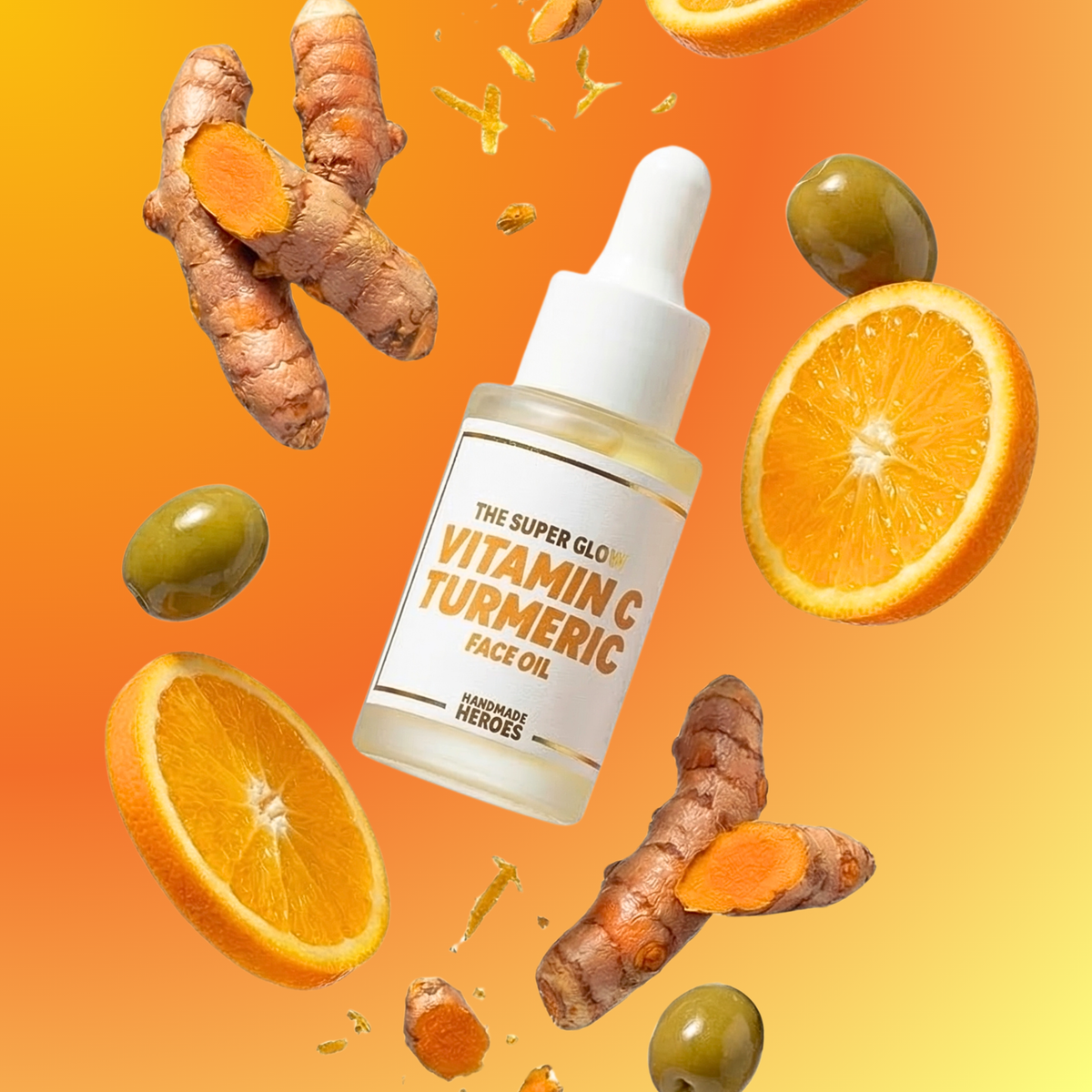
The Super Glow Vitamin C Turmeric Face Oil is built around that logic. Instead of L-ascorbic acid in a water base, it uses tetrahexyldecyl ascorbate suspended in an oil — the same stable, oil-soluble vitamin C described above — paired with turmeric root oil, which is where the warm, earthy scent comes from. The ingredient list stays short, the formula is vegan, cruelty-free, and lab-formulated, and the job is simple: brighten the look of dull, uneven-looking skin without asking you to race a bottle to the finish line before it turns. Shop The Super Glow Vitamin C Turmeric Face Oil.
FAQ
Is an oxidized vitamin C serum unsafe to use? Usually not irritating on its own, but it's not doing much for the look of your skin anymore. Once the color has visibly shifted to orange or brown, it's reasonable to replace it.
How can I tell if mine has turned? Color is the clearest sign — pale yellow drifting to amber, orange, or brown. A change in smell, often slightly metallic or sour, is another cue.
Does Super Glow oxidize the same way? No. The oil-soluble vitamin C and anhydrous oil base are specifically what keep it from following the same clear-to-orange timeline as a water-based L-ascorbic acid serum.
Related reading
- The Most Stable Form of Vitamin C, Explained
- Vitamin C Serum vs. Oil: What's the Difference?
- Turmeric Skincare Without the Yellow Stain
Sources
Warrenton Dermatology & Skin Therapy Center, excerpting Dermatology Times, "Why Do Some Vitamin C Products Turn Orange on the Skin?"
Paula's Choice Skin Care Ingredient Dictionary, "Tetrahexyldecyl Ascorbate (THD)"
This article is general information, not medical advice.
Real ingredients. Real results.

Leave a comment
This site is protected by hCaptcha and the hCaptcha Privacy Policy and Terms of Service apply.