
TL;DR: Peeling, splitting cuticles are almost always caused by dryness — from over-washing, cold air, or the habit of picking. The fix is simpler than you think: moisturize, stop cutting, and protect your barrier. Here’s the full breakdown.
What Your Cuticles Actually Do
The cuticle is a thin layer of skin that seals the gap between the nail plate and the skin around it. According to the American Academy of Dermatology (AAD), cuticles protect the nail root — and when you cut or damage them, you open a direct route for bacteria and other germs to enter the body, increasing infection risk. That seal matters.
Why Cuticles Peel and Split
A few repeat offenders show up time and again:
- Over-washing and harsh soaps: Every hand wash strips some of the skin’s natural oils. Do it a dozen times a day without moisturizing after, and your cuticles feel it first.
- Cold, dry weather: Winter air has low humidity. Your skin loses moisture faster than it can replace it, and the thin skin around nails is particularly vulnerable.
- Picking and biting: Once a cuticle starts to peel, it’s tempting to pull it. Resist — you usually tear further into healthy skin and create a small wound that can sting and swell.
- Nail polish remover and acetone: Acetone is extremely drying. Frequent gel removal is one of the fastest routes to chronically wrecked cuticles.
- Skipping moisturizer: Hands are one of the most washed and least moisturized parts of the body. If your hand lotion routine is “whenever I remember,” your cuticles will tell on you.
The One Thing Not to Do: Stop Cutting Your Cuticles
We know, we know — every nail salon does it. But the AAD is unambiguous: “It’s important to avoid cutting your cuticles or pushing them back. When you trim or cut your cuticles, it’s easier for bacteria and other germs to get inside your body and cause an infection.” If you’ve ever had a swollen, red, throbbing nail fold after a manicure, that’s exactly what they’re talking about.
A Simple Cuticle Care Routine That Actually Works
You don’t need a complicated 7-step process. You need consistency.
- Moisturize after every hand wash. Keep something next to every sink. A fast-absorbing oil or a thick balm — both work, your preference.
- Apply a dedicated cuticle oil daily. Oils penetrate more effectively than heavy creams, delivering nourishment directly to the nail and the surrounding skin. Morning or before bed (or both) — whatever you’ll actually stick to.
- Wear gloves for wet work. Dishes, cleaning, anything involving prolonged water exposure — rubber gloves protect the barrier you’re trying to rebuild.
- File, don’t tear. If a nail snags, file it smooth rather than ripping — ragged nail edges catch on things and drag at the cuticle.
- Give your nails a break from gel/acrylics periodically. The removal process is almost always harsher than the application.
What to Use: Oat Mighty Cuticle Oil
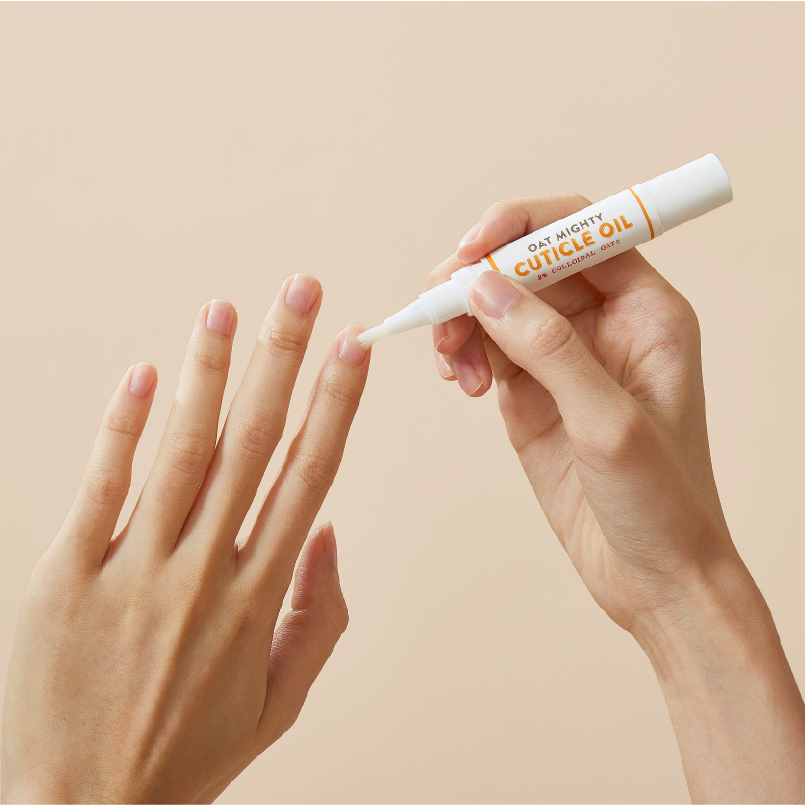
Our Oat Mighty Cuticle Oil is a nourishing nail and cuticle oil formulated to soften ragged edges and condition the surrounding skin. A single glide at the base of each nail and you’re done — it’s designed to absorb quickly rather than leaving a greasy film on your keyboard.
Find it alongside our full range of body and hand care in the body collection.
Not medical advice — consult a board-certified dermatologist if you have signs of nail infection or persistent skin changes.
FAQ
How often should I apply cuticle oil?
Daily is ideal — especially if your hands are frequently washed or exposed to harsh conditions. Even once a day before bed makes a noticeable difference within a week or two.
My cuticles are red and swollen — is that normal dryness?
Redness and swelling around the nail fold can be a sign of paronychia (a nail infection) rather than simple dryness. If the area is painful, warm to the touch, or doesn’t improve, see a dermatologist — it may need treatment.
Should I push my cuticles back?
The AAD advises against pushing cuticles back. The cuticle is there for a reason — it seals out bacteria. Softening the skin with cuticle oil achieves a tidier appearance without compromising that protective function.
Can winter weather alone cause cuticle damage?
Yes. Low winter humidity, combined with indoor heating, creates conditions that rapidly dehydrate exposed skin. Your cuticles are thin and get a lot of wear — they’re usually the first to show the effects of seasonal dryness.
Sources
- American Academy of Dermatology. How to trim your nails. https://www.aad.org/public/everyday-care/nail-care-secrets/basics/how-to-trim-nails
Real ingredients. Real results.


Leave a comment
This site is protected by hCaptcha and the hCaptcha Privacy Policy and Terms of Service apply.