
TL;DR: Hyaluronic acid is your skin’s own natural moisture magnet — but molecular weight determines where in your skin it actually works. High-MW HA sits on the surface and plumps. Low-MW HA penetrates deeper. A multi-weight formula gives you both. Here’s the full science, minus the chemistry lecture.
What Is Hyaluronic Acid, and Why Does Your Skin Care?
Hyaluronic acid (HA) is a glycosaminoglycan — a polysaccharide molecule your body produces naturally and concentrates heavily in skin, joints, and eyes. Its defining characteristic is an extraordinary capacity to bind water: a single gram of HA can hold up to six litres of water. In skin specifically, HA sits within the extracellular matrix and is responsible for the turgor, resilience, and plumpness you associate with healthy, well-hydrated skin.
Here’s the catch: your skin’s natural HA levels start declining in your mid-twenties. By the time you hit your forties, you’ve lost a significant portion of it. Dryness, fine lines, and a loss of that dewy bounce are direct consequences. A 2012 review in Dermato-Endocrinology described HA as “a key molecule in skin aging” and documented its central role in maintaining skin moisture and structural integrity (Papakonstantinou et al., 2012, Dermato-Endocrinology, DOI: 10.4161/derm.21923).
The Molecular Weight Problem — and Why It Actually Matters
When you see “hyaluronic acid” on a label, you’re seeing a category, not a single ingredient. HA molecules vary enormously in size, measured in Daltons (Da) or kiloDaltons (kDa). And size determines where the molecule can travel in your skin.
Your skin’s outermost layer, the stratum corneum, acts as a barrier with tightly packed cells and tiny intercellular spaces. Large molecules simply cannot get through it. Small ones can.
- High-molecular-weight HA (typically >600–1000 kDa): Too large to cross the stratum corneum. It sits on the skin surface, forming a moisture-retaining film that temporarily plumps the look of skin and reduces transepidermal water loss. You feel the immediate smoothing effect — but the hydration is surface-level.
- Low-molecular-weight HA (typically <50–100 kDa, down to a few hundred Daltons): Small enough to penetrate into deeper skin layers. Research shows LMW-HA can permeate down toward the dermis, where it acts on the extracellular matrix more directly. A peer-reviewed study examining 12 HA molecules of different sizes found that lower-molecular-weight molecules (400 Da to 100 kDa) achieved skin penetration rates of 14%–19%, compared to just 2.73%–10.2% for larger molecules (Juniper Publishers, JOJ Dermatology & Cosmetology, DOI: 10.19080/JOJDC.2023.09.555665).
High vs. Low: Why You Don’t Have to Choose
The beauty of a multi-weight formula is that you get both mechanisms working at once:
- High-MW HA creates an immediate, visible surface effect — skin looks plumper, smoother, and more luminous right away.
- Low-MW HA penetrates past the surface to deliver deeper hydration where fine lines are actually forming.
A 2022 review published in Dermatologic Therapy (available via PMC) surveyed the clinical evidence for topical HA and found consistent improvements in skin hydration and elasticity across multiple randomized controlled trials, with the researchers concluding that HA-based cosmeceuticals provide “a noninvasive, effective solution for improving skin hydration and rejuvenation” (Bravo et al., 2022, Dermatologic Therapy, PMC10078143).
What About Sodium Hyaluronate?
You’ll often see sodium hyaluronate on ingredient lists rather than “hyaluronic acid.” This is the sodium salt form of HA — it’s more stable in formulas, less prone to degradation, and penetrates skin more readily than the unsalted acid form at comparable molecular weights. In practice, the terms are often used interchangeably in cosmetic contexts, and sodium hyaluronate is widely considered the more skin-friendly delivery form.
Snow Shroom + HA: The Handmade Heroes Take
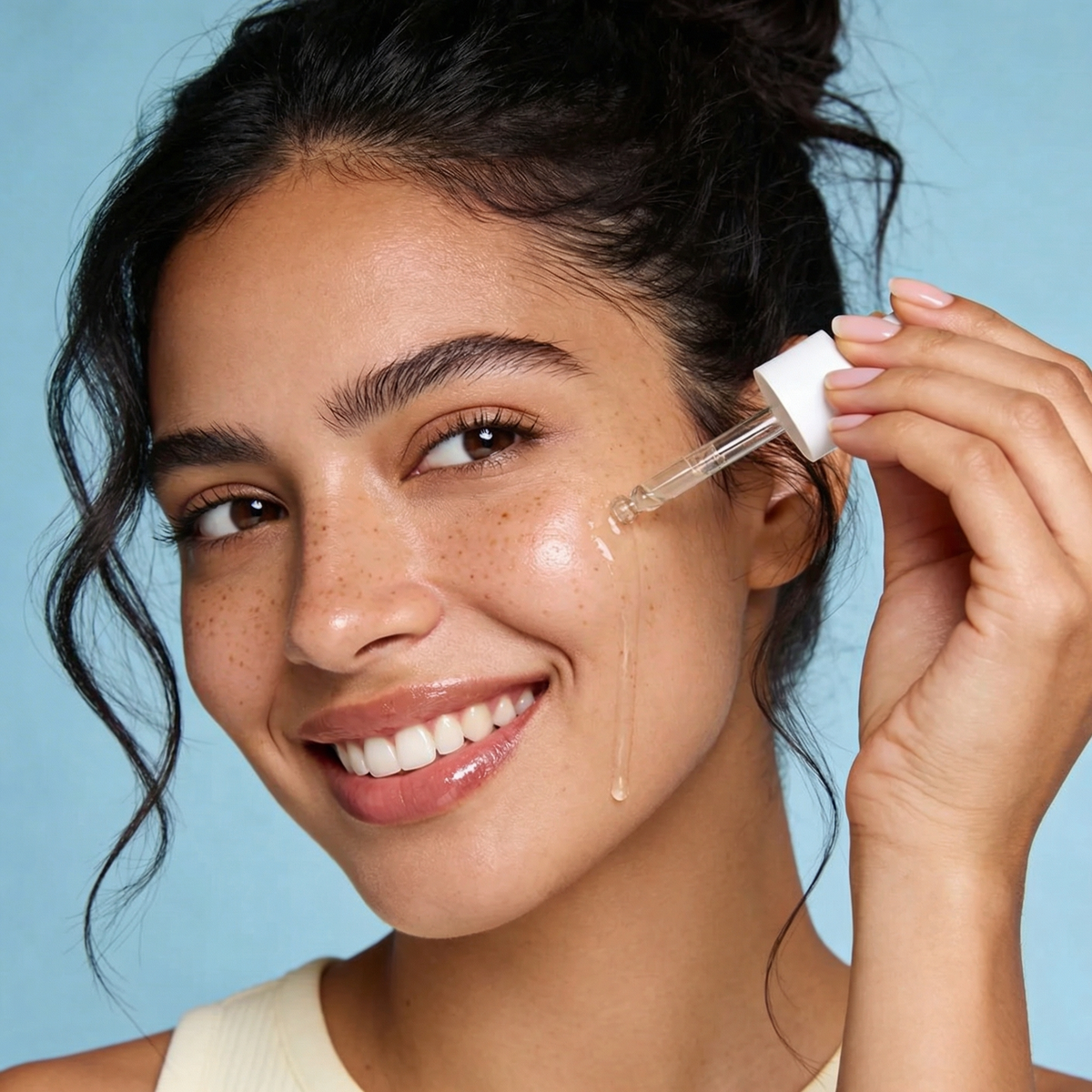
Our Snow Shroom HA Serum pairs multi-weight hyaluronic acid with Tremella fuciformis (Snow Mushroom) — a natural polysaccharide that mimics HA but with particles small enough to sit between skin cells and pull in even more moisture. The result is a layered hydration hit: surface plumping, deeper delivery, and a dewy finish that doesn’t feel sticky or heavy.
Explore the full range at our face collection.
FAQ
Is higher molecular weight hyaluronic acid better?
Not inherently — it’s better for surface-level hydration and plumping. For deeper hydration and fine-line support, you want lower-molecular-weight HA in the formula too. Multi-weight is the most comprehensive approach.
Can hyaluronic acid dry out your skin?
In very dry environments, high-MW HA applied without a follow-up moisturizer can theoretically draw moisture from within the skin rather than from the air. Applying HA to damp skin and sealing with a moisturizer or oil eliminates this concern.
How often should I use an HA serum?
Most people use it morning and night. It’s one of the most skin-compatible actives out there — no purging, no sensitivity period, no sun-sensitizing effects.
What is Snow Mushroom and how does it compare to HA?
Snow Mushroom (Tremella fuciformis) produces a polysaccharide with a naturally smaller particle size than standard high-MW HA, allowing it to penetrate more easily while still delivering intense moisture-binding. Many formulators now use both together for a complementary effect.
Sources
- Papakonstantinou E, Roth M, Karakiulakis G. Hyaluronic acid: A key molecule in skin aging. Dermato-Endocrinology. 2012;4(3):253–258. https://www.tandfonline.com/doi/full/10.4161/derm.21923
- Bravo B, et al. Benefits of topical hyaluronic acid for skin quality and signs of skin aging: From literature review to clinical evidence. Dermatologic Therapy. 2022;35(12):e15903. https://pmc.ncbi.nlm.nih.gov/articles/PMC10078143/
- Skin Penetration Ability of 12 Hyaluronic Acids with Different Molecular Weights After Topical Application. JOJ Dermatology & Cosmetology. 2023. https://juniperpublishers.com/jojdc/JOJDC.MS.ID.555665.php
Real ingredients. Real results.

Leave a comment
This site is protected by hCaptcha and the hCaptcha Privacy Policy and Terms of Service apply.