
Short answer: for most people, pumice wins. Here's the reasoning, not just the verdict.
Two different tools, two different jobs
A pumice stone is naturally porous volcanic rock that works by gentle abrasion, a little at a time. A metal foot file — sometimes called a foot grater — uses a blade or micro-abrasive surface that removes skin faster and in bigger amounts per stroke. Same end goal, very different feel in the hand.
Control is where it actually matters
Speed sounds like an advantage until you're the one holding the tool. Pumice is the gentler, more forgiving option — it works gradually, and it's much harder to take off more than you meant to. Metal files are faster, but they're also far easier to overdo, especially on a heel you can't fully see while you're working on it. If you've ever filed a heel raw, pumice is the one to switch to. One caveat applies no matter which tool you choose: if you have diabetes, poor circulation, or neuropathy, see a podiatrist before filing your own feet.
Hygiene: porous vs. non-porous
Metal is non-porous, so it wipes and rinses down to bare metal every time. Pumice is porous by nature — that's part of why it files the way it does — but that's not a hygiene downside in practice. Rinse it under running water after every use, shake off the excess, and let it air dry fully before it goes near your feet again. A file that's still damp inside a closed shower caddy is the actual problem, regardless of material.
Longevity
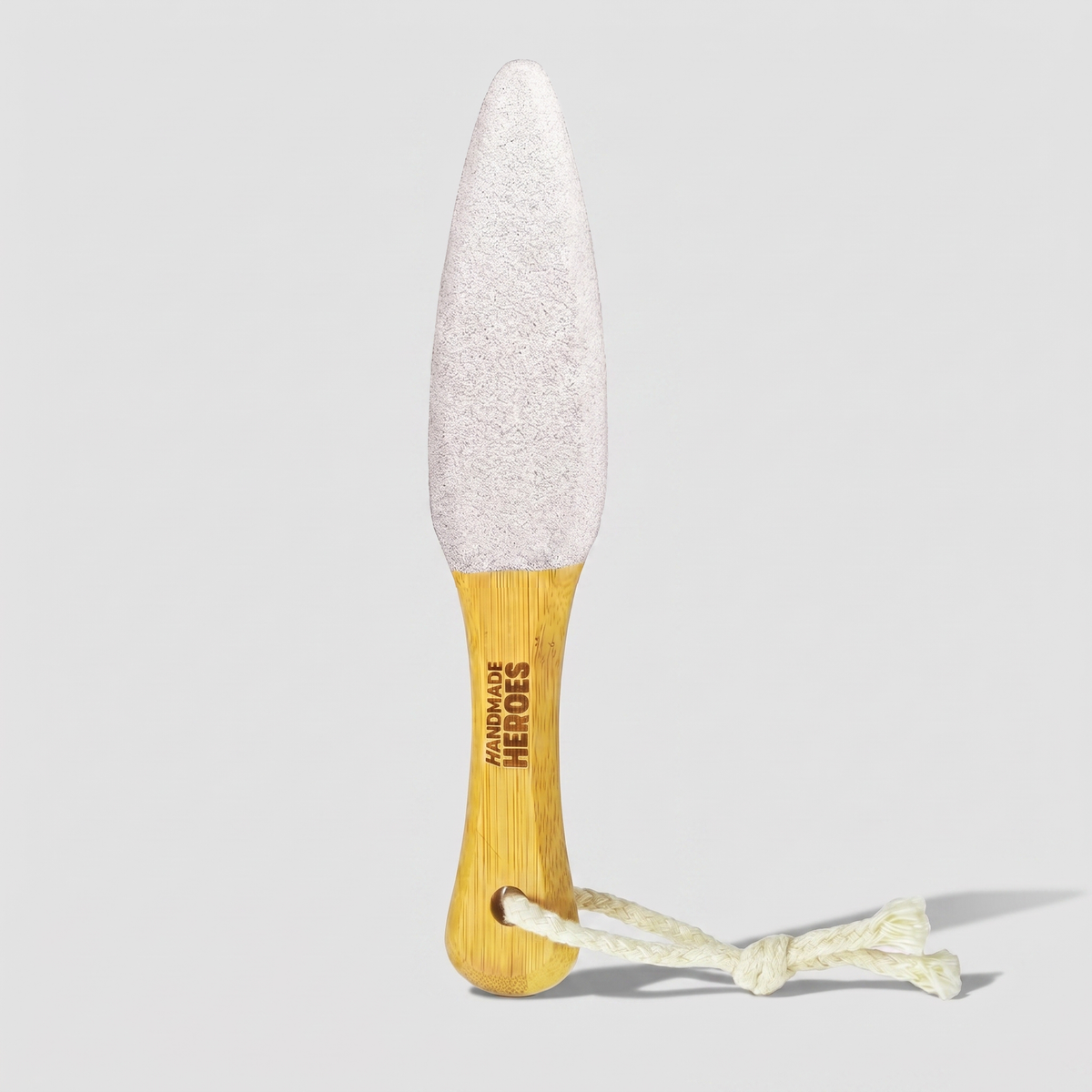
Pumice wears down gradually over months of regular use, so expect to replace it eventually. Metal files don't wear down the same way, but their edges can dull or lose precision over time. The Tough Love Pumice Stone Foot File is dual-sided — coarse and fine in one tool — which stretches its useful life by giving you two intensities before you'd need a replacement at all.
Worth knowing before you buy
Pumice stones are the lower-commitment purchase — inexpensive, and easy to replace once one wears down. A quality metal file usually costs more upfront and holds its shape longer if you take care of it, but there's more at stake if you get heavy-handed with it early on. Neither is the "wrong" purchase; the real decision is how much margin for error you want while you're still learning your own feet.
The verdict
If you're new to filing your own feet, have sensitive skin, or you've overdone it with a metal file before, pumice is the safer default. It's slower by design, which is exactly what makes it hard to damage skin with. Reach for metal only once you know your own skin well and want more speed for the same amount of attention.
Shop the pick
The Tough Love Pumice Stone Foot File gives you both intensities in one dual-sided tool — coarse for genuinely thick spots, fine for regular smoothing. Bamboo handle with a no-slip grip wet or dry, rinses clean and hangs to dry.
FAQ
Does a metal file work faster? Yes — and that's exactly the risk. Faster removal means less margin for error, especially on skin you can't fully see or feel.
Can I use both? Some people do — pumice for regular maintenance, metal for occasional deeper sessions. If you're not sure which camp you're in yet, start with pumice.
How do I know if I've overfiled? Stinging, redness, or any bleeding means stop immediately and moisturize. That's your skin telling you the session is over.
Related reading
Sources
- American Academy of Dermatology — How to treat corns and calluses
- Cleveland Clinic — Corns and Calluses: Symptoms, Causes & Treatments
Real ingredients. Real results.

Leave a comment
This site is protected by hCaptcha and the hCaptcha Privacy Policy and Terms of Service apply.