

If breastfeeding has you wincing every time your baby latches, you are nowhere near alone, and there's a real, well-documented reason it happens, plus a few genuinely useful things that help in the meantime.
The most common cause is latch, not you
According to La Leche League International, the most common cause of nipple pain is a shallow latch, where the baby doesn't have enough breast tissue in their mouth. It's a mechanical, fixable thing, not a sign you're doing something fundamentally wrong. Cleveland Clinic points to the same root cause: if a baby isn't latching on correctly, it can lead to nipple pain, itching, and irritation.
Why this matters more than any balm
Here's the honest part: no balm fixes a shallow latch. If soreness is sharp, ongoing, or getting worse rather than better, getting positioning and latch checked by a professional is genuinely the most useful next step, often a small adjustment changes everything. Balms and comfort measures are worth having, but they work alongside a good latch, not instead of one. That's not a knock on comfort care, it's just an honest ordering of what fixes what.
What actually helps in the meantime
While you're working on latch, a few things make the day-to-day more bearable. Cleveland Clinic notes that warm compresses and a nipple balm can help with comfort, and starting feeds on the less sore side can take some pressure off. Letting nipples air-dry after a feed, rather than staying damp inside a bra, also helps skin that's already feeling worked-hard.
Other things that can cause soreness
Latch is the most common cause, but it's not the only one. Cleveland Clinic notes that irritation can also come from breast pads, certain soaps, or pump parts that don't fit quite right, and that conditions like nipple blebs or vasospasm can also play a role. Soreness that doesn't track with feeding at all, or that shows up alongside other symptoms, is a different picture than everyday latch-related tenderness.
Where a balm fits in
A rich, buttery balm won't correct a latch, but it can make tender, worked-hard skin more comfortable between feeds. Something soft enough to melt in easily, with a short ingredient list, is one small, genuinely helpful piece of the picture: comfort while you sort out the bigger fix, and a small, tangible thing you can do for yourself in an otherwise exhausting stretch.
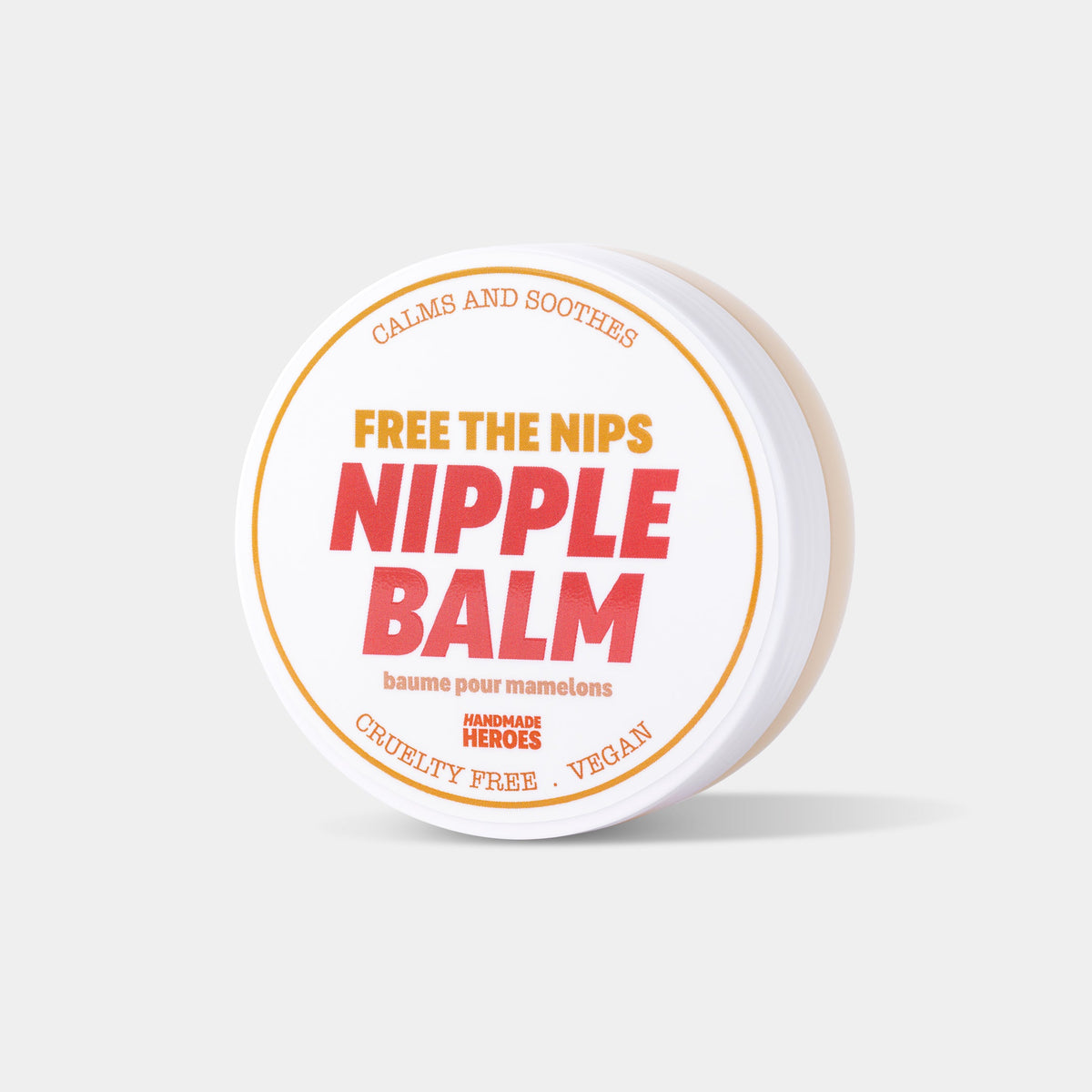
Free the Nips Nipple Balm
Free the Nips is a rich, buttery balm made to bring comfort to tender, cracked-feeling skin before, during, and after breastfeeding. Calendula extract helps soothe the feel of irritated skin, while mango and cocoa butter nourish and soften. Warm a small amount between clean fingertips and smooth over nipples after feeding, reapplying as needed.
Shop Free the Nips Nipple Balm
FAQ
When should I get help instead of waiting it out? If pain is sharp, lasts throughout the feed, or doesn't ease up after the first week or so, check with your lactation consultant or doctor. Sooner is easier to fix than later.
Is some soreness normal at the start? A little tenderness in the very first days is common, but pain that's sharp or ongoing usually points to something fixable, like latch, rather than something you just have to push through.
Can pumping cause the same soreness as nursing? Yes, an ill-fitting pump flange is a common culprit. If pumping hurts, it's worth double-checking your flange size rather than pushing through it.
Related reading
Sources
- La Leche League International — Breastfeeding with Sore Nipples
- Cleveland Clinic — Sore Nipples: Pain, Causes, Symptoms & Treatment
Real ingredients. Real results.

Leave a comment
This site is protected by hCaptcha and the hCaptcha Privacy Policy and Terms of Service apply.