































Cyclodextrin
Cyclodextrin
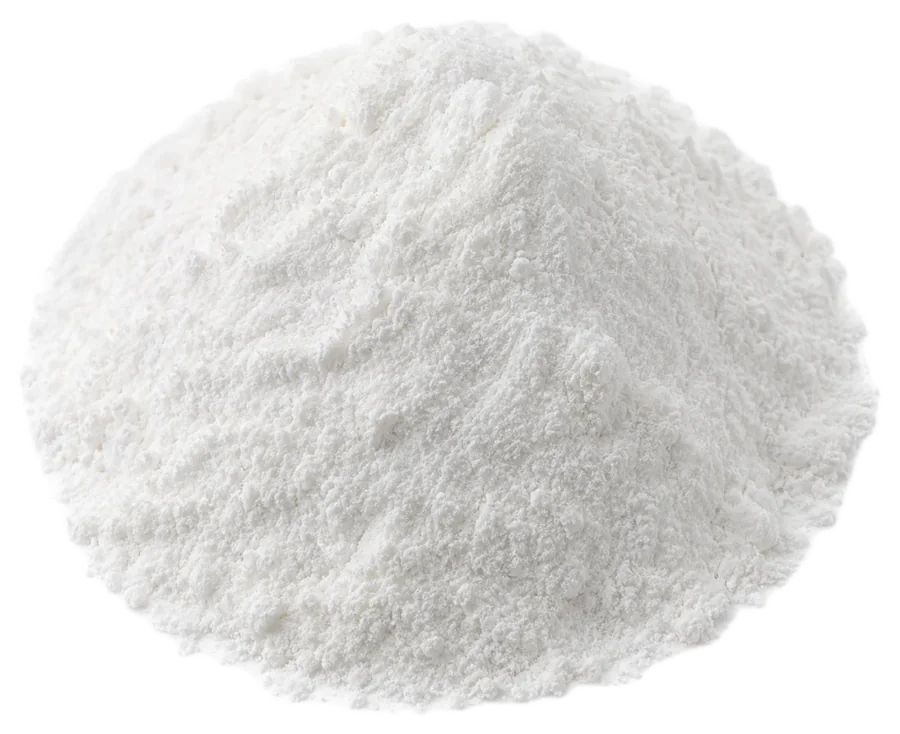
Cyclodextrin is a ring-shaped, sugar-based molecule that can form complexes with other molecules, and the EU lists it as an absorbent and chelating ingredient
The short version
- Rings of glucopyranose units, made by treating starch with an enzyme
- Forms complexes that change how other molecules dissolve and hold up
- EU database lists two functions: absorbent and chelating
- A 2026 review calls its cosmeceutical use relatively underexplored
The good
- The EU lists cyclodextrin as an absorbent and chelating ingredient.1
- A review describes complexes that improve other molecules’ solubility and stability.5
The not so good
- A review calls its cosmeceutical use relatively underexplored.5
- The listed CIR safety report's conclusion on cyclodextrin isn't summarized here, so no verdict is given.2
The origin story
Cyclodextrin came from experiments with potato starch and bacteria.68
In 1891, French pharmacist and chemist Antoine Villiers discovered crystalline carbohydrates while using Bacillus amylobacter to digest the starch.678 The crystalline carbohydrates were called “cellulosines,” an earlier name for cyclodextrins.67
Today, cyclodextrins are used in cosmetics, as well as in food and pharmaceuticals.78
What is cyclodextrin?
Cyclodextrin is a cyclic oligosaccharide, meaning a small ring built from glucopyranose units linked together in an alpha-1,4 pattern.3
Cyclodextrins are made by converting starch with an enzyme called cyclodextrin glucanotransferase.3
What does cyclodextrin do in a formula?
Cyclodextrin's ring can form what chemists call inclusion complexes, non-covalent partnerships with other molecules.4
In drug research that raises the apparent water solubility of poorly soluble drugs.4 A 2026 review says the same trick can improve solubility, stability and bioavailability of the molecules involved.5 Another 2026 review says cosmetic uses are being explored, especially for formulation stability and controlled delivery.3
The EU's CosIng database lists two functions for the plain INCI name Cyclodextrin: absorbent and chelating.1
Has cyclodextrin had a safety review?
Yes, the Cosmetic Ingredient Review (CIR), a US expert panel, lists a final report for cyclodextrin dated September 2015.2
The attachment is titled Safety Assessment of Polysaccharide Gums as Used in Cosmetics.2 That report's conclusion on cyclodextrin isn't summarized here, so no verdict is given.
Bigger picture: a 2026 review calls cyclodextrin use in cosmeceuticals relatively underexplored.5 If a product irritates you, stop using it and check in with a dermatologist.
Questions people ask
What is cyclodextrin in skincare?
Cyclodextrin is a cyclic oligosaccharide made of glucopyranose units, produced by converting starch with an enzyme. It forms complexes with other molecules.34
What does cyclodextrin do in a formula?
Cyclodextrin is listed by the EU as an absorbent and a chelating agent.1 Two 2026 reviews say its complexes can improve the solubility and stability of other molecules, and that cosmetic uses for formulation stability are being explored.53
Has cyclodextrin been reviewed for cosmetic safety?
Yes, the CIR database lists a final report for cyclodextrin from September 2015. The linked report is titled Safety Assessment of Polysaccharide Gums as Used in Cosmetics.2
Find it in
- under-eye espresso eye serum $16.99
Related ingredients
Back to the listSources
Show all 8 sources
- European Commission. CosIng cosmetic ingredient database: Cyclodextrin (ID 75402). Open source
- Cosmetic Ingredient Review. CIR Infobase ingredient status report: Cyclodextrin (Final Report, September 22, 2015: Safety Assessment of Polysaccharide Gums as Used in Cosmetics). Open source
- Kumar A, Pal RR, Patel P, Jain A, Sharma N, Patil UK, Kurmi BD. Cyclodextrins: Synthesis, Pharmaceutical Applications, Drug Delivery Systems and Safety Perspectives. AAPS PharmSciTech. 2026;27(4):194. Open source
- Brewster ME, Loftsson T. Cyclodextrins as pharmaceutical solubilizers. Advanced Drug Delivery Reviews. 2007;59(7):645-666. Open source
- Amaro C, Kowalczyk T, Picot L, Merecz-Sadowska A, Verdugo P, Cabral-Marques H, Sitarek P. Cyclodextrin-Based Delivery Systems in Cosmeceuticals: Current Advances and Future Perspectives. Biomolecules. 2026;16(7):1011. Open source
- Wüpper S, Lüersen K, Rimbach G. Cyclodextrins, Natural Compounds, and Plant Bioactives—A Nutritional Perspective. Biomolecules. 2021;11(3):401. doi:10.3390/biom11030401. Open source
- Nicolaescu OE, Ionescu C, Samide A, Tigae C, Spînu CI, Oprea B. Advancements in Cyclodextrin Complexes with Bioactive Secondary Metabolites and Their Pharmaceutical Applications. Pharmaceutics. 2025;17(4):506. doi:10.3390/pharmaceutics17040506. Open source
- Christaki S, Spanidi E, Panagiotidou E, Athanasopoulou S, Kyriakoudi A, Mourtzinos I, Gardikis K. Cyclodextrins for the Delivery of Bioactive Compounds from Natural Sources: Medicinal, Food and Cosmetics Applications. Pharmaceuticals. 2023;16(9):1274. doi:10.3390/ph16091274. Open source