
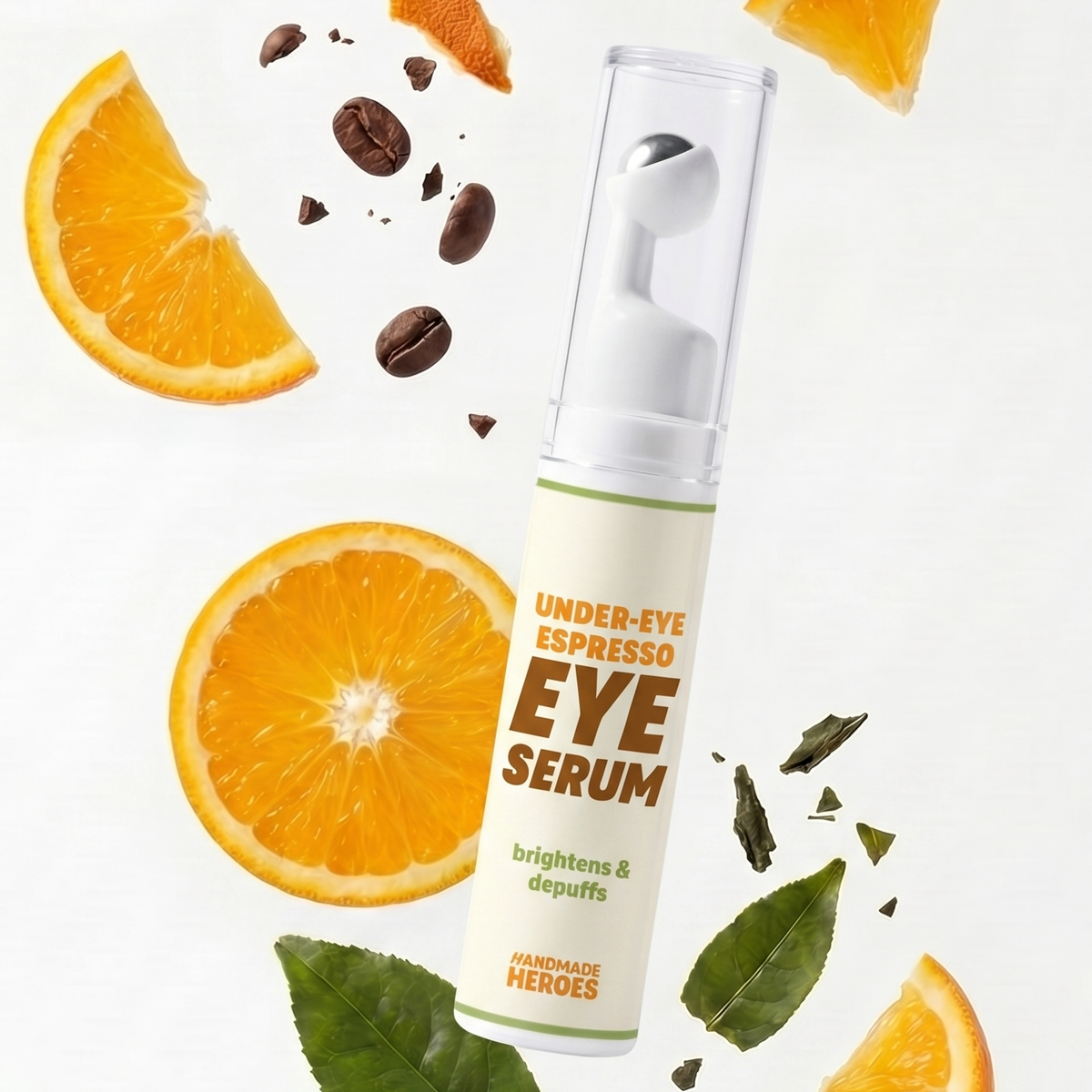
TL;DR: EGCG (epigallocatechin gallate) is green tea's most-studied polyphenol antioxidant. Raw EGCG oxidizes fast, which is why Under-Eye Espresso Eye Serum uses a stabilized, glucoside-bound version — Epigallocatechin Gallatyl Glucoside — so it actually survives on the shelf and reaches the delicate skin under your eyes intact.
Green tea's star molecule
Epigallocatechin gallate, or EGCG, makes up roughly half of the polyphenol content in green tea. It's the most researched of the tea catechins, and most of that research lands on one word: antioxidant. EGCG scavenges reactive oxygen species — the unstable molecules behind everyday oxidative stress — and helps activate the skin's own antioxidant systems.1 That's a useful job description for any ingredient sitting near the eye area, which is thinner, has fewer collagen fibers and shows the visible signs of aging and everyday oxidative stress faster than skin almost anywhere else on the face.
Why raw EGCG struggles in a bottle
Here's the catch nobody puts on the label: EGCG is chemically unstable. It's reactive by design — that's what makes it a good antioxidant — but the same reactivity means it degrades quickly when exposed to light, heat, oxygen or the wrong pH. Left unprotected in a formula, a meaningful share of the EGCG in a bottle can break down before it ever reaches your skin. A serum built on raw EGCG can look good in the lab and underperform by the time it's opened on your bathroom shelf.
Meet Epigallocatechin Gallatyl Glucoside
Under-Eye Espresso doesn't use raw EGCG. It uses Epigallocatechin Gallatyl Glucoside — a stabilized, glucoside-bound derivative of the same molecule. A sugar (glucoside) group is attached to the reactive part of the EGCG structure, essentially putting a shelf-stable wrapper on it. That wrapper keeps the molecule intact through formulation, shipping and time in your bathroom, then lets it do its antioxidant work once it's on skin. Same source molecule, same category of benefit, considerably more staying power.
What this means for the skin under your eyes
The eye area has less oil and thinner skin than the rest of the face, so a stable, active antioxidant is doing more real work than an unstable one that's already partly spent by the time you apply it. That's the whole argument for using the glucoside-bound form here instead of the raw compound — it's about the antioxidant actually being there when your skin needs it, not a bigger number on an ingredient deck.
Try Under-Eye Espresso Eye Serum
Under-Eye Espresso Eye Serum pairs Epigallocatechin Gallatyl Glucoside with caffeine, a stable vitamin C derivative and sodium hyaluronate in a lightweight, water-based formula. It's vegan, cruelty-free and lab-formulated — the actives are cited, not invented, and the antioxidant story is one part of a wider ingredient list built for the eye area specifically. See the full Under-Eye Espresso Eye Serum and the rest of what's in the bottle.
FAQ
Is EGCG the same as green tea extract?
Not exactly. Green tea extract is the whole plant extract; EGCG is one specific polyphenol within it, and the one most studied for antioxidant activity.
Does EGCG make dark circles disappear?
No single ingredient does. EGCG is included here as an antioxidant that supports the look of the eye area. Dark circles and puffiness can also be structural or medical — genetics, hollowing, allergies — so if yours are persistent, see a doctor. This article is general information, not medical advice.
Related reading
- Every ingredient in Under-Eye Espresso, explained
- Vitamin C for the delicate eye area
- Does caffeine work for dark circles and eye bags?
Sources
Kim E, Hwang K, Lee J, et al. "Skin Protective Effect of Epigallocatechin Gallate." International Journal of Molecular Sciences. 2018;19(1):173. ncbi.nlm.nih.gov/pmc/articles/PMC5796122
Cleveland Clinic. "Dark Circles Under The Eyes: Causes & Treatment." my.clevelandclinic.org
Real ingredients. Real results.



Leave a comment
This site is protected by hCaptcha and the hCaptcha Privacy Policy and Terms of Service apply.