
TL;DR: Dry shampoo is not inherently bad for your hair — but using it as a substitute for washing is. Here’s how dermatologists say to use it, plus why the formula you pick actually matters.
Not medical advice — always consult a board-certified dermatologist for personal hair or scalp concerns.
What Dry Shampoo Actually Does (And Doesn’t Do)
Let’s clear this up immediately. According to board-certified dermatologist Paradi Mirmirani, MD, FAAD, quoted on the American Academy of Dermatology website: “No, it just absorbs the oil. Dry shampoo shouldn’t replace regular shampooing.”
Those little starch or silica particles in dry shampoo? They soak up excess sebum and add volume. They do not remove dead skin cells, clear product buildup, or eliminate the microorganisms that can cause dandruff and scalp odor. That requires water and actual shampoo.
When Dry Shampoo Becomes a Problem
The AAD flags a few scenarios where regular dry shampoo use tips into problematic territory:
- Scalp buildup: If dry shampoo stays on your scalp, it can accumulate and cause hair breakage and shedding.
- Seborrheic dermatitis risk: Skip regular washing for too long and you could develop an itchy, scaly scalp condition called seborrheic dermatitis.
- Clogged pores and odor: Homemade cornstarch versions can clump, clog scalp pores, and — because bacteria can digest cornstarch — actually make your scalp smell worse, not better.
The short rule: the AAD recommends washing your hair after one or two dry shampoo uses to reap the benefits of both.
How to Use Dry Shampoo the Right Way
Used correctly, dry shampoo is a legitimate tool. Here’s the dermatologist-approved approach:
- Apply only where you need it — target oily roots, not the full length of your hair.
- Let it sit for the time stated on the packaging so the particles can absorb oil properly.
- Brush or comb it out — this step is what actually removes the oil-laden particles from your scalp.
- Choose a formula made for your hair color. A white powder on dark hair looks dusty; a tinted powder blends in. Simple.
- Still wash regularly. Dry shampoo buys you a day or two, not a week.
Why the Format Matters: Powder vs. Aerosol
Most drug-store dry shampoos are aerosol sprays — convenient, but they can deposit uneven amounts of product and use propellants that some people want to avoid. A loose powder formula gives you more direct control: you decide exactly where it goes, how much you use, and you’re not breathing in a cloud of propellant gas.
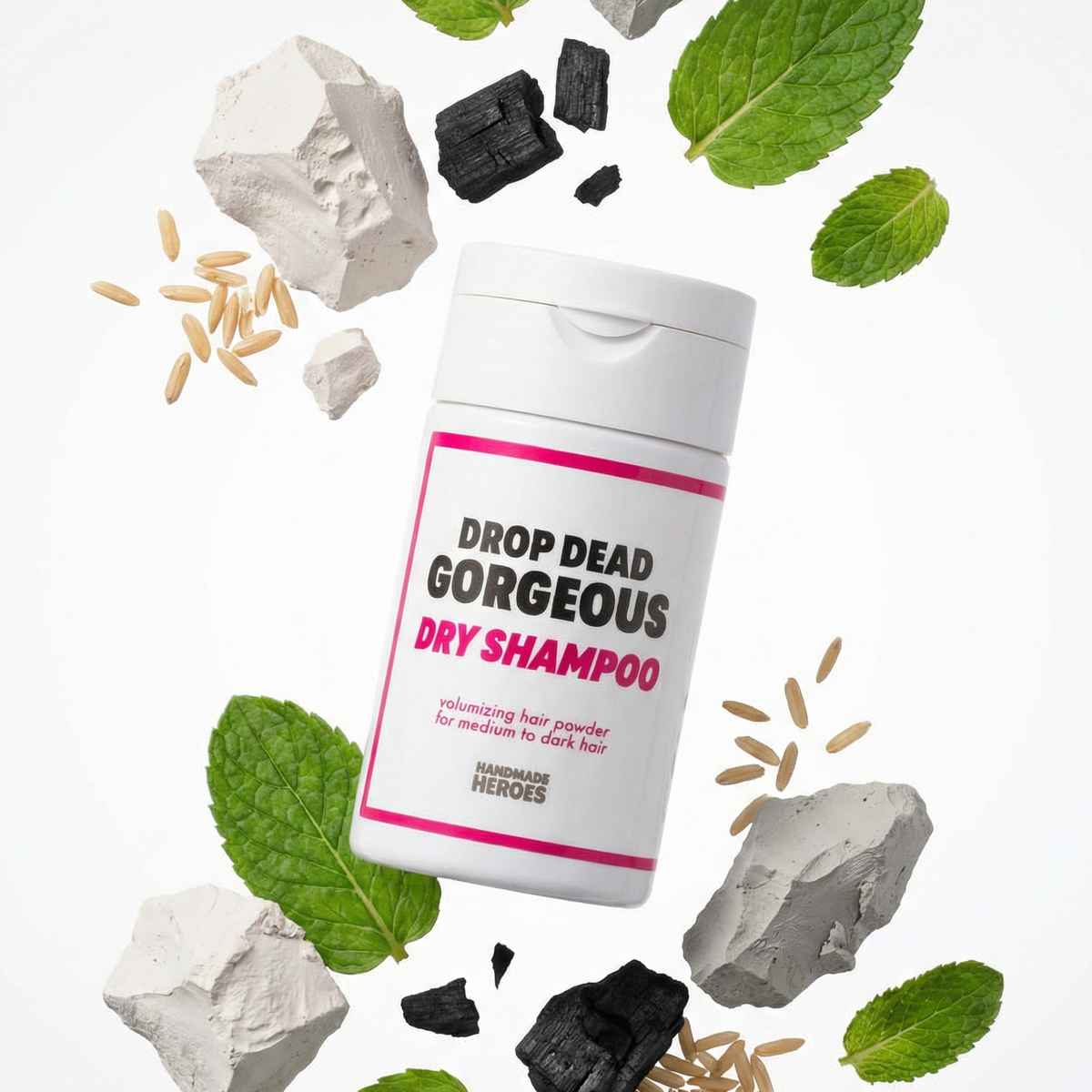
That’s the thinking behind Drop Dead Gorgeous Dry Shampoo — a talc-free, non-aerosol powder that comes in tinted shades to match your hair. It’s available in Light and Medium to Dark, and it’s one of our bestsellers from the full hair range.
If you want a deeper dive into application technique, check out our earlier guide: How to Use Dry Shampoo.
FAQ
Can I use dry shampoo every day?
Daily use without regular washing may lead to product buildup on the scalp, which can cause itching, irritation, and over time may contribute to hair shedding. Use it strategically — a day or two between proper washes is the sweet spot.
Is dry shampoo bad for oily scalp types?
It’s a useful tool for managing oil between washes, but it doesn’t address the root cause of excess sebum. If your scalp is chronically oily, a dermatologist can help identify whether washing frequency, product choice, or a scalp condition is the driver.
Does dry shampoo cause hair loss?
If used incorrectly. The AAD notes that product buildup from dry shampoo can contribute to hair breakage and shedding when it accumulates — this is not the same as clinical hair loss, but it’s a good reason not to skip wash days indefinitely.
What’s the difference between powder and spray dry shampoo?
Powder gives you more targeted control and skips aerosol propellants and hence is travel friendly (you can bring it onboard a flight!). Spray can be faster for large areas but is harder to apply precisely. Both work on the same oil-absorbing principle — the delivery method is the main difference.
Sources
- American Academy of Dermatology. Dry shampoo: Dermatologists’ tips for getting your best results. https://www.aad.org/public/everyday-care/hair-scalp-care/hair/dry-shampoo-best-results
Real ingredients. Real results.

Leave a comment
This site is protected by hCaptcha and the hCaptcha Privacy Policy and Terms of Service apply.