































Coco-caprylate/caprate
Coco-Caprylate/Caprate
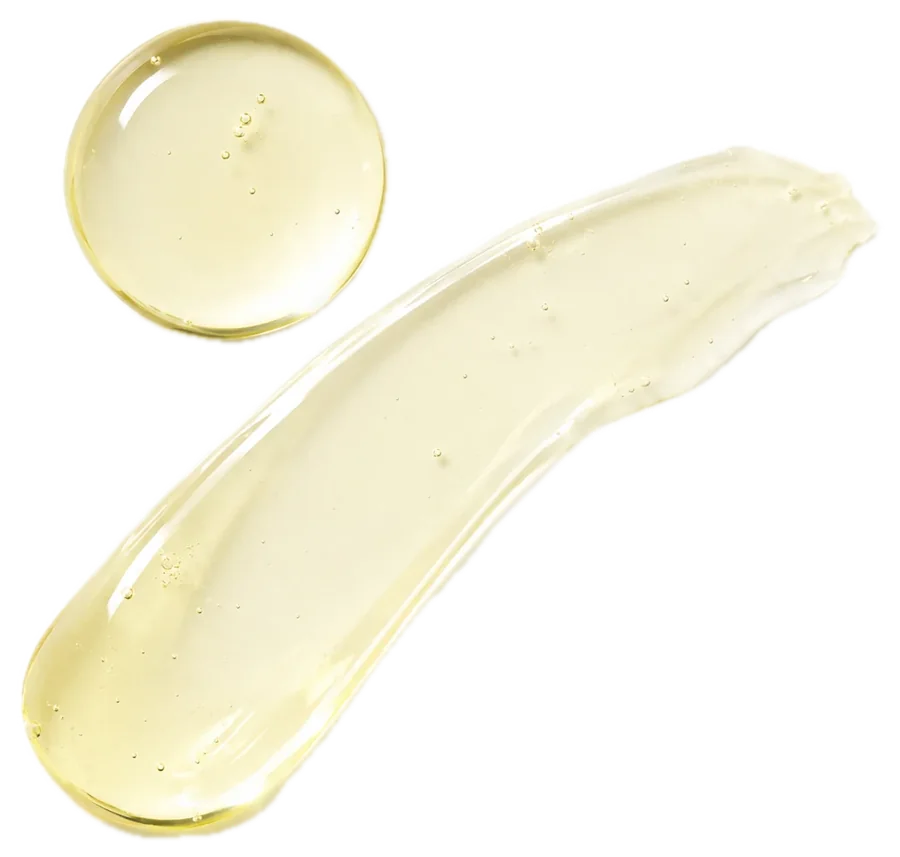
Coco-caprylate/caprate is an emollient ester that cosmetics list as a skin conditioner and use to tune how a cream feels
The short version
- A mix of esters: coconut-derived fatty alcohols joined to caprylic and capric acids
- Listed as a skin-conditioning emollient
- Reported in 261 cosmetic formulas, at up to 35% in leave-on products
- Safe at reviewed use levels in nonirritating formulas, per a 2015 US panel review
- Not the same thing as caprylic/capric triglyceride
The good
- The US CIR panel found it safe as used in formulas that don't irritate.1
- Its listed cosmetic job is softening and conditioning skin.1
The not so good
- The safety review described no skin tests on this ingredient, relying instead on similar esters.1
- The study tested a blend as a sensory agent in an emulsion.3
What is coco-caprylate/caprate?
Coco-caprylate/caprate is an ester, the product of a fatty acid reacting with an alcohol.1
Here the alcohol side is fatty alcohols derived from coconut alcohol, and the acid side is a mix of caprylic and capric acids.1 The result is a mixture of esters rather than one single molecule.1
The name trips people up because of a near-twin. Caprylic/capric triglyceride uses the same two acids but hangs them on glycerin instead of on coconut fatty alcohols.2 Same acids, different backbone, different ingredient.
What does coco-caprylate/caprate do?
Coco-caprylate/caprate's listed job is skin-conditioning emollient.1
One 2026 formulation study touches on that role. Researchers building a simple cream screened ingredients for skin feel, and a 1% blend of a plant-based alkane with coco-caprylate/caprate, used as the sensory agent, gave the best sensory results.3 The blend was tested as a sensory agent in an emulsion study.3
It's a common pick, too. In US data from the 2015 safety review, it was reported in 261 formulas, at up to 35% in leave-on products and up to 62% in rinse-off ones.1
Is coco-caprylate/caprate safe?
Coco-caprylate/caprate is safe in the present practices of use and concentration when formulated to be nonirritating, the Cosmetic Ingredient Review (CIR) concluded.1
The CIR, a US expert panel, assessed 237 alkyl esters, and coco-caprylate/caprate is one of them.1 That last bit is there because the panel saw potential for skin irritation with some of the esters in the group, so it specified, in its words, that "products must be formulated to be nonirritating."1
Worth knowing: the review describes no skin tests on coco-caprylate/caprate itself. It filled the gaps with data from similar esters, which share structure, properties and uses.1 It also noted that some alkyl esters can help other ingredients pass into skin, and asked formulators to keep that in mind.1 If a product with it irritates your skin, stop using it and check in with a dermatologist.
Questions people ask
Is coco-caprylate/caprate the same as caprylic/capric triglyceride?
No, coco-caprylate/caprate is not the same as caprylic/capric triglyceride. Both use caprylic and capric acids, but coco-caprylate/caprate attaches them to coconut-derived fatty alcohols, while caprylic/capric triglyceride attaches them to glycerin.12
Is coco-caprylate/caprate made from coconut?
Coco-caprylate/caprate is partly derived from coconut. Its alcohol half is fatty alcohols derived from coconut alcohol.1 The safety review doesn't say where the caprylic and capric acids come from.
Is coco-caprylate/caprate safe for skin?
Coco-caprylate/caprate is safe as used when the product is formulated to be nonirritating, according to a US expert panel's 2015 conclusion. That conclusion leans on data from related esters.1
Related ingredients
Back to the listSources
Show all 3 sources
- Fiume MM, Heldreth BA, Bergfeld WF, et al. Safety Assessment of Alkyl Esters as Used in Cosmetics. International Journal of Toxicology. 2015;34(2 Suppl):5S–69S. Open source
- Fiume MM, Bergfeld WF, Belsito DV, et al. Amended Safety Assessment of Triglycerides as Used in Cosmetics. International Journal of Toxicology. 2022;41(3 Suppl):22S–68S. Open source
- Lavarde M, Lassalle M, Gouot S, Corroyer Y, Marceau C, Briffaut V, Poigny S, Issa S. Minimalist, bioinspired and sensorial emulsion based on a Ca(2+) double cone vector system using Design of Experiment (DoE). International Journal of Cosmetic Science. 2026;48(3):489–499. Open source