
TL;DR: Brow serums split into two camps: prescription-strength prostaglandins (with real side effects) and conditioning botanical formulas (gentler, cosmetic-grade). Knowing which you’re using — and why — is the whole conversation. The good news: the gentler camp is a daily habit you’re fully in control of.
Brows have had a decade-long moment. We went from over-plucked to microbladed to laminated, and somewhere in the middle, brow serums quietly became one of the fastest-growing categories in the beauty aisle. But here’s the thing: two products sitting side by side with the word “serum” on the label can be doing completely different things at a biological level — and one of them comes with a side-effect profile you’d expect from a pharmaceutical.
Let’s sort it out.
The Two Categories of Brow Serums
Category 1: Prostaglandin-Based Serums
The highest-profile brow- and lash-enhancing drugs are built on prostaglandin analogues — a class of compounds originally developed for glaucoma treatment. Bimatoprost (sold as Latisse) is the only FDA-approved drug for eyelash hypotrichosis, and its prescribing label lists a significant range of potential side effects including iris pigmentation changes, eyelid skin darkening, and potential eyelid fat changes over time, per the FDA Latisse prescribing label.
But it’s not just Latisse. Many over-the-counter lash and brow serums have historically contained lower-concentration prostaglandin analogues or derivatives. The AAO EyeWiki page on Prostaglandin Associated Periorbitopathy (PAP) describes a constellation of periorbital changes associated with topical prostaglandin use, including upper lid ptosis, deepening of the upper lid sulcus, and periorbital fat atrophy. These changes have been documented in patients using topical prostaglandin analogue eye drops — and the same compound class is what drives many “clinical-strength” OTC lash and brow serums.
If a brow serum sounds almost pharmaceutical in its claims, it’s worth checking the ingredient list for isopropyl cloprostenate, dechloro dihydroxy difluoro ethylcloprostenolamide, or similar prostaglandin analogues. These are active cosmetic ingredients that carry real considerations. This article is not medical advice — if you have questions about prostaglandin-containing products and your eye health, consult an ophthalmologist.
Category 2: Botanical Conditioning Serums
The second category takes a different approach entirely: instead of pharmacologically influencing the hair cycle, these formulas focus on conditioning the existing hair fiber and supporting the follicle environment with botanical ingredients. The results are cosmetic in nature — supporting the appearance of fuller, healthier-looking brows — rather than medicinal.
Two ingredients with published research behind them:
- Rosemary extract: A 2015 study by Panahi et al., published in SKINmed Journal, compared rosemary oil to 2% minoxidil in participants with androgenetic alopecia and found comparable results at 6 months. While this study focused on scalp hair, it established a meaningful baseline for rosemary as a botanical active in hair care research.
- Pumpkin seed oil: A study by Cho et al. (2014), published in Evidence-Based Complementary and Alternative Medicine, found that pumpkin seed oil supplementation showed positive effects on hair count in men with androgenetic alopecia over 24 weeks, suggesting activity via potential 5-alpha reductase inhibition.
- Biotin-related conditioning: Research by Murata et al. (2013) in the Journal of Dermatological Science explored keratinocyte and hair follicle biology relevant to topical conditioning approaches.
It’s important to be honest about what the research shows: most botanical ingredient studies are conducted in the context of scalp hair, not lashes or brows specifically, and many are small or preliminary. Conditioning serums support the appearance of brows — they do not have the same pharmacological mechanism as prostaglandin drugs. That distinction matters both for your expectations and for safety.
What the “Hype” Actually Is
A lot of brow serum marketing borrows the visual language and implied claims of prescription-strength products while relying on cosmetic ingredients. Watch for phrases like “clinically proven to regrow” applied to conditioning-only formulas, or before-and-after photos that may not represent typical results. On the flip side, over-dismissing conditioning serums entirely ignores legitimate research on botanical actives in hair care science — the picture isn’t black and white.
The honest version: conditioning brow serums can support the appearance of fuller, healthier-looking brows when used consistently. They are not the same as prescription bimatoprost. Neither of those facts makes them useless.
What to Actually Look For
- Prostaglandin-free: Especially if you’re using near the eye area, or if you have any history of eye pressure concerns.
- Water-based, lightweight formula: Easier to apply precisely; less likely to migrate.
- No fragrance near the eye area: Brow serums are applied close to the eyes — fragrance is a common sensitizer.
- Ingredient transparency: A brand that lists and explains its actives is a brand you can trust.
Start with the gentler camp today
Here’s the good news: while you decide which camp is right for you, you don’t have to just wonder — you can start with the gentler option today. A little daily attention is completely in your control, and it doesn’t come with a side-effect label to read first.
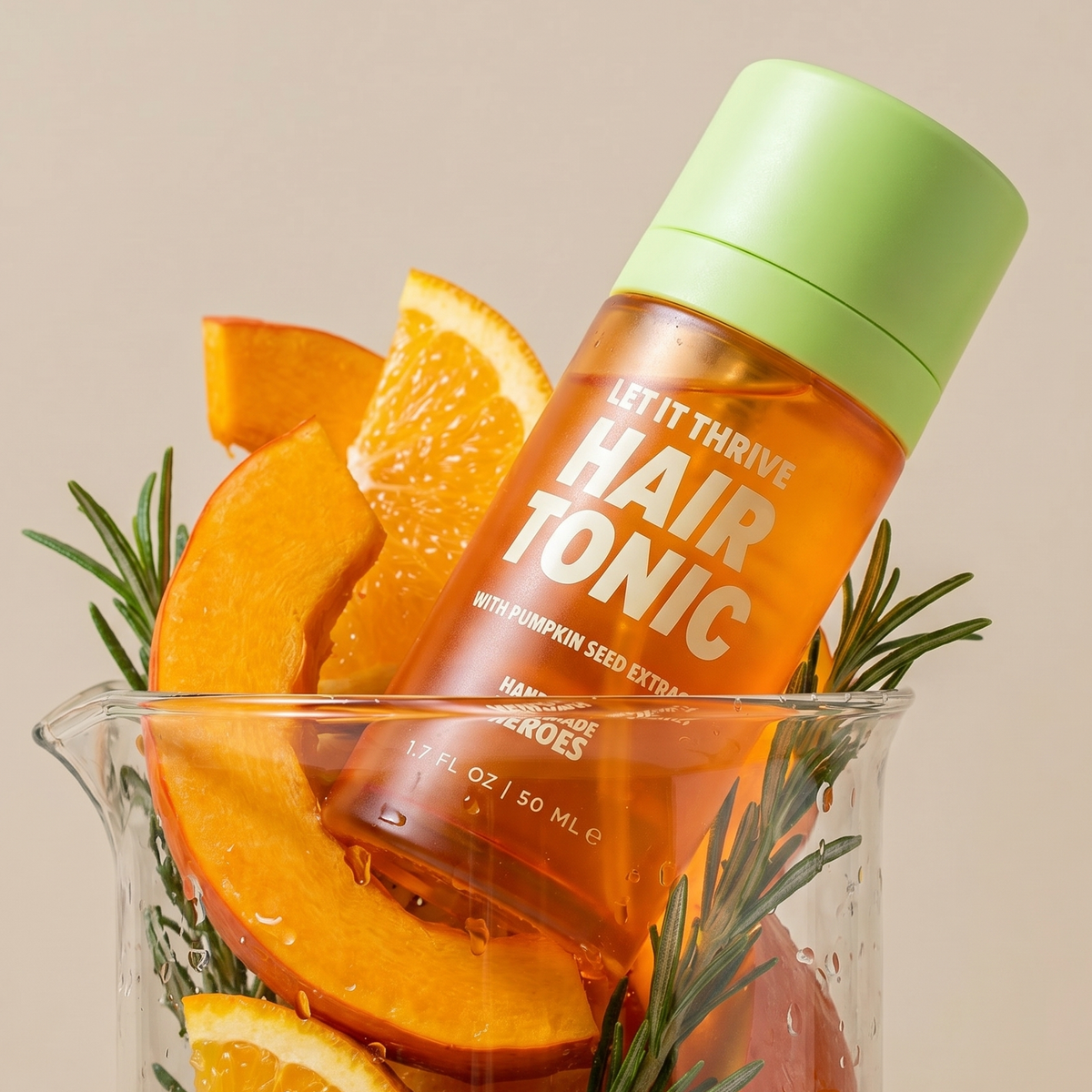
That’s exactly the philosophy behind our Let It Thrive Eyelash Serum. It’s a cosmetic conditioning formula built on pumpkin seed extract and rosemary — the same conditioning actives this article covers above — with no prostaglandins and no biotin. It conditions the lash line and supports the appearance of fuller, healthier-looking lashes, and many people layer it into their brow routine too (more on that in the FAQ below).
Why those ingredients? Rosemary performed comparably to 2% minoxidil in a 2015 trial, and pumpkin seed showed supportive results for hair count in a 2014 trial — honest caveat, because we don’t do hype: that research is on scalp hair, not lashes or brows specifically, so treat it as why we like these botanicals, not a growth promise for either.
Start with the conditioning camp — no prescription, no side-effect list. Shop the Let It Thrive Eyelash Serum, and browse the full face range for more clean eye-area care.
Want to go deeper on the lash serum side of this conversation? See:
- Prostaglandins in Lash Serums: Side Effects to Know
- Do Natural Lash Serums Actually Work?
- Why Are My Eyelashes Falling Out? 6 Everyday Causes
FAQ
Are brow serums safe to use every day?
Conditioning, prostaglandin-free brow serums are generally designed for daily use. Prostaglandin-based products should be used only as directed, and any eye-area concerns should be discussed with an ophthalmologist.
How long does a brow serum take to work?
Visible improvement in how brows look and feel typically requires several weeks of consistent daily use — brow hairs, like all hair, follow a slow growth cycle. Give any conditioning serum at least 6–8 weeks before evaluating results.
Can I use a lash serum on my brows?
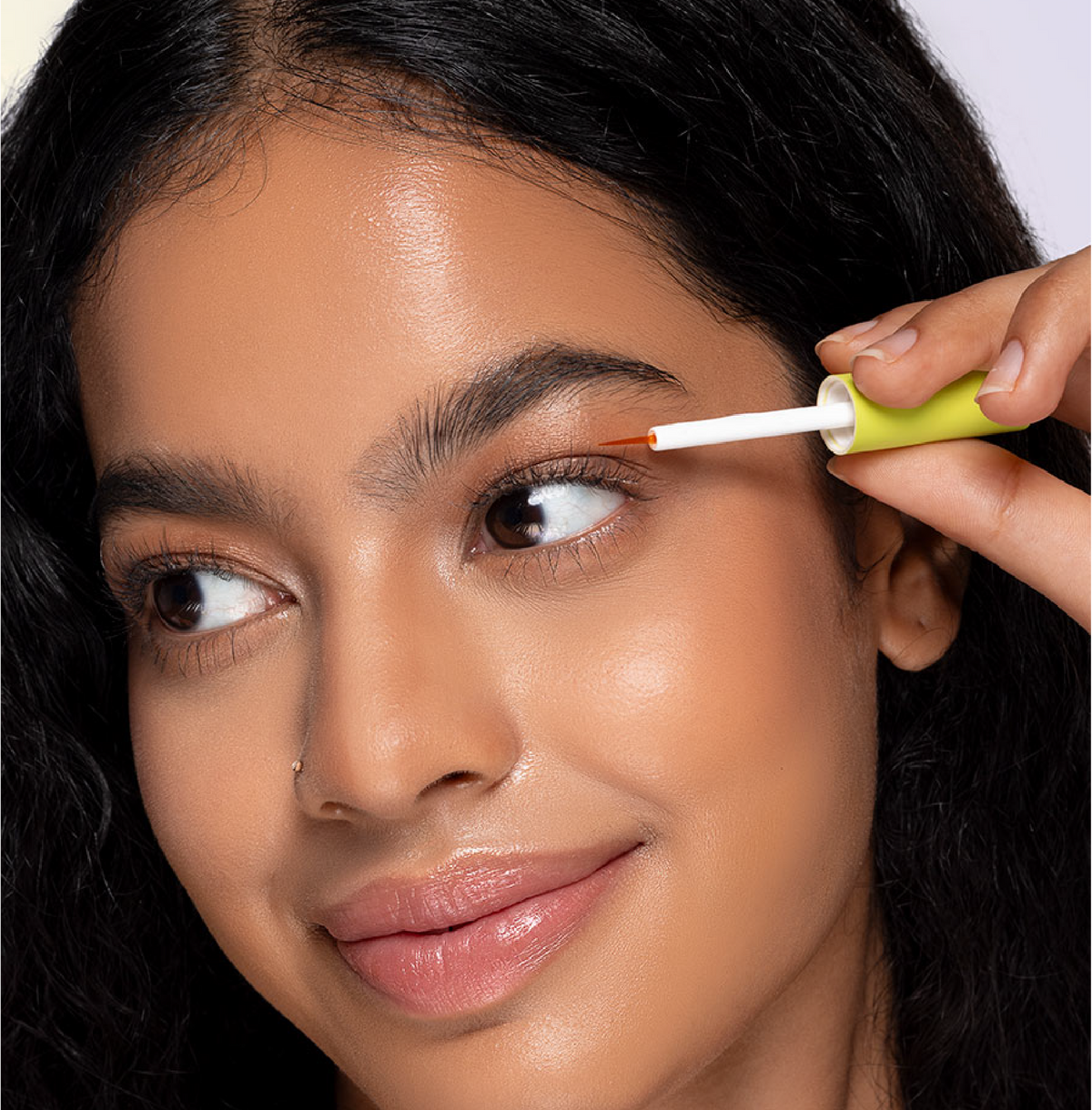
Many lash serums — especially water-based, prostaglandin-free formulas — can be applied to brows as well as lashes. Lash and brow hairs share the same basic follicle biology. Check the product guidance and apply a thin line along the brow.
What are prostaglandin analogues and why do they matter for brow serums?
Prostaglandin analogues are a class of compounds originally developed to treat glaucoma. They can influence the hair growth cycle, and the only FDA-approved version for lashes is prescription bimatoprost (Latisse). The FDA prescribing label and the AAO EyeWiki document a range of potential periorbital side effects. Their presence in OTC cosmetics is a category to understand before purchasing.
Sources
- FDA — Latisse (Bimatoprost) Prescribing Label
- AAO EyeWiki — Prostaglandin Associated Periorbitopathy
- Panahi et al. (2015) — Rosemary Oil vs. Minoxidil 2% for Hair Thickness, SKINmed Journal
- Cho et al. (2014) — Pumpkin Seed Oil and Hair Count, Evidence-Based Complementary and Alternative Medicine
- Murata et al. (2013) — Journal of Dermatological Science
Real ingredients. Real results.

Leave a comment
This site is protected by hCaptcha and the hCaptcha Privacy Policy and Terms of Service apply.