
TL;DR: A conditioning lash serum won’t force your lashes to grow the way a prescription drug claims to — it cares for the lashes you have so they look fuller, healthier and more defined, without prostaglandins. The good news: that’s a daily habit you’re fully in control of, no drug side effects required. Consistency is the whole game. (General info, not medical advice.)
Two very different things are sold as “lash serums”
It helps to separate them. Prostaglandin-based serums (prescription bimatoprost / Latisse, and over-the-counter analogs like isopropyl cloprostenate) act on the lash cycle — genuinely effective, but with documented, sometimes permanent side effects including iris darkening and fat loss around the eye, a syndrome ophthalmologists call prostaglandin-associated periorbitopathy (FDA Latisse label; AAO EyeWiki); in 2026 the EU’s SCCS judged the cosmetic analog isopropyl cloprostenate unsafe for lash and brow growth products (Opinion SCCS/1680/25). We go deeper on all that here. A conditioning serum is a different proposition: it conditions and cares for your existing lashes rather than chemically driving the cycle.
So what can a conditioning serum realistically do?
The honest picture: softer, healthier-looking, more defined lashes that look fuller — built up with consistent use over several weeks. Not overnight, not a dramatic transformation, and not a substitute for a medical treatment if that’s genuinely what you’re after. What you get is well-cared-for lashes, the gentle way.
The botanicals behind ours
Our serum leans on pumpkin seed and rosemary, two of the most-studied botanicals in hair care — rosemary performed comparably to 2% minoxidil for pattern hair loss in a 2015 trial (Panahi et al., 2015), and oral pumpkin seed oil raised hair count versus placebo in a 2014 trial (Cho et al., 2014). Honest caveat: those studies were on scalp hair (and one was an oral supplement), so treat them as why we like these botanicals — not a lash-growth promise.
The daily habit that’s completely up to you
Here’s the good news: while you wait out the slow biology of the lash cycle, you don’t have to just watch and hope. A little daily attention is the one move that’s completely in your control — and doing something feels a whole lot better than doing nothing.
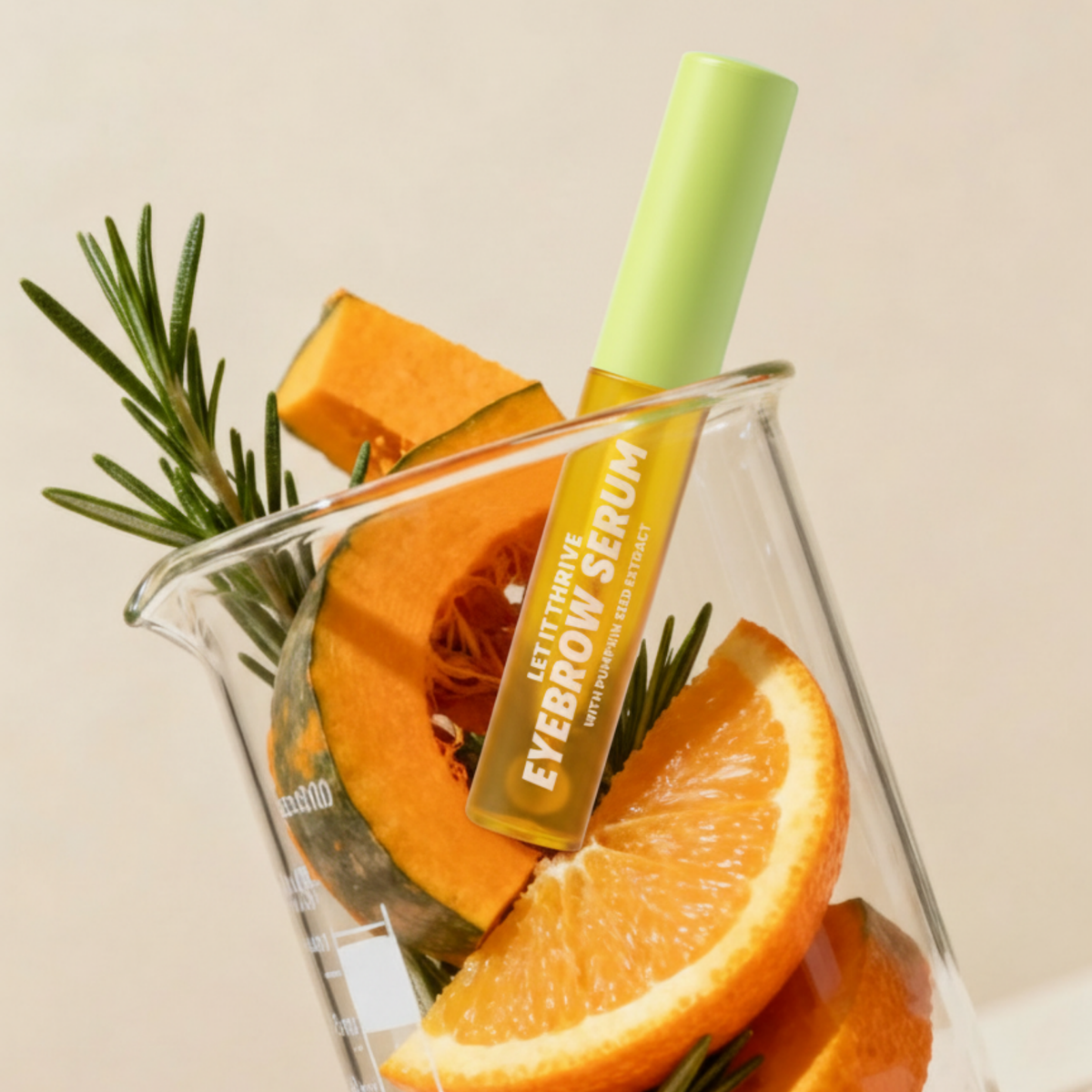
That’s exactly what our Let It Thrive Eyelash Serum is made for. It’s a lightweight, water-based formula built on pumpkin seed extract and rosemary — two of the most-studied botanicals in hair care — that conditions lashes and supports the appearance of fuller, healthier-looking lashes, with no prostaglandins and no biotin. Sweep it along the upper lash line like a thin line of eyeliner, morning and night, on clean lashes.
Why those ingredients? Rosemary performed comparably to 2% minoxidil for hair thickness in a 2015 trial, and pumpkin seed raised hair count versus placebo in a 2014 trial — honest caveat, because we don’t do hype: those studies were on scalp hair (one an oral supplement), so treat them as why we like these botanicals, not a lash-growth promise. It’s supportive, cosmetic lash care; it won’t replace a prescription route if that’s what you’re after.
The only real trick left is sticking with it. Shop the Let It Thrive Eyelash Serum and browse the full face range.
When to see a professional
Any eye irritation, redness or change in vision — stop and see an eye doctor.
Natural lash serum FAQ
Do natural lash serums grow lashes? They condition rather than grow — literal growth claims belong to prescription/prostaglandin products, which carry their own trade-offs. A conditioning serum supports the look of fuller, healthier lashes.
How long until I notice a difference? Give it consistent daily use over several weeks; conditioning results build gradually.
Is it safe? It’s a cosmetic, prostaglandin-free conditioning serum — but stop and see an eye doctor if you get any irritation.
Sources
- FDA — Latisse (bimatoprost) Prescribing Information. accessdata.fda.gov
- AAO EyeWiki — Prostaglandin-Associated Periorbitopathy. eyewiki.org
- EU SCCS — Opinion SCCS/1680/25 (2026).
- Panahi et al., Skinmed 2015. reference · Cho et al., 2014. PMC4017725
Real ingredients. Real results.


Leave a comment
This site is protected by hCaptcha and the hCaptcha Privacy Policy and Terms of Service apply.