
Hair oils occupy a weird space in beauty: beloved by some, ignored by others, and frequently oversold by brands that blur the line between cosmetic conditioning and clinical treatment. So let’s settle this properly. Do hair oils work? Yes — for specific things. And no — for the things they can’t and don’t do.
This article is general information, not medical advice. For persistent or significant hair loss, please consult a board-certified dermatologist.
What Hair Oils Actually Do
Oils work on two levels: the hair shaft and the scalp.
On the hair shaft
Oils coat the cuticle layer of the hair shaft, reducing friction, sealing in moisture, and adding surface shine. Lighter oils (like argan, squalane) penetrate the shaft more readily; heavier oils (like coconut, castor) tend to sit on top and create a barrier. Neither mechanism is bad — they just serve different purposes.
This is purely conditioning. No oil applied to the hair shaft reaches the follicle. Claims about “penetrating to the root” via the shaft should be read skeptically.
On the scalp
This is where things get more interesting — and where the science is actually developing. Some oils applied to the scalp contain active botanical compounds that may interact with follicle biology. Two examples with genuine research behind them:
- Rosemary oil: A randomized controlled trial by Panahi et al. (2015) compared topical rosemary oil to 2% minoxidil over 6 months in participants with androgenetic alopecia, finding comparable results in hair count at 6 months. Separately, Murata et al. (2013) identified rosemary leaf extract as a 5α-reductase inhibitor in a mouse model — the same mechanism targeted by some clinical hair loss treatments.
- Pumpkin seed oil: A 2014 RCT by Cho et al. found oral pumpkin seed oil produced a 40% increase in hair count vs. 10% for placebo in men with androgenetic alopecia over 24 weeks. A 2022 review in Pharmaceuticals explored the topical case for plant-based oils, noting pumpkin seed’s phytosterol content as potentially relevant to DHT inhibition.
Caveats apply to both: single trials, specific populations, mechanism studies in mice. Promising — not conclusive.
What Hair Oils Don’t Do
Let’s be direct:
- Cosmetic hair oils do not treat hair loss. They are not drugs; they are not classified or regulated as treatments.
- No oil “opens” follicles that have stopped cycling due to pattern hair loss or scarring alopecia.
- Applying oil to the scalp does not “feed” the follicle in the same way internal nutrition does. The scalp’s sebaceous glands produce their own sebum; topical oils supplement and condition the environment rather than replacing what the follicle needs from within.
The 10-second daily habit that skips the guesswork
Here's the good news: you don't have to sort through heavy oils, undiluted essential oils, and questionable "penetrates to the root" claims to get the well-studied botanicals onto your scalp. A little daily attention to your scalp is the one move that's completely in your control — and doing something feels a whole lot better than doing nothing.
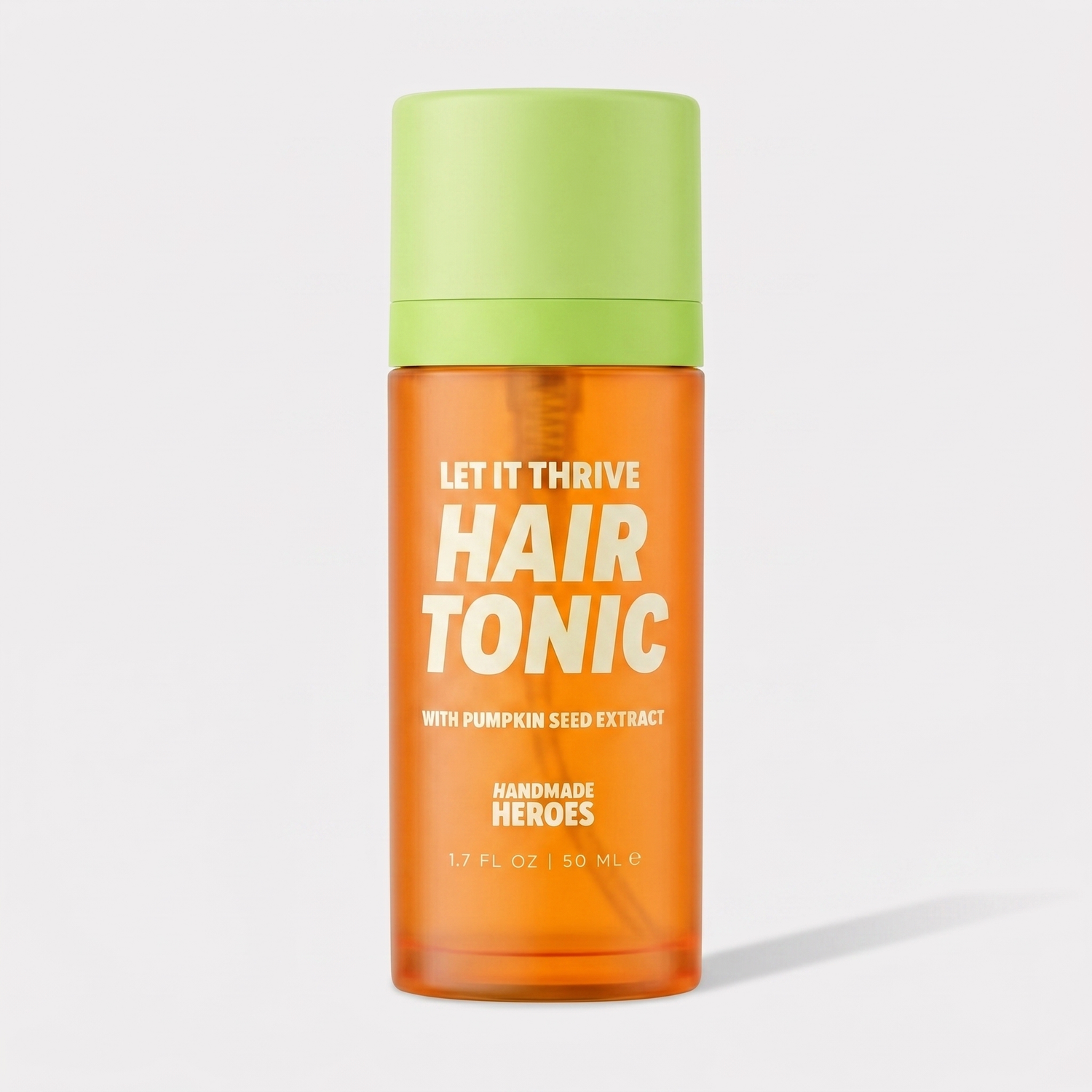
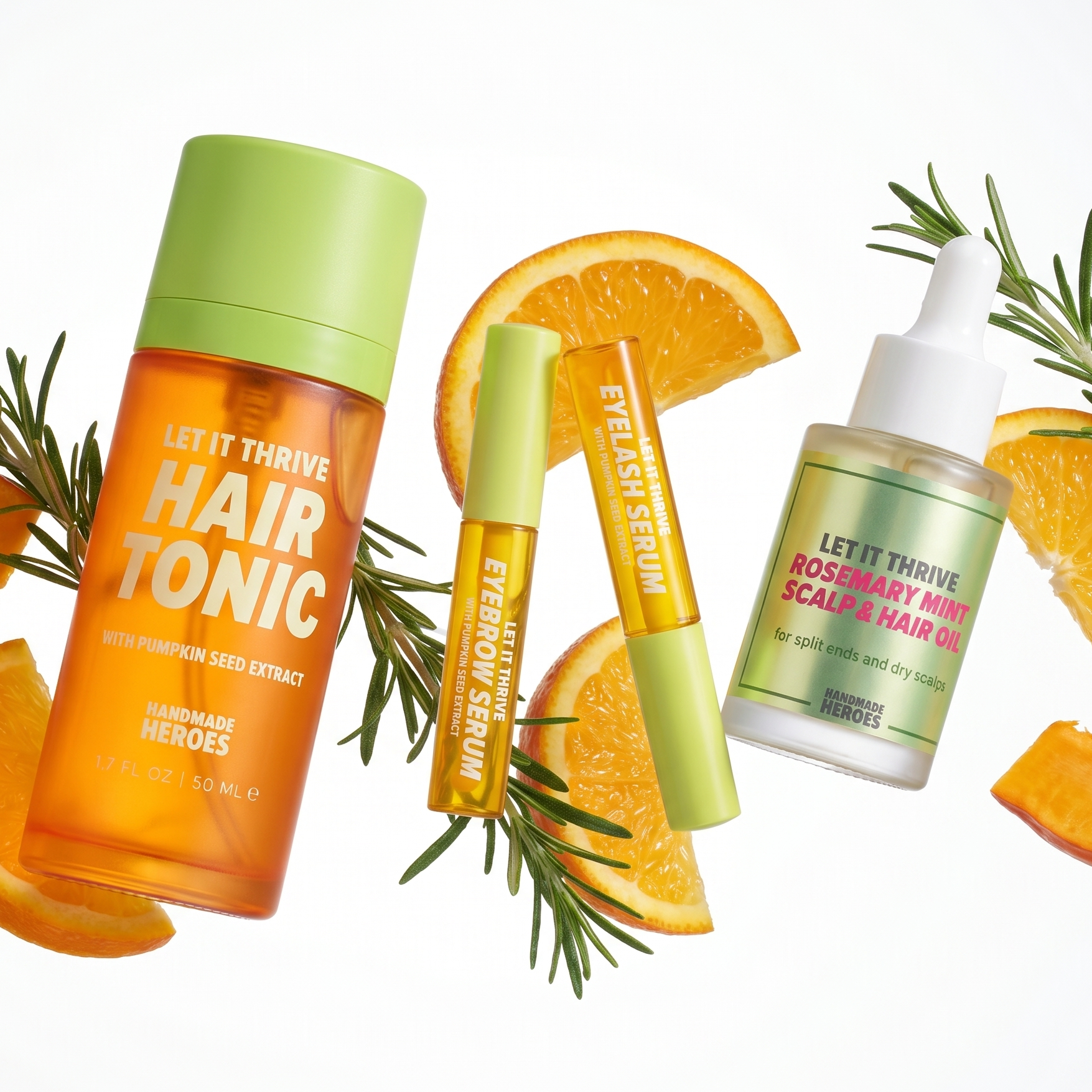
That's exactly what our Let It Thrive Hair Tonic is made for. It's a fine-mist, leave-in scalp tonic built on rosemary and pumpkin seed extract — the two most-researched botanicals covered above — in a lightweight, fast-absorbing formula with no prostaglandins and no biotin, no grease, no build-up. One spray, a 30-second massage, done.
Why those two botanicals? Rosemary performed comparably to 2% minoxidil for pattern hair loss in the 2015 Panahi trial, and oral pumpkin seed oil raised hair count versus placebo in the 2014 Cho trial. Honest caveat, because we don't do hype: those studies were on pattern hair loss (and one was an oral supplement) — so they're why we chose these ingredients, not a promise that any oil or tonic regrows hair.
If you're going to build one small ritual around what the research points to, make it the easy one. Give your scalp its daily 10 seconds — shop the Let It Thrive Hair Tonic. We don't currently carry a standalone hair oil on the US store — browse the full hair care collection.
How to Actually Use Oils for Your Scalp
If you’re using any oil or oil-based tonic on your scalp:
- Apply to a dry or slightly damp scalp for best absorption
- Use a dropper, pipette, or spray (like the Hair Tonic) to target the scalp rather than the lengths
- Follow with gentle scalp massage to support circulation
- Be consistent — hair cycling is slow; give any routine at minimum 3–6 months
- Don’t expect an oil to replace a clinical treatment if you’re experiencing pattern hair loss — see a derm first
Which hair oil is best for the scalp?
Based on published research, rosemary oil is currently the most evidence-backed topical option for scalp health (Panahi 2015; Murata 2013). Pumpkin seed oil has a stronger oral evidence base (Cho 2014) with growing topical interest. Look for these as ingredients in a well-formulated product rather than applying undiluted essential oil directly.
Can I sleep with oil on my scalp?
Overnight oiling is a longstanding practice in many hair care traditions and is generally fine for most scalp types. If your scalp is prone to build-up or you have fine hair, a lighter oil or a fast-absorbing tonic is a better choice than a thick, heavy oil.
Do oils block hair follicles?
Heavy, comedogenic oils applied in excess can contribute to scalp build-up over time. This is why lightweight, formulated products tend to be better suited for daily scalp use than pure heavy oils.
Sources
- Panahi Y. et al. (2015) — Rosemary oil vs. minoxidil 2% for androgenetic alopecia (SCIRP)
- Murata K. et al. (2013) — Rosemary leaf extract and 5α-reductase inhibition in mice (PubMed)
- Cho Y.H. et al. (2014) — Pumpkin Seed Oil RCT in men with androgenetic alopecia (PMC)
- Pharmaceuticals (MDPI, 2022) — Plant-Based Oils in Hair and Scalp Care Review
Real ingredients. Real results.

Leave a comment
This site is protected by hCaptcha and the hCaptcha Privacy Policy and Terms of Service apply.