
TL;DR: Somewhere between ages 8 and 14, hormonal changes switch on a new type of sweat gland (apocrine glands), and body odor shows up for the first time. It's not a hygiene failure — it's biology. The smell comes from skin bacteria breaking down that sweat, not from the sweat itself. Daily washing, breathable fabrics, clean gym kit and a gentle first deodorant handle it for most families. See a doctor if the change is sudden, unusually strong, or shows up with other symptoms.
Why does my teenager suddenly smell?
One day your kid smells like, well, a kid. The next, their room needs a window open and their school shirt could stand up on its own. If you've found yourself googling why does my teenager smell at eleven at night, you're not alone — and neither is your teen.
This is one of the most universal, least talked-about parts of growing up. It's biological, it's completely normal, and it happens to nearly every kid somewhere between ages 8 and 14.
The science: what actually switches on
Babies and young kids sweat plenty, but it's a different kind of sweat — made by eccrine glands, and mostly water. It doesn't really smell.
Puberty activates a second type of sweat gland: apocrine glands, concentrated in the armpits and groin. Cleveland Clinic explains that apocrine glands are present from birth but "don't start working until you hit puberty, likely due to hormonal changes at that time." That's the switch that flips — not a hygiene failure, not something your teen is doing wrong. A hormonal milestone, same as a growth spurt or a changing voice.
Odor isn't sweat. It's sweat meeting bacteria.
Here's the part almost nobody explains clearly: sweat on its own doesn't really smell. Apocrine sweat is thicker and oilier than the eccrine kind, and once it reaches the skin's surface, the bacteria that live there break it down — and that breakdown is what produces the odor. Cleveland Clinic calls this bromhidrosis: it happens "when bacteria on your skin break down your apocrine sweat, leading to a strong, unpleasant smell."
Which means the goal was never to stop sweating. It's to manage what happens after — keeping skin clean, and keeping the bacteria that cause odor in check.
It's universal, not a hygiene failure
According to Nemours KidsHealth, body odor typically starts when this hormonal shift begins — usually around ages 8–13 for girls and 9–14 for boys. Every teenager goes through this, on their own timeline. It says nothing about how clean your kid is, or how well you're parenting. It's a hormone switch, and it flips for everyone eventually.
What actually helps
- Wash daily, focusing on the armpits and groin, where apocrine glands are concentrated.
- Breathable fabrics — cotton over synthetics lets sweat evaporate instead of sitting on the skin.
- Wash gym kit and school shirts after every wear, not "one more day."
- A gentle first deodorant. This is usually the missing piece — most deodorants on the shelf are formulated and scented for grown skin, not an eleven-year-old's first go at it.
When it's worth seeing a doctor
Body odor on its own, at the usual age for puberty, isn't a medical issue. Nemours KidsHealth notes it's worth a doctor's visit if body odor shows up well before the usual age of puberty (younger than 7–8 for girls, 9 for boys), or if a sudden, unusually strong change in odor appears alongside other symptoms. Otherwise, this is a growing-up milestone, not a medical one.
This article is general information, not medical advice. If you're concerned about your teen's health or development, speak with their doctor.
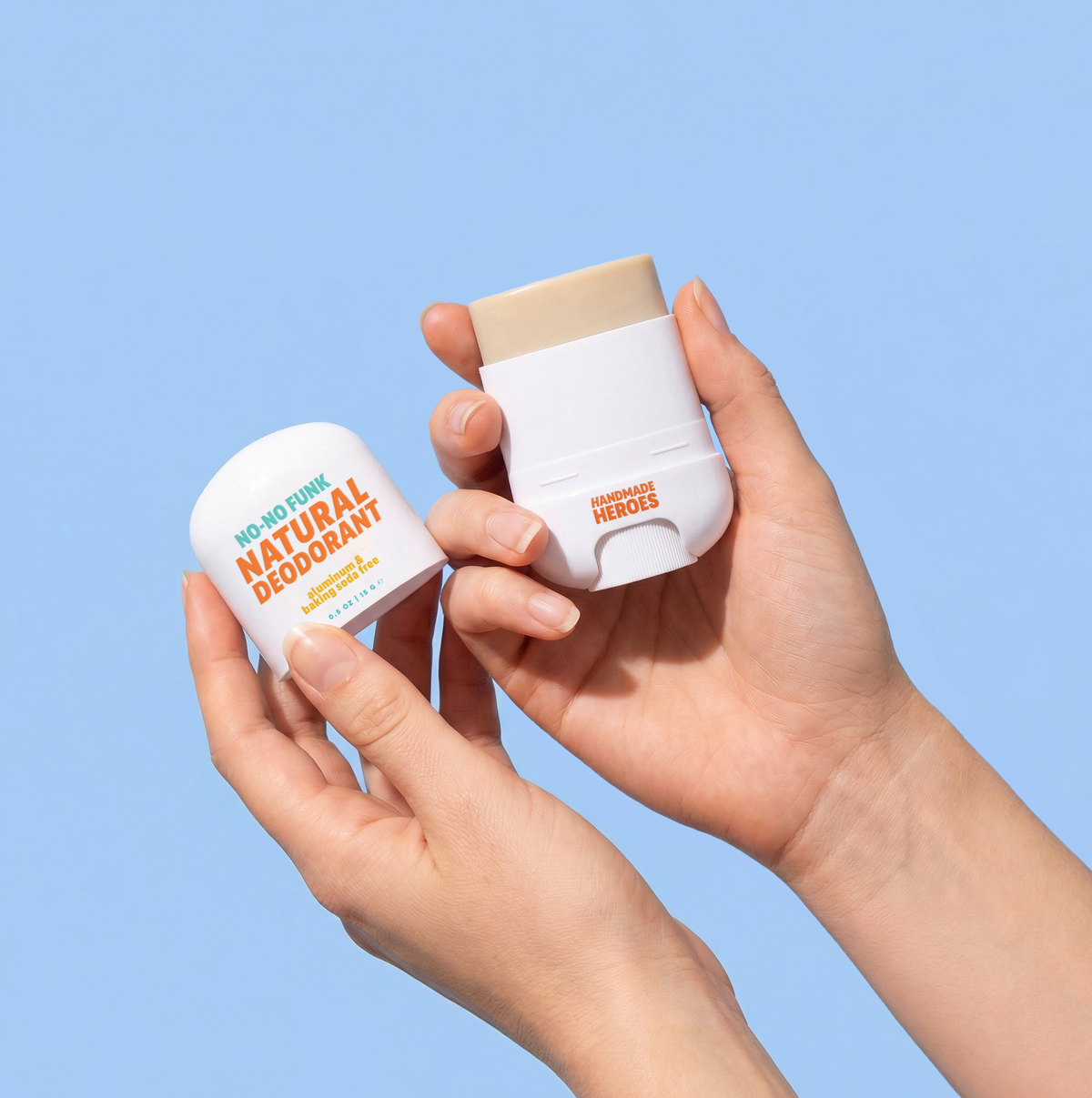
A gentle first deodorant: No No Funk Natural Deodorant
No No Funk Natural Deodorant was built for exactly this moment — a first deodorant, not a grown-up one handed down early.
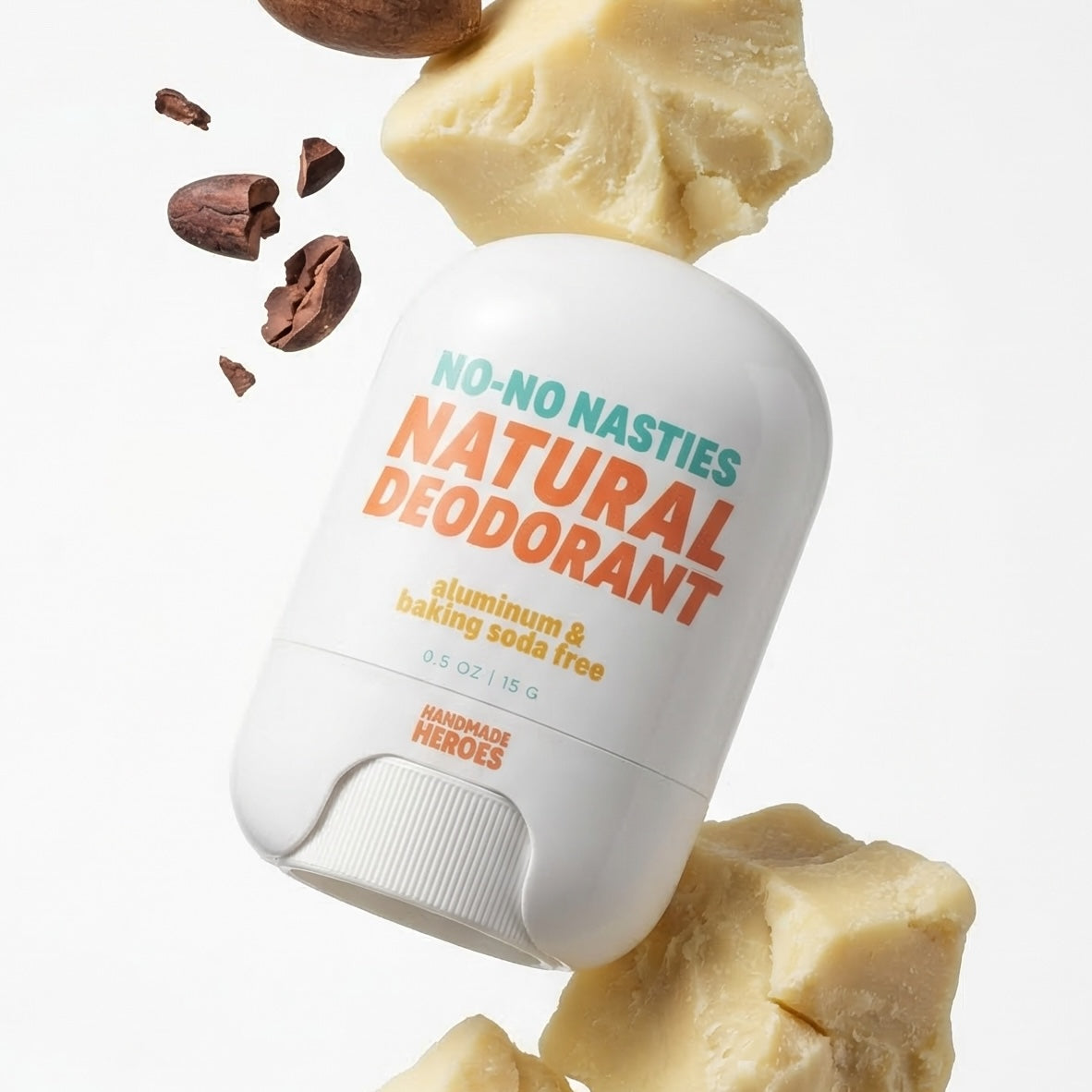
It's baking-soda-free, which matters on young, sensitive skin that can react to the harsher formulas made for adults. It's aluminum-free too — worth saying plainly: this is a deodorant, not an antiperspirant. It works with your teen's skin to control odor, not to block or reduce sweat.
Inside the formula: magnesium hydroxide neutralizes odor, zinc ricinoleate traps odor molecules before they escape, and arrowroot and kaolin absorb moisture. A balm base of shea butter, cocoa butter and candelilla wax carries it all, with tocopherol (vitamin E) to condition the skin underneath. Funk-free for 24 hours, in a stick small enough to disappear into a school bag or gym kit.
Right now it comes unscented — a sensible starting point for a first deodorant, especially for sensitive noses and sensitive skin. Lavender Rose and Vanilla Coconut, both naturally derived, land in about a month.
Try No No Funk Natural Deodorant
Related reading
- The best first deodorant for teens: a parent's guide
- What's actually in No No Funk: all 9 ingredients explained
- Deodorant vs antiperspirant: the real difference
Sources
- Cleveland Clinic, "Apocrine Glands" (reviewed 2024): my.clevelandclinic.org/health/body/apocrine-glands
- Cleveland Clinic, "Body Odor: Causes, Changes, Underlying Diseases & Treatment": my.clevelandclinic.org/health/symptoms/17865-body-odor
- Nemours KidsHealth, "Deodorant Use for Kids and Teens" (reviewed June 2022): kidshealth.org/en/parents/deodorant.html
Real ingredients. Real results.

Leave a comment
This site is protected by hCaptcha and the hCaptcha Privacy Policy and Terms of Service apply.