
If your deodorant has gone quiet on you, you're not imagining it, and you didn't do anything wrong. Odor is a bacteria-plus-sweat equation, and both sides of it change over time. "Deodorant fatigue" isn't a clinical term, but the things behind it are real.
Why a deodorant that worked can stop working
Start with what odor actually is. Cleveland Clinic explains that sweat itself doesn't smell; the smell comes when bacteria on your skin mix with sweat. Underarm (apocrine) glands don't start working until puberty, which is why young kids don't have body odor. From there, three things move.
1. The bacteria change. In a study of nine people, researchers found that deodorant and antiperspirant use altered the underarm bacterial community, and concluded that underarm cosmetics "modify the microbial community and can stimulate odor-producing bacteria" (Callewaert et al., 2014). A separate small experiment found a strong effect of product use on the bacterial composition of armpits (Urban et al., 2016). Both studies were small, but they point the same way: the bacterial mix under your arms today isn't the one your deodorant first met.
2. Hormones shift. Cleveland Clinic says hormones can change body odor. Puberty switches the apocrine glands on, hot flashes and hormonal fluctuations during menopause can increase sweating and change odor, and some people believe their odor changes during pregnancy or their cycle. If your deodorant stopped working around one of those life stages, that is a likely suspect.
3. Life piles on. Cleveland Clinic also lists stress, exercise, hot weather, certain foods, and medications as factors that affect body odor. A rough month can make the same deodorant look weaker. If the change is sudden, or comes with a big jump in sweating, Cleveland Clinic suggests mentioning it to a healthcare provider.
The fix isn't a stronger perfume. It's a different mechanism.
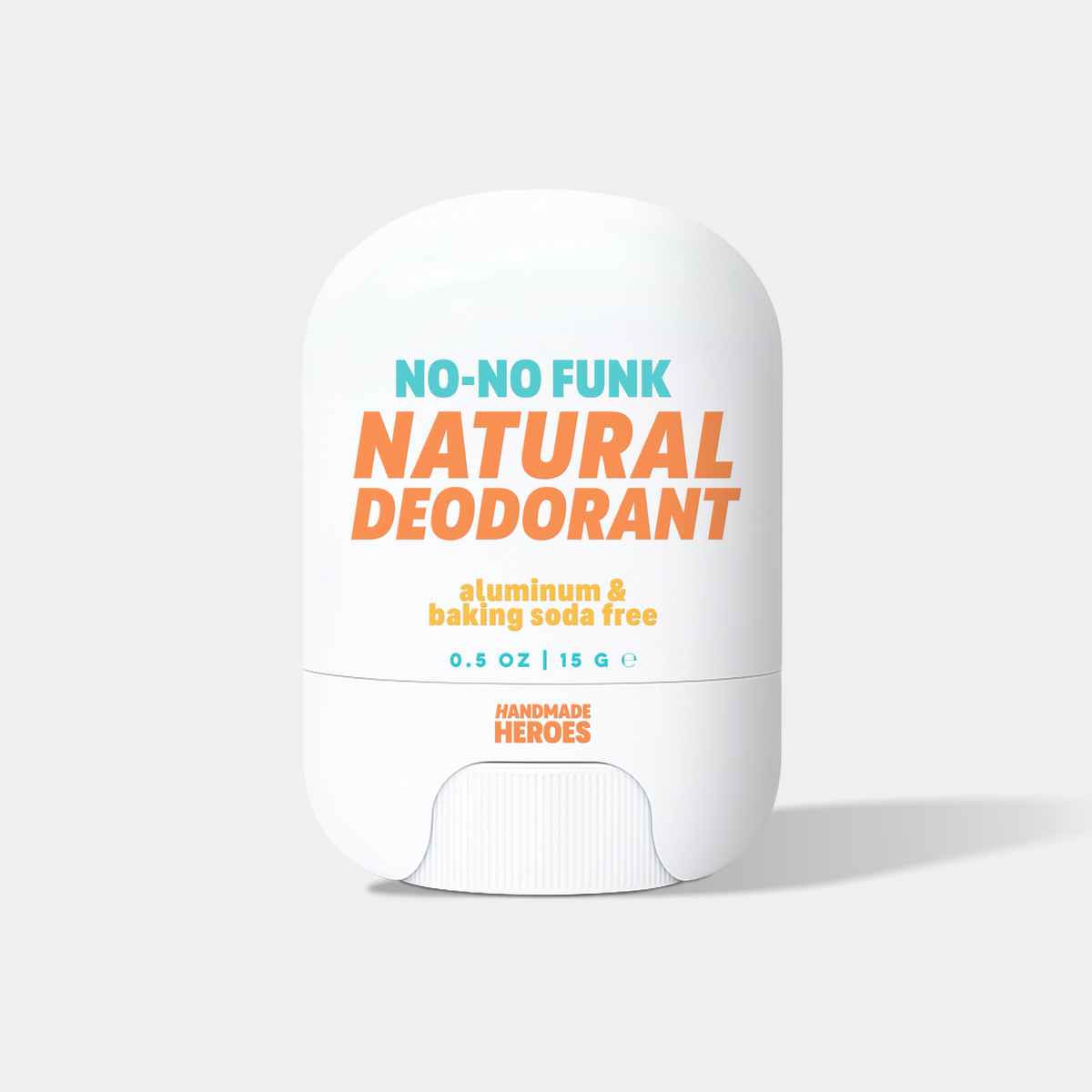
When a formula seems to stall, the instinct is to layer on more of it or reach for a louder scent. Fragrance covers odor; it doesn't change what is producing it. Switching mechanisms is the better experiment, and that is the idea behind No-No Funk Natural Deodorant:
- Zinc ricinoleate traps odor molecules instead of masking them. It is widely used to adsorb odor-active compounds, and a molecular-modeling study (Kuhn et al., 2000) simulated how it binds them, including ammonia.
- Magnesium hydroxide works on the environment odor-causing bacteria live in, helping neutralize odor, with no baking soda.
- Arrowroot and kaolin absorb moisture, while shea and cocoa butter keep the balm smooth and comfortable.
- Nine ingredients, aluminum-free and baking-soda-free.
It's a deodorant, not an antiperspirant: it handles odor, not sweat. If wetness is the issue, antiperspirants are the products made for that.
Shop No-No Funk Natural Deodorant
How to reset, whatever you wear
- Wash the area. Cleveland Clinic recommends a daily bath or shower, focusing on the armpits, because removing some of the bacteria on your skin regularly helps prevent odor. It also clears away product from the day before.
- Apply to clean, dry skin. A thin layer is enough; a little goes a long way.
- Keep sweat moving. Cleveland Clinic suggests keeping armpits shaved so sweat evaporates quickly and has less time to interact with bacteria, and wearing clean, breathable clothing.
- Rotate or switch on purpose. If one formula has gone flat after years, trying one with a different mechanism is a low-risk experiment, and the research above suggests the underarm community responds to what you put on it.
FAQ
Does my body get "used to" a deodorant?
"Deodorant fatigue" isn't a clinical diagnosis. What the research above shows is that underarm bacteria shift with product use, and that hormones, stress, heat, and diet change odor. The formula may not be the thing that changed.
Why not just use more?
More layers add more product and more fragrance, not a new way to handle odor. Washing first and switching mechanisms is the more useful move.
Will No-No Funk stop me from sweating?
No. It is a deodorant, so it targets odor, not sweat. Antiperspirants, whose active ingredient is usually aluminum according to Cleveland Clinic, are the products made for sweat.
Related reading
- Why Natural Deodorant Gives You a Rash (And How to Stop It)
- Neutralize vs Mask: The Deodorant Science Nobody Explains
- Deodorant vs Antiperspirant: What's Actually the Difference?
Sources
- Cleveland Clinic. Body Odor: Causes, Changes, Underlying Diseases & Treatment
- Callewaert C, Hutapea P, Van de Wiele T, Boon N. Deodorants and antiperspirants affect the axillary bacterial community. Archives of Dermatological Research, 2014.
- Urban J, et al. The effect of habitual and experimental antiperspirant and deodorant product use on the armpit microbiome. PeerJ, 2016.
- Kuhn H, Muller F, Peggau J, Zekorn R. Mechanism of the odor-adsorption effect of zinc ricinoleate: A molecular dynamics computer simulation. Journal of Surfactants and Detergents, 2000.
Real ingredients. Real results.

Leave a comment
This site is protected by hCaptcha and the hCaptcha Privacy Policy and Terms of Service apply.